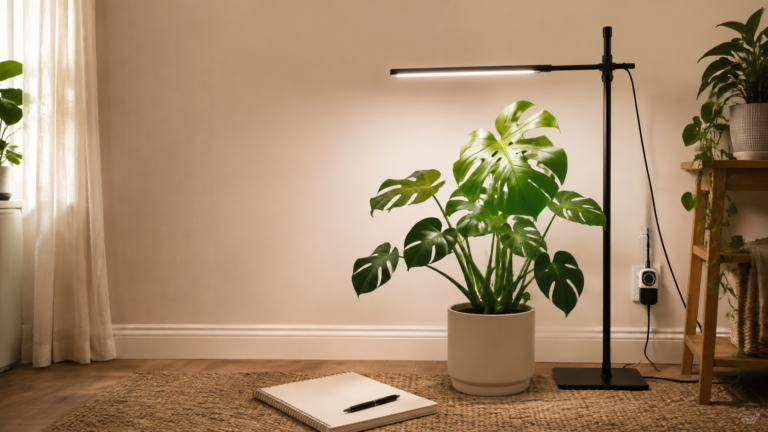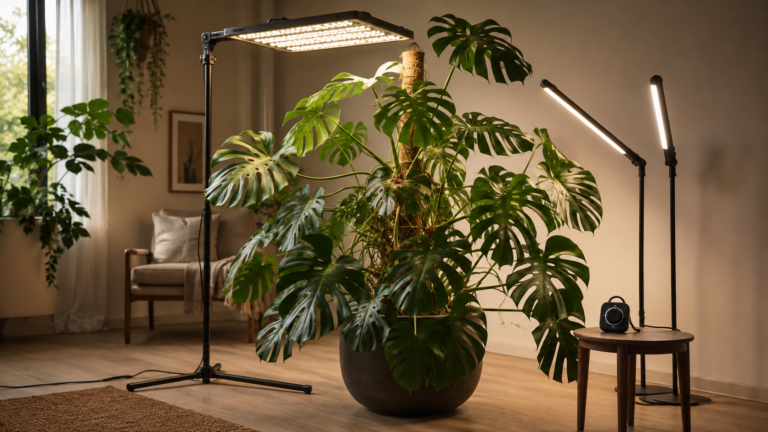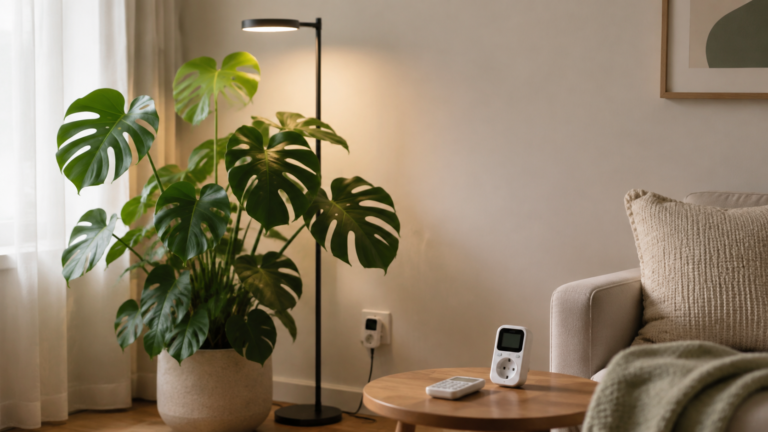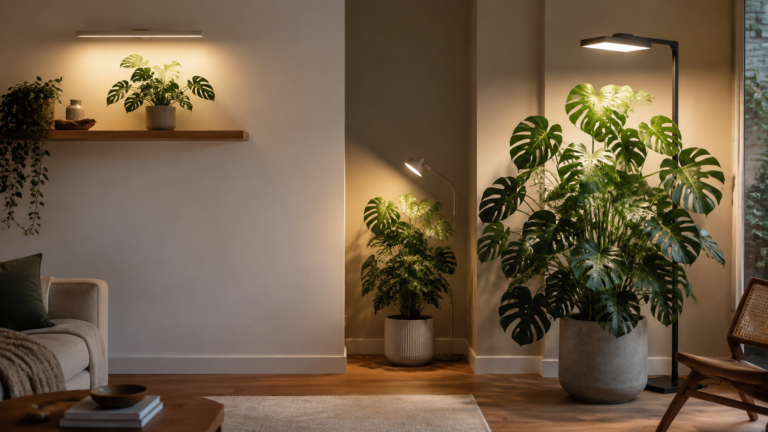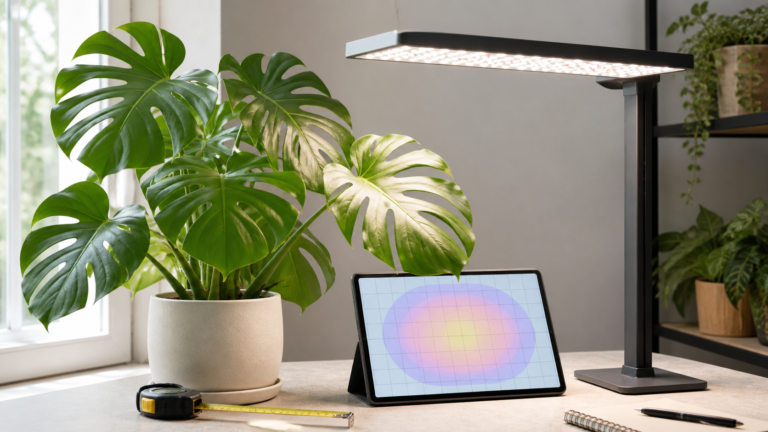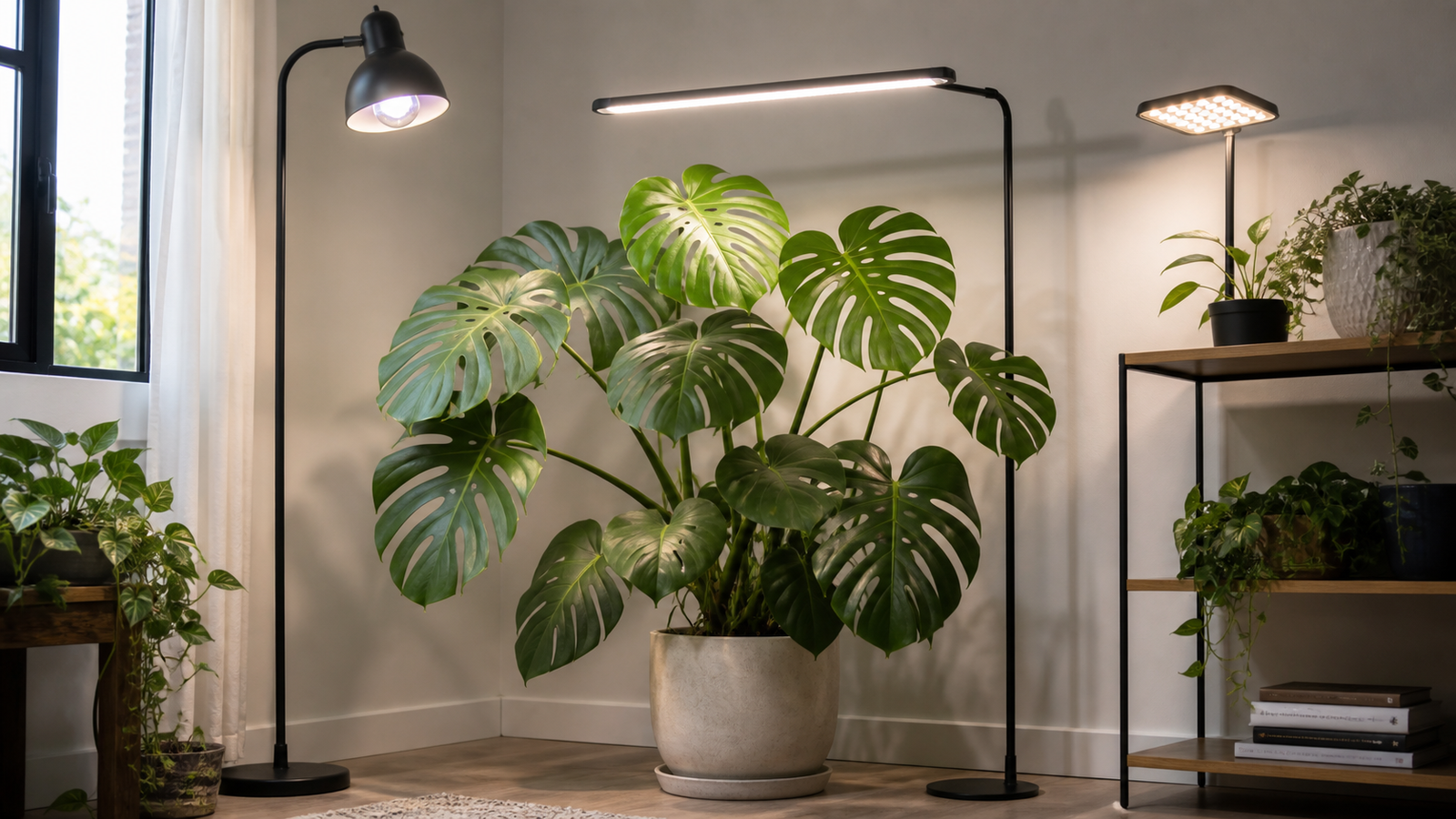
For most Monstera homes, an LED bar is the easiest all-around fixture because its long footprint covers more leaves evenly without the narrow hotspot of a bulb or the visual and heat demands of a large panel. Choose a bulb for one compact plant, a bar for a shelf or climbing canopy, and a panel for a broad plant table when its coverage map fits.
The “best” grow light is not a universal wattage or a fashionable fixture shape. It is the format whose light field reaches your leaves, can be mounted safely, and fits the way you use the room. This comparison breaks down the practical differences between an LED grow bulb, bar, and panel so you can choose with a tape measure and a plant photo instead of guesswork.
Table of Contents
- How do LED bulbs, bars, and panels differ for Monstera?
- Which fixture matches your Monstera canopy?
- Why does the coverage map matter more than wattage?
- How do room layout and mounting change the decision?
- How should you manage heat, glare, and electrical safety?
- How can you test a fixture before committing to it?
- How does window light change the fixture you need?
- What should you do when the leaves still look stressed?
- Conclusion: choose the footprint you can keep consistent
- Frequently Asked Questions
- References
How do LED bulbs, bars, and panels differ for Monstera?
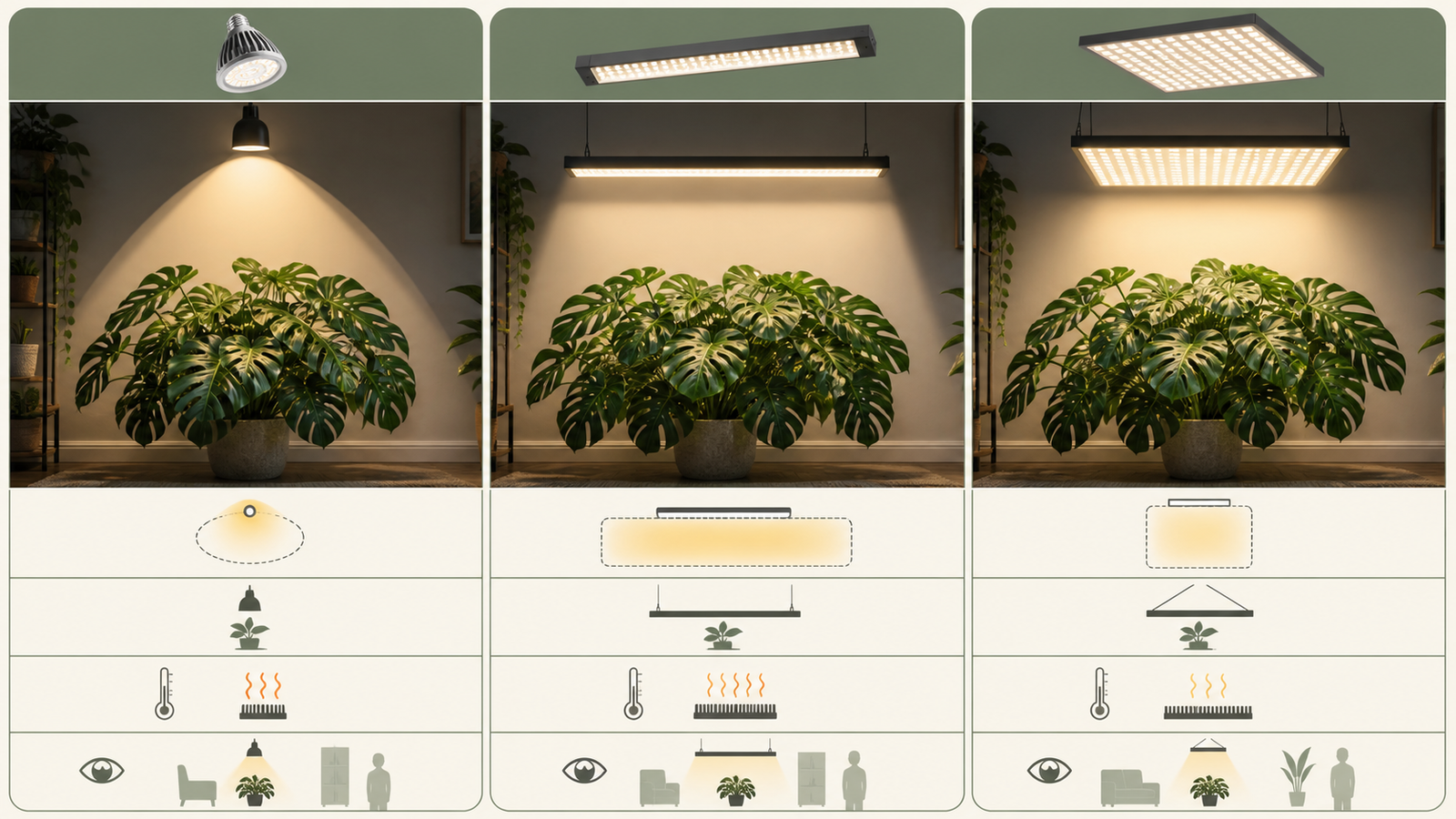
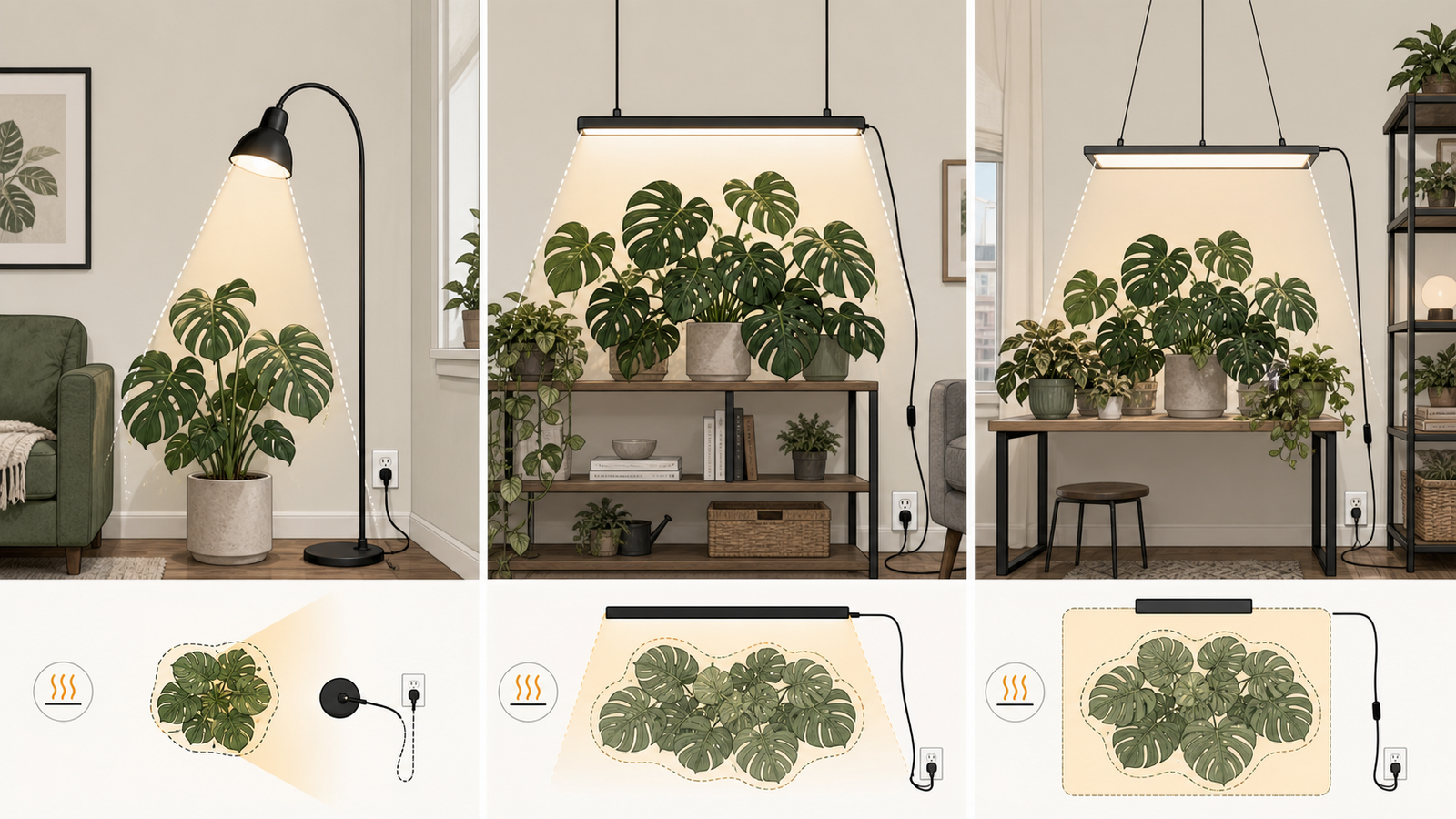
An LED bulb is a point source, a bar is a long linear source, and a panel is a broad flat source. The shape changes how light spreads across leaves, where the fixture can go, and how visible it feels in your home.
| Fixture | Light pattern | Strong fit | Main trade-off |
|---|---|---|---|
| LED grow bulb | Concentrated cone from a socket or reflector | One small-to-medium Monstera, a plant in a corner, or a lamp you already own | The center can be much brighter than the edges; the socket and shade determine aim and clearance |
| LED grow bar | Elongated strip that can wash a row or canopy | Shelf plants, narrow plant walls, and a climbing Monstera with a predictable upper canopy | Needs a suitable horizontal mounting line; a short bar still leaves outer leaves in shade |
| LED grow panel | Broad rectangular field from a suspended or stand-mounted face | Wide canopies, plant tables, and several plants with similar light needs | Takes more visual space and may create more room glare or heat if positioned too close |
None of these formats is automatically stronger or safer. A high-output bulb can overwhelm a small leaf, while a low-output panel can fail to cover a wide canopy. Compare the manufacturer’s distance, coverage, dimming, and heat guidance for the exact model you are considering.
Which fixture matches your Monstera canopy?
Choose by the shape and movement of the leaves, not by pot size alone. A young Monstera with a compact rosette has a different lighting problem from a mature plant whose leaves extend above and beside a moss pole.
Choose an LED bulb when the plant is compact and the socket is useful
A bulb makes sense when you have one plant, one available socket, and a place for a reflector or lamp arm to aim the beam. It can be the least disruptive option beside a sofa or in a rental where drilling and a new stand are not practical.
Before choosing it, draw the bulb’s projected cone on the wall or floor. If the cone covers only the newest center leaves, the plant may continue to stretch toward the source even though the lamp looks bright. A reflector can change the beam, so use the bulb-and-reflector combination—not the bulb in isolation—when checking the coverage.
Choose an LED bar when the canopy is wider than it is deep
A bar is often the most forgiving format for a shelf, console, or climbing support. Its length can follow the width of a Monstera canopy, and its linear footprint reduces the single bright hotspot common to a point source. A bar also keeps the fixture visually close to an existing furniture line.
Measure the active canopy and compare it with the bar’s recommended footprint at the planned height. A short bar above a large plant simply creates a brighter strip in the middle. If the plant is climbing, check the newest leaves and the lower leaves separately; moving the bar a little higher may widen the footprint but also reduce intensity.
Choose an LED panel when you need broad, shared coverage
A panel is useful when several leaves or several plants occupy one broad table. Its face can cover a wider rectangle than a single bulb and may be easier to suspend over a group. It is also the clearest choice when a canopy is broad and you can tolerate a visible piece of equipment.
The panel’s trade-off is proportion. A large panel over one small Monstera can look oversized, spill light into the room, and tempt you to place it too close. Use the smallest panel whose map covers the canopy, and leave room for air movement and leaf inspection.
Why does the coverage map matter more than wattage?
A coverage map tells you where useful light lands at a stated distance; wattage tells you only part of the electrical load. Use the map to compare formats, then use plant observations to confirm that the chosen footprint works in your room.
Start with the Monstera grow-light guide for the selection sequence: measure the canopy, read the fixture’s published map, place it conservatively, and adjust one lever at a time. Look for PPFD values or a clearly defined growing footprint at the distance you can actually maintain. If a seller gives only watts and a vague “for plants” claim, you have less information with which to predict edge coverage.
The map is still a model, not a promise for your room. A white wall can reflect light; a dark shelf can absorb it; a sheer curtain can reduce window contribution; and a leaf can shade the leaf behind it. Check the nearest, center, and farthest leaves. A simple lux meter or phone app can help you spot a large gradient, but it cannot convert every spectrum and sensor into a reliable PPFD value.
Distance changes all three formats. A bulb moved twice as far can lose a great deal of intensity at the leaves, while a panel moved higher may cover more area at a lower level. Do not solve a narrow footprint by extending the timer indefinitely. Fix the geometry first, then decide whether duration needs adjustment.
How do room layout and mounting change the decision?
The right fixture is one you can mount, move, and inspect without fighting the room. Treat the available mounting line and outlet as design constraints from the beginning.
| Space you have | Practical first choice | Why it fits | Watch for |
|---|---|---|---|
| One pot beside a window or sofa | LED bulb in an adjustable lamp | Uses an existing footprint and can supplement the dim side of a room | A shade may block the beam; avoid shining directly into eyes or screens |
| A bookcase or floating shelf | LED bar under or above the shelf | The bar follows the shelf and can cover a row of leaves | Confirm the shelf’s load and heat clearance; keep the cord away from runoff |
| A wide console or plant table | LED panel on a rated stand or suspension | Broad face can cover several leaves at once | Suspension points, glare, and visual scale need more planning |
| A tall Monstera on a support | Long bar or adjustable panel | Reaches the growth point and can be raised as the plant climbs | Lower leaves may still be shaded; check the whole vertical canopy |
| A rental with little wall access | Bulb or freestanding bar | Reversible and easy to move during a room change | Protect walkways, use stable bases, and do not improvise permanent mounts |
For a tall plant, physical support and light placement work together. A stable stem lets you aim a bar or panel at a consistent growth point rather than chasing a leaning canopy. If your Monstera is outgrowing its pot or support, a modular moss pole for climbing Monstera can help you organize the vertical shape before you re-measure the light. The support does not replace adequate coverage, and it should be sized for the plant and the installation conditions.
How should you manage heat, glare, and electrical safety?
LEDs are often cooler than older high-heat lamps, but every powered fixture still has a heat, clearance, and electrical specification. Follow the exact manufacturer instructions and use the closest leaf—not the room’s general feeling—as your first checkpoint.
Keep leaves from touching the fixture. Watch for a persistent warm spot, bleached tissue, crisp margins, or a leaf that angles away after the light turns on. A bright window can compound the exposure, especially when the sun shifts seasonally. University of Connecticut guidance also emphasizes careful acclimation because large Monstera leaves can burn after an abrupt light change.2
Control glare with placement and angle before adding a homemade diffuser. Do not cover a fixture with fabric, paper, or a decorative shade unless the manufacturer approves it. Keep the power connection above the pot’s splash zone, leave a service loop, and route cords where they cannot be pinched, walked on, or pulled by a moving pot.
Use a timer for a repeatable light window and preserve a dark period. Iowa State Extension describes a starting observation period and notes that supplemental lighting should not become an all-night routine simply because the plant is indoors.3 Put the timer where it remains accessible, and use a properly rated outlet or power strip without daisy-chaining strips.
How can you test a fixture before committing to it?
Run a controlled one-week trial with the fixture in its intended room. A short log will tell you more than a single photograph under the lamp.
- Map the leaves. Measure the widest canopy, identify the newest growth, and mark the closest and farthest leaves. Photograph the plant in ordinary room light.
- Place the fixture provisionally. Use the manufacturer’s starting distance and a stable stand, clip, or existing lamp. Keep the cord safe before you judge the look.
- Check the light field. During the first light window, look for an obvious hotspot, a dark outer edge, glare on a nearby screen, or a beam that misses the growth point.
- Check the leaf and room. After the light has run, feel for unusual warmth and note whether the corner becomes noticeably warmer or drier. Do not diagnose a problem from one afternoon alone, but do not ignore repeated heat.
- Record the plant’s environment. Note pot weight, substrate feel, drainage, window conditions, and whether the newest leaf changes posture. Brighter, warmer locations can change drying speed, so watering should follow the substrate and roots rather than a fixed calendar.4
- Change one variable. If coverage is narrow, adjust height, aim, dimming, or fixture length—one at a time. Keep the successful setting for several more days before making another change.
This trial also exposes the format’s lifestyle cost. A panel that grows the plant well but shines into your bed may be less sustainable for your routine than a slightly less powerful bar that you can run consistently. Consistency is part of fixture fit.
How does window light change the fixture you need?
Window light is a moving input, so use a grow light to fill the weak hours or weak side of the canopy rather than automatically replacing daylight. The same bulb, bar, or panel can behave differently in a bright south-facing room, a cloudy north-facing room, or a shaded apartment courtyard.
Observe the room at the hours when the Monstera normally receives light. A sheer curtain, neighboring building, seasonal sun angle, and window distance can reduce the usable contribution. Monstera deliciosa is generally treated as a moderate-light foliage plant; sudden direct exposure can damage leaves, while darker rooms can produce longer internodes and slower new growth.1 Variegated plants may need more usable light than fully green forms, so compare the pale and green sections when checking the canopy.
If daylight already reaches one side, aim a bar or panel to balance the darker side instead of doubling the brightest area. A bulb may work as a small side fill for one plant. When the season changes, recheck the room before buying a second fixture: moving the plant closer to the window or changing the bar’s height may solve the gap more simply.
What should you do when the leaves still look stressed?
A new fixture is not proof that the old problem was light. Use the symptom, timing, and location of the damage to decide what to inspect.
| Symptom or pattern | First question | Likely fixture move |
|---|---|---|
| New leaves are smaller or internodes lengthen | Is the whole canopy receiving enough useful light, or only the center? | Widen the footprint with a longer bar or better-aimed panel; do not add hours first |
| One side faces the lamp while the other side stretches | Is the source too directional? | Move the source toward the canopy center, rotate gradually, or use a bar for broader coverage |
| Pale, crisp, or bleached patches appear near the fixture | Did intensity, distance, or window sun change abruptly? | Increase distance or lower output one step and acclimate; inspect for heat and leaf contact |
| Soil dries faster after a fixture change | Is the corner warmer, brighter, or better ventilated? | Check substrate, pot weight, and roots before changing the watering routine; the complete indoor Monstera care guide connects these signals |
| Leaves yellow while the pot stays wet | Could the root zone or drainage be the limiting factor? | Pause light changes and inspect roots, drainage, and airflow rather than increasing output |
| The lamp looks bright but growth remains weak | Does the manufacturer provide a usable map at your distance? | Measure the center and edge; replace a poorly matched fixture instead of relying on wattage |
The Monstera light requirements guide can help you separate low-light clues from watering, pests, temperature, and root-zone problems. Make one correction, document it, and give the plant time to respond.
Conclusion: choose the footprint you can keep consistent
Choose an LED bulb for a compact plant and a useful existing socket, an LED bar for a shelf or climbing canopy that needs linear coverage, and an LED panel for a broad table or shared plant group. Then verify the exact map, distance, heat clearance, mounting, glare, and cable route in your own room.
The best fixture is the one that covers the leaves you care about and remains safe and livable after the novelty wears off. Start conservatively, preserve a dark period, observe for a week, and change one variable at a time. For the full selection sequence, return to the Monstera grow-light guide and re-measure whenever the canopy or season changes.
Frequently Asked Questions
Is an LED bulb, bar, or panel best for a Monstera?
There is no single winner. A bulb suits one compact plant, a bar usually suits a shelf or vertical canopy, and a panel suits a broad plant table. Choose the format whose published coverage map fits the leaves at a distance you can safely maintain.
Are LED grow bars better than bulbs for large Monstera leaves?
Often, a bar is easier to match to a wide canopy because its length spreads light across more leaves. It is not automatically better: a short bar, poor mounting height, or low output can still leave the edges dark.
When should I choose a panel instead of a bar?
Choose a panel when the canopy or plant group is broad and you have a stable stand or suspension point with appropriate clearance. If one Monstera is narrow or the room is small, a panel may be visually oversized and harder to aim.
Does wattage tell me which grow-light fixture is strongest?
No. Wattage describes electrical consumption, not the amount of useful light at each leaf. Compare PPFD or coverage information at a stated distance, then watch the nearest, center, and farthest leaves in your room.
Can I use a regular household lamp with an LED grow bulb?
Only when the bulb fits the socket and the lamp’s rating, ventilation, shade, and stability are compatible. Follow the bulb and lamp instructions, keep the fixture away from water and leaves, and avoid a shade that traps heat or blocks the intended beam.
Will a grow-light panel make my apartment too hot?
It can add heat near the canopy or wall even if it is an LED. Check the manufacturer’s clearance guidance, feel the closest leaf after the light window, and move or dim the panel if warmth is persistent.
How many hours should any of these fixtures run?
Use the manufacturer’s timing guidance as a starting point, consider the daylight already entering the room, and preserve a dark period. Observe leaf response and drying speed before extending the light window.
References
- North Carolina Cooperative Extension: Monstera deliciosa (Ceriman, Cutleaf Philodendron, Hurricane Plant) — Moderate-light guidance, direct-sun caution, and cultivar context. 2026.
- University of Connecticut Home & Garden Education Center: Monstera deliciosa — Acclimation, leaf-burn risk, and indoor-care context. 2020.
- Iowa State University Extension and Outreach: How to Set Up Supplemental Lights for Indoor Plants — Supplemental-light placement, observation, timers, and dark periods. 2026.
- University of Minnesota Extension: Lighting for Indoor Plants and Starting Seeds — Indoor light categories and how brighter, warmer locations can affect drying speed. 2026.