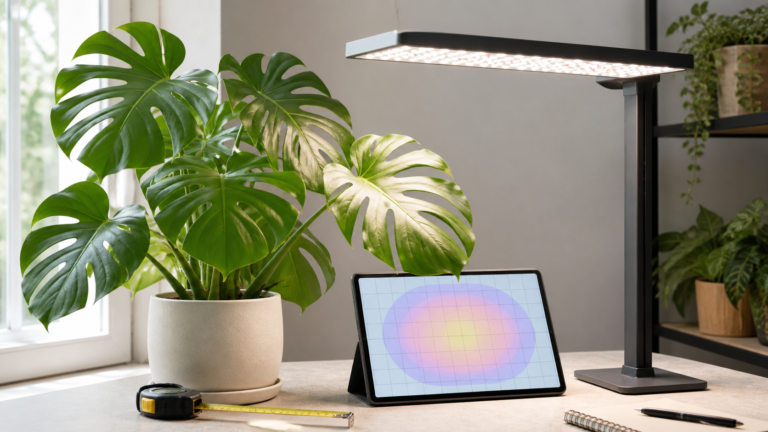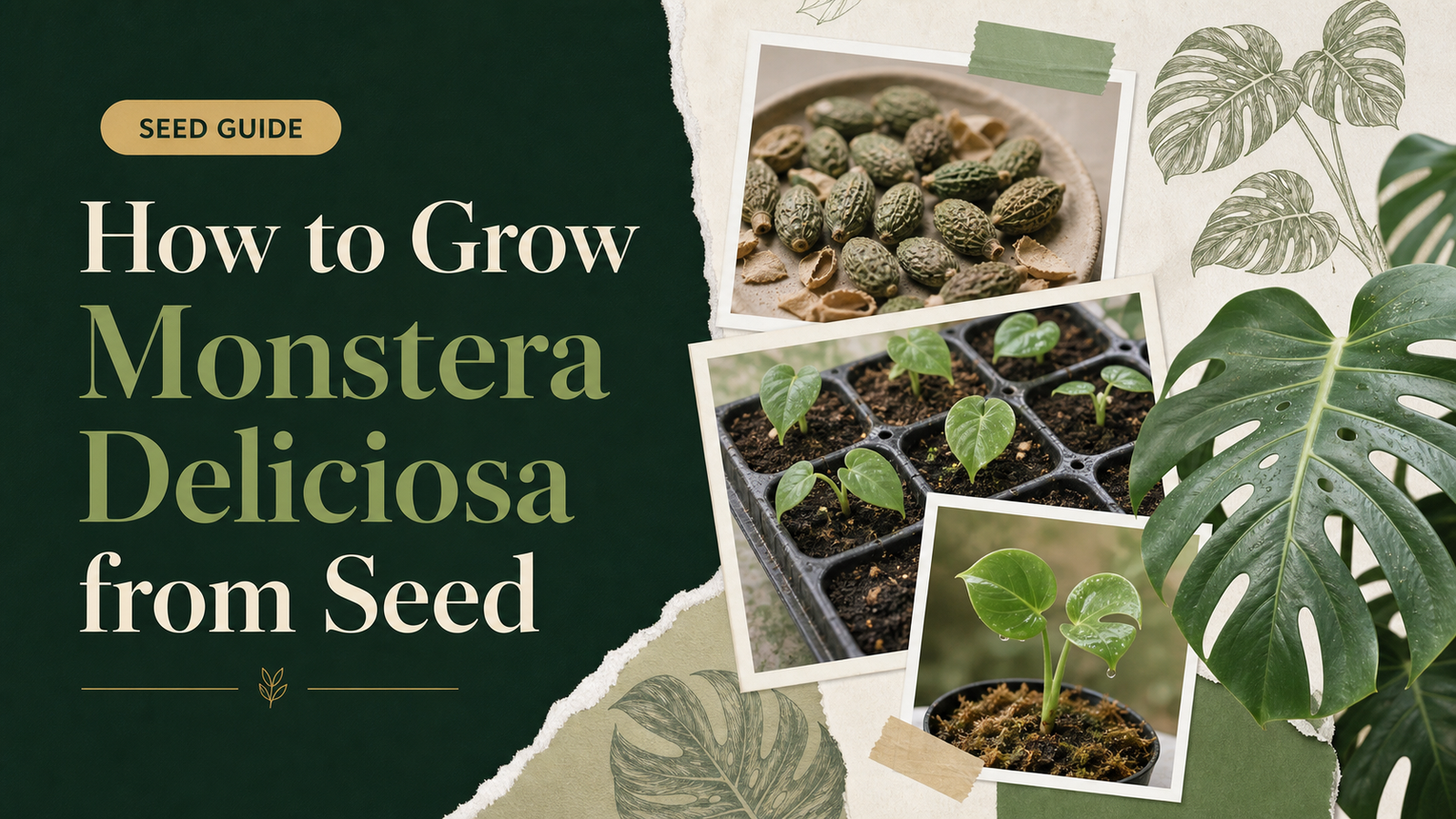
Growing Monstera deliciosa from seed is possible, but it is slower and less predictable than growing a node cutting. The best results come from fresh, viable seeds, steady warmth, high humidity, and a medium that stays evenly moist without becoming soggy. If you want a quick clone of a favorite plant, use a cutting with a node. If you want the pleasure of raising a plant from its first leaf, seeds are worth trying.
Can You Grow Monstera Deliciosa from Seed?
Yes. Monstera deliciosa can be grown from seed, though it is not the most common way houseplant owners propagate it. University of Connecticut notes that seed propagation is possible but uncommon because seedlings are slow at first and need warm, humid conditions. University of Wisconsin Extension also notes that seedlings need warmth and develop slowly.
That slow start is the main difference between seed-grown Monstera and a cutting. A cutting already has mature stem tissue, nodes, and sometimes aerial roots. A seedling has to build everything from scratch: first roots, first juvenile leaves, stronger petioles, a climbing stem, and eventually the larger split leaves people associate with mature Monstera plants.
There is also an important buying warning: do not pay extra for “variegated Monstera seeds.” Stable variegated forms such as many albo-type plants are normally propagated from cuttings or tissue culture, not guaranteed from seed. A seed may grow into a healthy green Monstera, but it should not be sold as a reliable way to get a variegated plant.
Seed vs. Cutting: Which Method Should You Choose?
| Method | Best for | Speed | Main risk |
|---|---|---|---|
| Seeds | Growing many young plants, learning the full life cycle, or starting from fresh fruit/seed | Slow | Old or fake seed, damping off, dry medium |
| Node cuttings | Cloning a known plant and keeping mature traits | Faster | Rot if the node stays too wet or lacks airflow |
| Air layering | Large established plants with mature stems | Moderate | Moss drying out before roots form |
If you already own a Monstera and want another plant with the same look, read our guide to how to propagate Monstera indoors. If you are starting from purchased seed, keep reading; seed-grown Monstera needs a slightly different mindset.
What Fresh Monstera Seeds Should Look Like
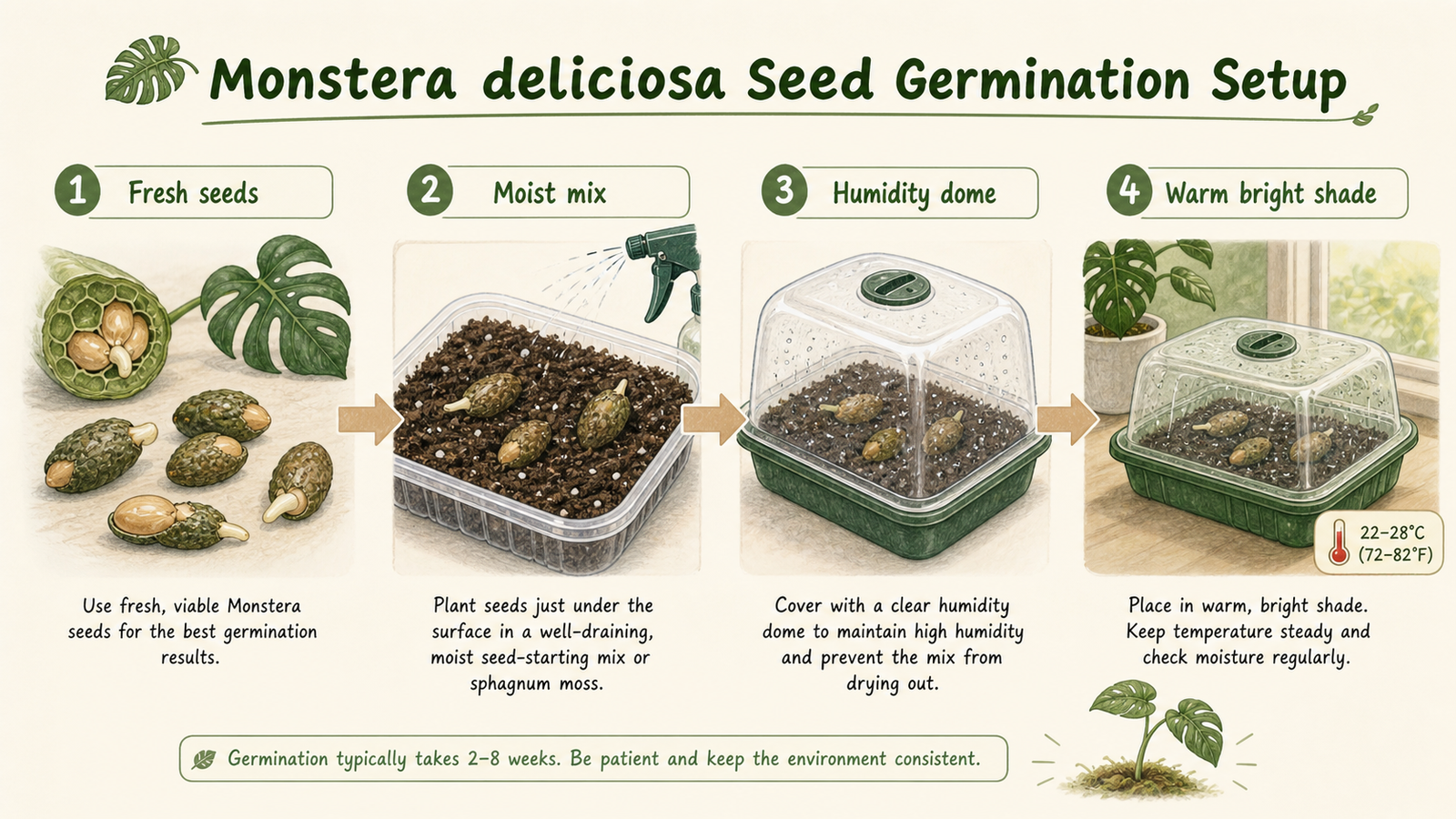
Fresh Monstera seeds are usually pale tan to light brown, firm, and slightly plump. They may arrive with a little fruit residue if they were recently harvested. Very old seeds are often shriveled, hollow-feeling, unusually dark, or dry enough to crack. Those can still be tested, but germination drops quickly when tropical seed is stored poorly.
Buy from a seller who can explain when the seeds were harvested and how they were stored. Avoid listings that use only photos of mature variegated leaves, promise rare colors from seed, or cannot show actual seed photos. A credible seller should be comfortable saying that seedlings may vary and that germination is not instant.
Freshness matters more than fancy packaging. A simple packet of recently harvested seed is usually better than old seed sold with unrealistic promises.
Supplies You Need
You do not need a complicated greenhouse. You do need consistency.
- Fresh Monstera deliciosa seeds
- Seed tray, small nursery pots, or a clear food-safe container with drainage
- Fine seed-starting mix, moist sphagnum moss, or a very light aroid mix
- Clear humidity dome, plastic lid, or propagation box
- Spray bottle or small watering can
- Warm bright spot, heat mat if the room is cool
- Plant label with sowing date
- Optional: diluted hydrogen peroxide rinse for cleaning fruit residue
For medium, aim for moist and airy rather than heavy. A fine seed-starting mix works well if it drains freely. Long-fiber sphagnum moss is useful because it holds moisture around the seed while still leaving air pockets. If you use sphagnum, squeeze it until it feels damp like a wrung-out sponge, not dripping. You can review our sphagnum moss guide and how to prepare sphagnum moss before sowing.
How to Plant Monstera Deliciosa Seeds
1. Clean the seeds if needed
If seeds arrive with fruit pulp attached, gently rinse them in clean water. Remove sticky pulp because it can encourage mold inside a closed humidity container. Do not scrape or damage the seed coat. Let the cleaned seeds sit on a paper towel briefly while you prepare the tray.
2. Pre-moisten the medium
Moisten your mix before sowing. This prevents small seeds from being pushed around by heavy watering later. The medium should hold together when pressed but should not release water when squeezed. If water pools at the bottom of the tray, it is too wet.
3. Sow shallowly
Place each seed on the surface and cover it lightly with a thin layer of mix or sphagnum. A practical depth is just enough to keep the seed in contact with moisture while still allowing oxygen around it. Space seeds so seedlings can be lifted later without tearing neighboring roots.
4. Cover for humidity
Put the tray under a clear dome or inside a propagation box. High humidity helps prevent the surface from drying out, which is important while the seed is swelling and forming its first root. Open the lid briefly every day or two for fresh air and to check for mold.
5. Keep warm and bright, not hot and sunny
Place the tray in bright indirect light. Avoid direct sun through a lid because a closed container can overheat quickly. A steady warm range around 22-28°C (72-82°F) is a useful target for germination. If your room is cool, a gentle heat mat can help, but avoid cooking the tray from below.
For light after germination, connect this seedling stage to the same principles in our Monstera light requirements guide. Seedlings want brightness, but they do not yet have thick mature leaves that can handle harsh exposure.
How Long Monstera Seeds Take to Germinate
Fresh seeds may begin to sprout in a few weeks, but timing varies. A reasonable expectation is roughly two to eight weeks, with old or cooler seed taking longer or failing entirely. Watch for a small pale root first, then a green shoot. Once leaves appear, the seedling still needs gentle care; the first leaves are juvenile and usually simple, not split.
Do not dig up seeds every few days. If you need to check, lift one seed carefully from the edge of the tray. Constant disturbance can break the first root just when the seedling is trying to establish.
Seedling Care After Germination
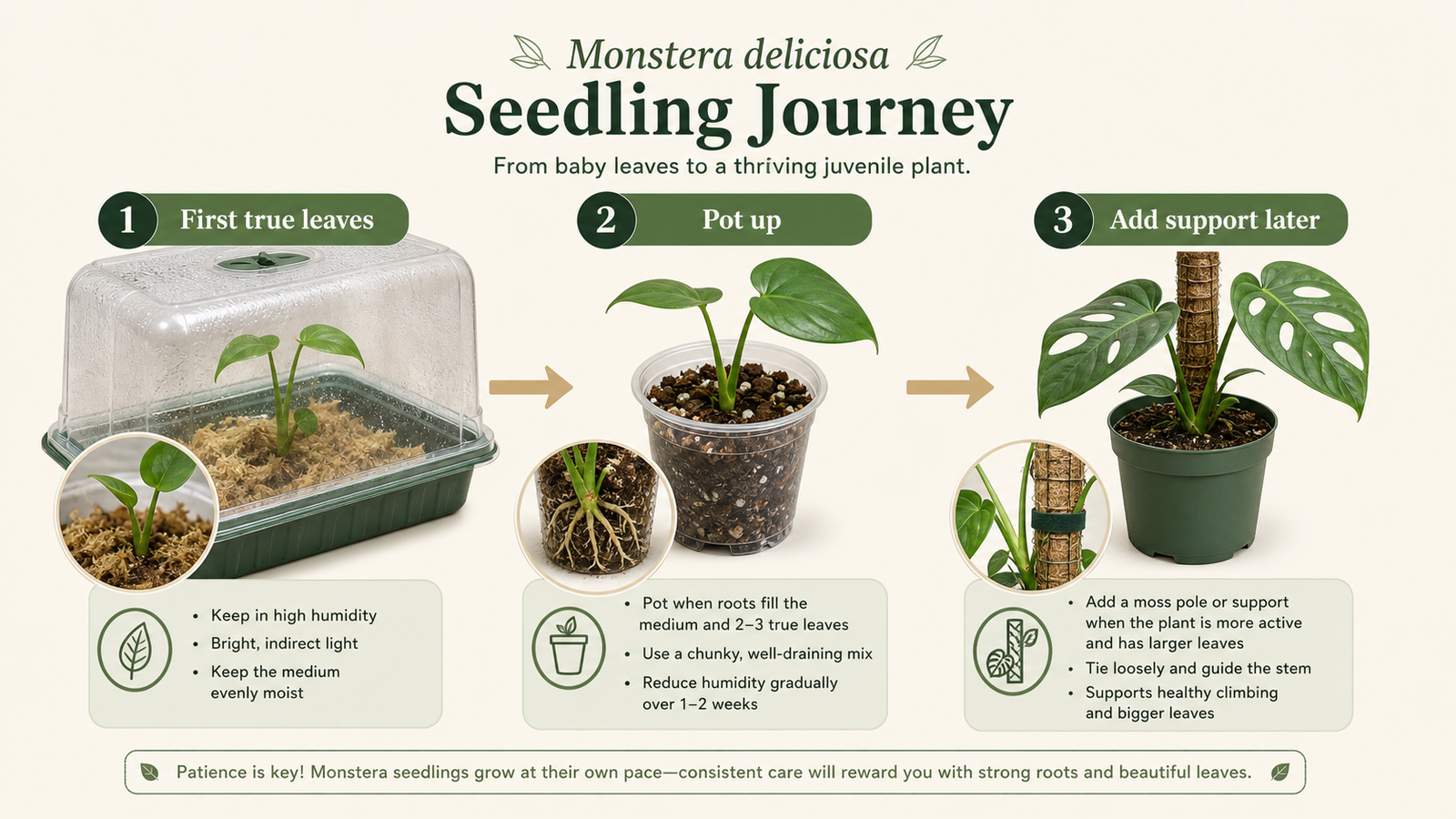
Once seedlings have opened their first true leaves, begin treating them like tiny tropical aroids rather than seeds. Keep the medium slightly moist, give them bright indirect light, and reduce humidity slowly instead of removing the lid all at once.
Open the humidity dome a little more each day over one to two weeks. If leaves wilt immediately, the shift is too fast. Close the lid partway and slow down. The goal is to help the seedling build stronger cuticles and roots before it lives in normal room air.
When to Pot Up Monstera Seedlings
Pot up when the seedling has several healthy roots and at least two or three true leaves. If roots are only just emerging, wait. Moving too early can damage the small root system; waiting too long can cause tangled roots and stalled growth.
Use a small pot first. Oversized pots stay wet for too long around a tiny root ball. A chunky, fast-draining mix is ideal once the plant is past the earliest seedling stage. Our best soil for Monstera guide explains how bark, perlite, coco chips, and organic matter can create a breathable mix for larger plants.
When Will Seed-Grown Monstera Get Split Leaves?
Not right away. Seed-grown Monstera begins with small, solid juvenile leaves. Fenestrations usually appear only after the plant has grown larger, developed a stronger root system, and received enough light and support. Some seedlings may take many months to show early splits, and indoor conditions can stretch that timeline.
This is where support matters. Monstera deliciosa is a climbing aroid, and University of Minnesota Extension describes it as a good climber. Once your seedling becomes a young plant with a stronger stem, a moss pole or vertical support can encourage upright growth and larger leaves. Do not strap a tiny seedling tightly to a pole. Wait until it has enough stem to guide gently.
Common Problems When Growing Monstera from Seed
| Problem | Likely cause | What to do |
|---|---|---|
| No germination | Old seed, low temperature, medium dried out | Check freshness, keep steady warmth, maintain even moisture |
| White fuzzy mold | Fruit residue, stale air, overly wet medium | Vent daily, remove badly molded seed, reduce surface wetness |
| Seedling collapses | Damping off from excess moisture and low airflow | Use cleaner medium, increase airflow, avoid saturated conditions |
| Pale stretched growth | Too little light after germination | Move closer to bright indirect light or use a gentle grow light |
| Crispy leaf edges | Humidity dropped too quickly or medium dried out | Acclimate more slowly and water before the root zone fully dries |
If you use a grow light, keep it gentle at first. Seedlings do not need intense light blasting them all day. Our Monstera grow light guide can help you choose distance and duration as the plant matures.
Is Growing Monstera from Seed Worth It?
It is worth it if you enjoy the process. Seed-grown Monstera is not the fastest route to a big fenestrated plant, and it is not a reliable way to reproduce rare variegation. But it is satisfying, affordable when the seed is fresh, and useful if you want to understand how a Monstera develops from the beginning.
For the best experience, start several seeds, label the sowing date, and keep expectations realistic. Some seeds may fail. Some seedlings may grow faster than others. The strongest plants are the ones that keep a steady rhythm: warm roots, airy moisture, bright shade, and gradual transitions.
FAQ
Do Monstera seeds need to be soaked before planting?
Soaking is optional. If the seeds look fresh and plump, you can sow them directly into pre-moistened medium. If they look slightly dry, a short soak in clean lukewarm water may help rehydrate them, but do not leave them submerged for days.
Can I grow variegated Monstera from seed?
Do not count on it. Most seed-grown plants will be green, and listings promising guaranteed albo or Thai Constellation seeds should be treated with caution. Buy seed for the experience of growing Monstera deliciosa, not as a shortcut to rare variegation.
Should Monstera seeds be grown in soil or sphagnum moss?
Both can work. Use a fine, well-draining seed-starting mix if you want easier potting later. Use moist long-fiber sphagnum if you want a humid, airy germination bed. In either case, avoid saturated, stale conditions.
When should I fertilize Monstera seedlings?
Wait until seedlings have true leaves and active growth. Then use a very diluted balanced fertilizer. Too much fertilizer early can damage tender roots.
Why are my Monstera seedlings not splitting?
Juvenile Monstera leaves are normally solid. Splits and holes come later as the plant grows larger, gets stronger light, and begins climbing. Improve light and support gradually, but do not expect mature leaves from tiny seedlings.
References
- University of Minnesota Extension: Propagating Monstera deliciosa
- University of Connecticut Home & Garden Education Center: Monstera deliciosa
- University of Wisconsin Horticulture: Swiss-Cheese Plant, Monstera deliciosa
- TropicalPlantKit: How to Propagate Monstera Indoors
- TropicalPlantKit: Monstera Care for Beginners Indoors