A practical, science-backed checklist for choosing Monstera-safe water using TDS, alkalinity, and disinfectant checks (chlorine vs chloramine).
Monsteras are famously forgiving—until they aren’t. In our day-to-day Tropicalplantkit experience, most “mystery” Monstera issues aren’t caused by a single bad watering. They’re caused by small water-quality mismatches that add up over weeks: dissolved minerals concentrating in the pot, alkalinity slowly pushing the mix pH upward, or a disinfectant that never truly “airs out.”
The good news: you don’t need perfect water. You need water that keeps the root zone stable over time. Commercial greenhouse guidance makes the same point—water pH, alkalinity, and soluble salts influence nutrient availability and long-term plant quality because they change the growing medium gradually.
One candid limitation: we can’t know your exact water from a generic checklist. If you’re on a well, have a whole-house softener, or your plant is declining fast (mushy stems, foul smell, sudden collapse), we recommend a basic water test and help from a local Extension office or plant professional. And if you have concerns about human drinking-water safety, consult your local water authority and a medical professional—plant care is not medical care.
Monstera Care 101 (start here if you want the full context):
If you’re still building your overall routine (light → watering → soil → feeding), our How To Care Monstera Plant – Ultimate Guide and Cheatsheet is the “big picture” companion to this water guide. For light-specific troubleshooting, see Monstera Grow Light Guide: Distance, Hours & Best LED Setup.
Best water for Monstera (quick answer)
If you want the simplest answer: unsoftened tap water is usually fine for Monsteras if you flush the pot monthly and you don’t see mineral crust. If your tap water is softened, don’t use it (it adds salts). If you have hard water (lots of white crust / high TDS), we get better long-term results by blending 25–50% RO/distilled with tap. And if your city uses chloramine, “letting water sit out” usually won’t help—use a method that actually removes or neutralizes chloramine.
If you’re new to Monsteras (or you’re not sure which type you have), our Image Guide to 10 Popular Monstera Varieties For Beginner helps you match expectations (growth speed, tolerance, and sensitivity) to your plant.
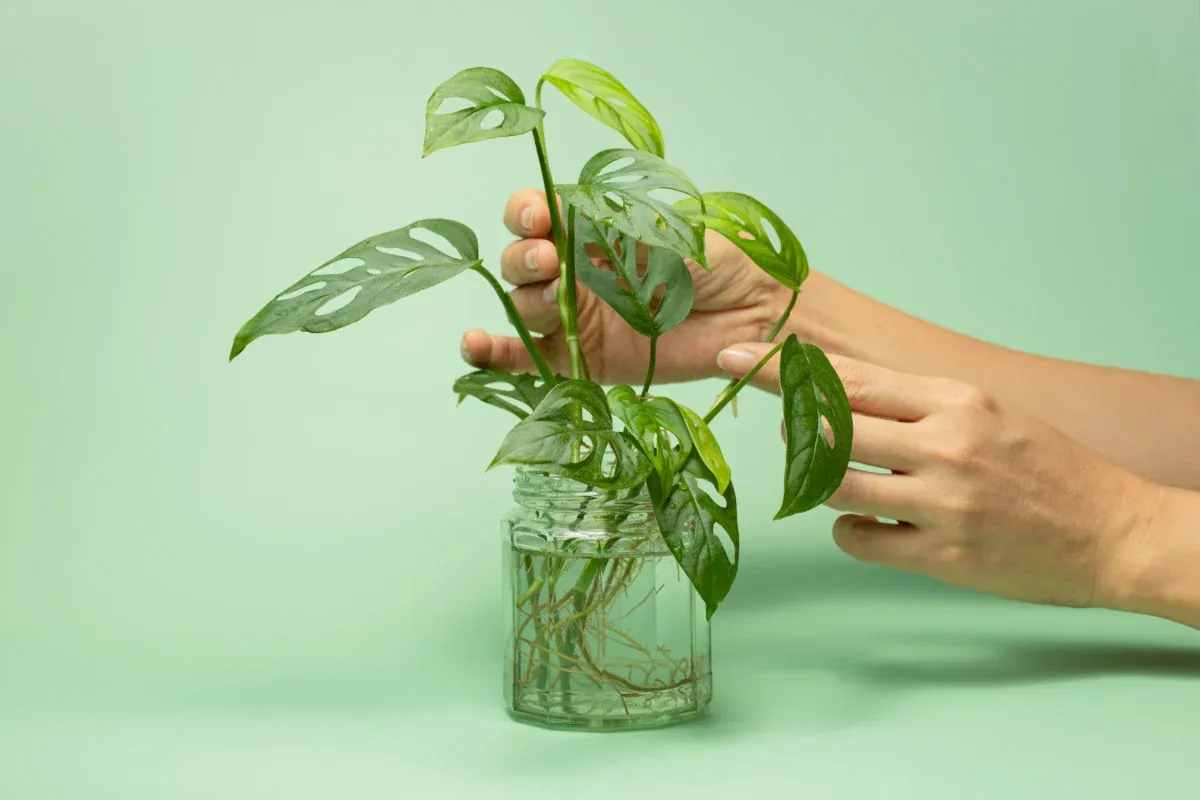
How to test your Monstera water (10-minute checklist)
We keep this simple and repeatable:
- Identify your water source (municipal, well, softened, RO).
- Check your CCR for disinfectant type and any pH/alkalinity notes.
- Measure TDS once from the tap and once from runoff (leachate). Big leachate spikes mean your pot is accumulating salts.
- Pick one goal: lower minerals, lower alkalinity, or address chloramine—and change only that first.
Actionable tip: take a photo of your newest leaf now. Compare the next leaf after 4–8 weeks of consistent water. New growth tells the truth.
If your plant is also growing slowly or stretching, check light before you blame water—Monsteras under weak light often dry down differently, and symptoms overlap. Use our Monstera Grow Light Guide to sanity-check distance and hours.
Our “good enough for most Monsteras” baseline
If you want a reliable starting point that works for many homes:
- Use room-temperature, unsoftened tap water whenever possible (avoid sodium-softened water).
- If you see white crust on soil or pots, add a monthly flush and consider blending in filtered/RO/distilled water.
- If your city uses chloramine, don’t rely on “letting water sit out”—choose a method that actually removes/neutralizes chloramine.
Now we’ll show you how to pick the best option for your Monstera and your water.
What “good water” means for Monsteras in pots
In nature, Monsteras usually receive frequent rainwater that drains away. In a pot, water evaporates and the plant drinks—but most dissolved material stays behind. That’s why water quality problems look like slow stress: recurring brown tips, mineral rings on pots, or a mix that gets harder to re-wet.
Action to take today: look at your pot and saucer. If you see crusty deposits, you’re seeing a water-quality “fingerprint” of salt accumulation.
If you’re unsure whether you’re dealing with “water chemistry” versus “watering technique,” the watering + soil sections in our Monstera Ultimate Guide are the fastest way to separate those two.
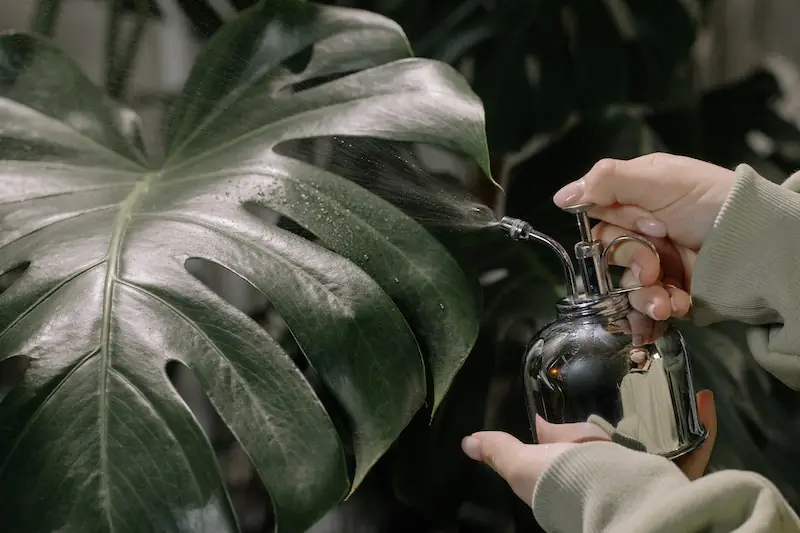
The water-quality checks that solve most Monstera problems
We focus on five traits. You don’t have to optimize all five—just identify the one or two that are most likely to be causing issues in your home.
Dissolved minerals: TDS, EC, and “hardness”
Think of dissolved minerals as the “background noise” in your watering routine. The more minerals (and fertilizer salts) going in, the faster they can build up in a pot. Extension guidance for indoor plants notes that extreme salt buildup can pull water out of root tips and damage roots directly, even when the mix is moist.
A greenhouse-oriented table from Texas A&M is a useful home reference: irrigation water around 175 ppm soluble salts is “excellent,” up to ~525 ppm is “good,” and the risk rises as you move higher.
How we use that at home:
- Under ~300 ppm TDS: usually fine; flush occasionally.
- 300–600 ppm: expect buildup; flush regularly; be conservative with fertilizer.
- Over ~600 ppm: we often blend with RO/distilled or switch sources for long-term stability.
Actionable tool: a simple TDS meter gives you a fast “go/no-go” signal for mineral buildup risk.
pH and alkalinity: the slow drift that changes nutrient uptake
If dissolved minerals are the background noise, alkalinity is the slow steering wheel. Texas A&M explains that irrigation water pH affects nutrient availability in the growing medium, and that alkalinity (bicarbonates/carbonates) can drive a gradual rise in medium pH over time.
Two practical benchmarks from production science:
- Purdue Extension notes that water alkalinity around 120 ppm CaCO₃ is often enough to cause high substrate pH problems in soilless systems.
- A University of Georgia resource suggests alkalinity <100 ppm is generally acceptable for greenhouse use, while >150 ppm often needs acidification in production settings.
What this can look like on a Monstera:
- New leaves that emerge paler than usual (especially if you’re fertilizing)
- Slower growth despite good light
Actionable approach: for most home growers, we don’t recommend DIY acid injection. Instead, blend high-alkalinity tap water with RO/distilled water to reduce drift.
Before you chase alkalinity too hard, double-check whether the plant is simply under-lit—light limitations can mimic “nutrient lockout.” Use our Monstera Grow Light Guide as your quick filter.
Chloramine in tap water: why “letting it sit” doesn’t work (and what does)
In many cities, the “tap water problem” for Monsteras isn’t minerals—it’s the disinfectant. Tap water is commonly treated with either chlorine or chloramine, and they behave differently once the water is in your watering can.
Chlorine vs. chloramine (the 30-second difference)
Chlorine is more reactive and, depending on your local system, can sometimes dissipate after standing. Chloramine is designed to be more stable, so the classic trick—“leave it out overnight”—often doesn’t solve chloramine at all. If your Monstera is sensitive, you can end up repeating the same stress cycle every watering.
How to know what your city uses (fast check)
Look up your local Consumer Confidence Report (CCR) and search for “disinfectant”. This one step prevents weeks of guesswork because it tells you whether “resting” water is even worth trying.
What we use when chloramine is the issue (choose one)
Pick the simplest option you can do consistently:
- A filter designed for chloramine: Not all carbon filters remove chloramine well. The key concept is contact time—chloramine often needs more of it. If you go this route, choose a system explicitly tested or marketed for chloramine reduction.
- Aquarium water conditioner (chloramine neutralizer): This is a practical, low-effort option many plant owners already have access to. Follow the product label carefully and treat only the amount of water you’ll use.
- RO or distilled water (or blending): If you’re also fighting hard water or high alkalinity, RO/distilled solves multiple problems at once. We often blend 25–50% RO/distilled with tap to reduce chloramine exposure and slow mineral buildup—then we keep nutrition steady with light, regular feeding.
What we avoid
If your CCR shows chloramine, we don’t rely on “letting water sit” as the main strategy. It may reduce some odor or help in chlorine-based systems, but it’s not a dependable chloramine fix.
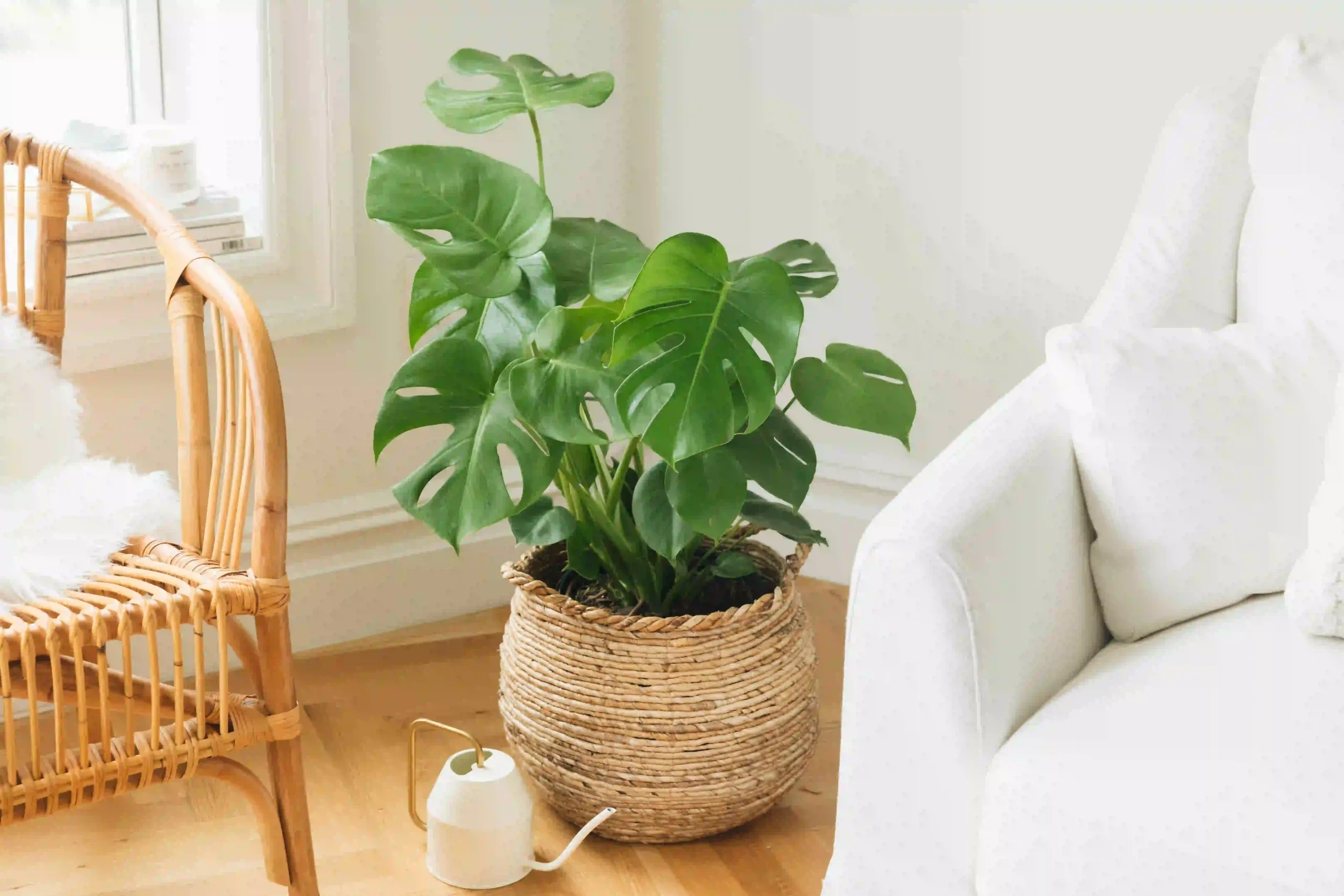
Fluoride and sodium: two ions that cause outsized frustration
If disinfectants aren’t your issue—or you’ve already solved them—two specific ions can still cause stubborn leaf-tip frustration: fluoride and sodium.
Fluoride: Michigan State University Extension describes fluoride toxicity symptoms as necrosis (dead tissue), especially on leaf tips and margins, and recommends well water or rainwater for susceptible crops when possible. A University of Arkansas greenhouse publication adds that several ornamentals are extremely sensitive to even low fluoride levels and recommends fluoride analysis when using fluoridated city water.
Monsteras aren’t the most fluoride-sensitive houseplants—but if you’ve ruled out humidity and salts, fluoride is worth testing by switching water sources for a month.
Sodium-softened water: This one is clearer. University of Maryland Extension warns that softened water should be avoided for houseplants because it contains more dissolved salts. University of Kentucky irrigation guidance states that water that has passed through a home softener should never be used for irrigation. Greenhouse guidance also notes sodium/chloride problems when irrigation water is run through sodium chloride softeners.
Actionable rule: if your tap is softened, find an unsoftened tap (often outdoor) or switch to RO/filtered/bottled for your Monsteras.
If you’re caring for rare or heavily variegated Monsteras, water stability matters more because stress shows faster and recovery is slower. Two helpful references from our site: Image Guide to 10 Rare Monstera Varieties and Mint, Lava, Electric Monstera: naming lineages.
Choosing the best water source for your Monstera
Here’s how we decide, based on the five checks.
Unsoftened tap water
If your TDS is moderate and you’re not fighting constant crust, unsoftened tap water is often perfectly workable. Just pair it with intentional flushing so salts don’t accumulate.
Filtered water
If your main issue is chlorine taste/odor or mild leaf tip stress, filtration can be a practical upgrade. If your water is chloraminated, make sure the method is actually suited for chloramine (contact time matters).
RO or distilled water (or blending)
If you have very hard/high-TDS water or high alkalinity that keeps pushing your mix upward, RO/distilled water is the cleanest fix. The tradeoff is nutrition management: Texas A&M notes that removing micronutrients via RO can create deficiency/imbalance situations unless fertility is managed carefully.
Our favorite “low-drama” solution for many homes is blending (for example, 25–50% RO with tap), which reduces buildup while keeping some buffering.
Rainwater
If you can collect it cleanly, rainwater can be a low-mineral option that many tropical houseplants respond well to. Keep containers clean and don’t use water that smells stagnant.
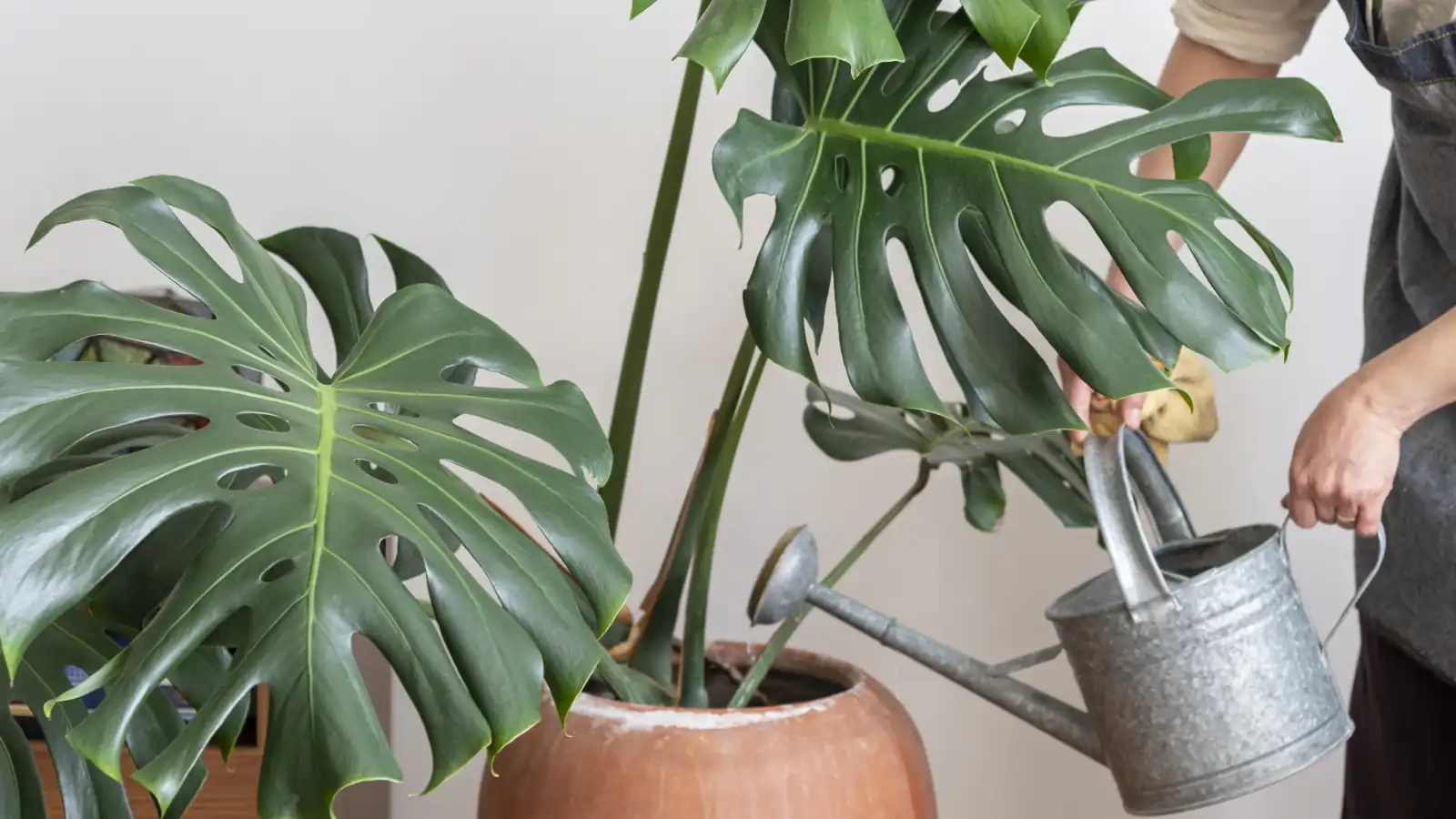
Distilled vs RO vs filtered vs tap water (what actually changes)
| Water type | Lowers minerals (TDS)? | Helps with chlorine/chloramine? | Best for | Watch-outs |
|---|---|---|---|---|
| Unsoftened tap | Sometimes | Varies | Most homes with low–moderate TDS | Buildup over time—flush |
| Filtered (varies) | Often not much | Some filters help more than others | Taste/odor + mild issues | Not all filters handle chloramine well |
| RO | Yes | Yes | Hard water / high alkalinity / chronic crust | Needs consistent light fertilizing routine |
| Distilled | Yes | Yes | Fast reset when salts are high | Same as RO: nutrients must come from fertilizer |
| Rainwater | Often yes | Yes | Great if collected cleanly | Storage hygiene matters |
The routine that makes any “good water” work better
Water quality is most powerful when we pair it with two habits.
Flush salts on purpose
A periodic flush directly addresses the salt-stress mechanism described by University of Maryland Extension.
Actionable flush protocol:
- Water until runoff starts, then keep going until you’ve run 2–3× the pot volume through the mix.
- Let it drain fully; empty the saucer.
Water based on the plant, not the calendar
Schedules fail because conditions change. Illinois Extension recommends checking soil moisture rather than adhering to a rigid schedule.
Actionable habit: check moisture 2 inches down (finger or skewer). Water when the top zone is dry but the pot isn’t bone-dry throughout.
Troubleshooting in real life: symptoms → next action
Brown tips + white crust
Likely: high minerals/fertilizer salts or softened-water sodium.
Next action: flush, switch to unsoftened water, consider blending with RO.
Brown tips with little/no crust
Likely: humidity swings, inconsistent watering, or fluoride/disinfectant sensitivity.
Next action: stabilize watering/humidity; trial RO/distilled for 4–6 weeks.
Pale new leaves despite feeding
Likely: alkalinity-driven pH drift.
Next action: blend with RO/distilled; keep fertilizer complete and consistent.
Summary
Choosing the right Monstera water quality is less about “magic water” and more about preventing slow root-zone drift.
- Keep minerals reasonable (TDS) and flush salts before they accumulate.
- Watch alkalinity; high alkalinity can steadily raise medium pH and complicate nutrient uptake.
- Treat chloramine as a special case—standing water isn’t a reliable fix.
- Avoid sodium-softened water for Monsteras.
- Keep changes controlled and judge results by new growth.
FAQs for “How to Choose the Right Monstera Water Quality”
What’s the best water for Monstera?
For most homes, unsoftened tap water works well if you flush the pot periodically to prevent mineral buildup. If your water is very hard/high-TDS or strongly alkaline, blend with RO/distilled for stability.
Can I use tap water for Monstera?
Yes—tap water is usually OK for Monstera when it’s not sodium-softened and you prevent mineral buildup. Here’s our baseline:
- Use room-temperature, unsoftened tap water for everyday watering.
- If you see white crust on pots/soil, treat that as a hard-water warning: flush monthly and consider blending in RO/distilled to slow salt accumulation.
- If your city disinfects with chloramine, don’t rely on “letting water sit overnight”—choose a solution that actually addresses chloramine.
If your Monstera is declining fast (soft stems, foul smell, sudden collapse), water quality may be part of the problem, but root rot or pests can be involved—get hands-on help if needed.
Is distilled water good for Monstera?
It can be excellent for reducing mineral buildup, but because it contains almost no minerals, you’ll want a consistent fertilizer routine (light, regular feeding) so nutrition stays balanced.
Is reverse osmosis (RO) water better than filtered water?
RO is best when you need to meaningfully lower dissolved minerals (TDS) and often alkalinity. “Filtered” can mean many things—some filters mainly improve taste/odor and may not significantly reduce minerals.
What is TDS, and why does it matter?
TDS (total dissolved solids) is a quick indicator of how many minerals/salts are in your water. In pots, dissolved material can accumulate over time, leading to tip burn, poor uptake, and a “tired” root zone.
How do I know if my Monstera water is too hard?
Common clues: white crust on soil or pot rims, frequent brown tips despite decent care, and runoff that measures much higher TDS than your tap. A cheap TDS meter makes this easy to verify.
What’s the difference between chlorine and chloramine for houseplants?
Chlorine can often dissipate by standing (varies by system). Chloramine is more stable, so “letting water sit” usually won’t solve it—use a method designed to neutralize/remove chloramine.
Should I let tap water sit overnight before watering?
It can help with free chlorine, but it’s not a reliable fix for chloramine. If you don’t know which your city uses, check your local water report (CCR).
Can softened water harm Monsteras?
Yes. Sodium-softened water increases dissolved salts, which can stress roots over time. If your home uses a softener, look for an unsoftened spigot or use RO/distilled/blended water.
Does Monstera prefer acidic or alkaline water?
Monsteras generally do best with a stable, mildly acidic-to-neutral root zone. In practice, the bigger issue is often alkalinity, which can slowly push potting mix pH upward and complicate nutrient uptake.
Why do my Monstera leaves have brown tips even when I water correctly?
Brown tips can come from salt buildup, inconsistent moisture swings, low humidity, or water chemistry (alkalinity/chloramine/fluoride in some cases). The fastest diagnostic is: check for crust + measure TDS + do a flush test.
How often should you flush a Monstera pot? (simple schedule)
If you use tap water and fertilize at least occasionally, we like a simple rule: flush about once a month. If your water is very soft/low-TDS and you fertilize lightly, you can flush less often. If you see crust, tip burn, or your runoff TDS is much higher than your tap, flush more often until growth stabilizes. Our goal is consistency: salts accumulate slowly, so small monthly resets work better than emergency “rescues.”
References (APA)
Arkansas Cooperative Extension Service. (n.d.). Irrigation water for greenhouses and nurseries (FSA6061). University of Arkansas Division of Agriculture.
Illinois Extension. (n.d.). Watering: Houseplants. University of Illinois Urbana-Champaign.
Michigan State University Extension. (2015, February 20). Fluoride toxicity in plants irrigated with city water.
Municipal Authority of Westmoreland County. (n.d.). Information about chloramine in drinking water: General facts.
Municipal Authority of Westmoreland County. (n.d.). Chloramines removal with carbon.
Purdue University Extension. (n.d.). Alkalinity management in soilless substrates (HO-242-W).
Texas A&M AgriLife Extension. (n.d.). Monitoring the quality of irrigation water. Aggie Horticulture.
Texas A&M AgriLife Extension. (n.d.). Treating irrigation water. Aggie Horticulture.
University of Georgia. (n.d.). EC and pH. https://hortphys.uga.edu/hortphys/files/2020/03/EC-and-pH.pdf
University of Kentucky Cooperative Extension Service. (n.d.). Understanding irrigation water test results and their implications on crop management (HO-111).
University of Maryland Extension. (n.d.). Watering indoor plants.