At Tropical Plant Kit, we’ve spent the last four to five years surrounded by tropical plants—well over a hundred pots of Philodendron, Anthurium, Begonia, Monstera, and many other foliage species that we grow, observe, repot, rescue, and troubleshoot every week in our workspace. Even though we sell planters, propagation tools, and growing accessories—not the plants themselves—the heart of everything we create comes from daily, hands-on experience caring for indoor tropical plants.
And among all the materials we use, sphagnum moss is one of the most misunderstood. New growers hear about it constantly—use moss to root cuttings, use moss for aroids, use moss in a propagation box—but very few guides explain what sphagnum moss actually is, why it behaves the way it does, and how to use it correctly without causing mold, rot, or compaction.
That’s the purpose of this article.
We want to walk you through sphagnum moss from the perspective of people who work with it every day—not in theory, but in the real, imperfect, practical environment of indoor tropical plant growing. We’ll explain:
Table of Contents
What Exactly Is Sphagnum Moss?
Sphagnum moss is a group of moss species harvested from cold, wet peat bogs—most famously in Chile, New Zealand, and Canada. When dried and rehydrated, it turns into long, springy fibers that can hold up to 20× its own weight in water (Price & Whitehead, 2004). This is the defining quality that makes it invaluable for tropical plant care.
Biological traits that matter in plant care
When we choose horticulture materials, we care about how they interact with roots—oxygen, water, microbial activity, and structure. Sphagnum moss is unique because:
- It holds moisture but still allows oxygen through. Unlike coco peat or potting soil, its long fibers do not compact tightly. Roots can breathe.
- It has natural antimicrobial properties. Sphagnum contains phenolic compounds that inhibit some fungi and bacteria. It doesn’t sterilize, but it reduces root rot issues caused by anaerobic conditions.
- It is slightly acidic (pH ~4.0–5.0). Perfect for aroids that prefer mildly acidic substrates.
- It rewets easily. Unlike bark blends that become hydrophobic when dry, sphagnum quickly absorbs moisture again.
In simple terms: sphagnum creates an ideal “humid but airy” root zone, which is exactly what plants like Philodendron, Anthurium, Alocasia, and rare aroids crave.
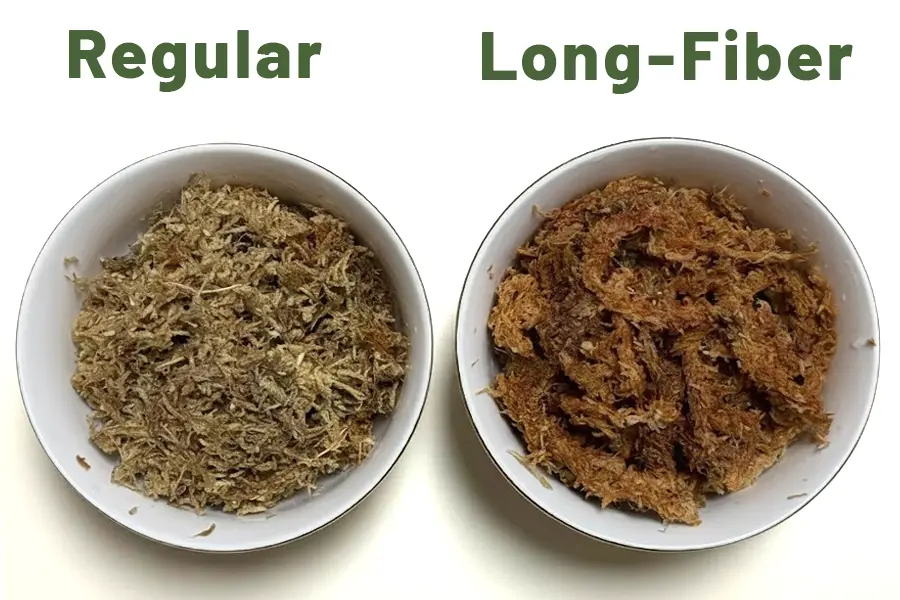
Long-Fiber vs. Regular Sphagnum Moss
Long-fiber sphagnum moss is made of the long, intact strands from the top active layer of the bog and provides superior airflow, moisture balance, and durability, while regular sphagnum moss contains shorter fibers and more debris, breaking down faster and compacting more easily.
“Regular” sphagnum moss—what many low-cost bags contain—is usually a mix of:
- shorter fibers
- fragmented strands
- some partially decomposed material
- occasional peat or fine particles
It still works as a moisture-retentive medium, but it does not maintain open air channels as well as long-fiber material. Over time, it compresses, stays wetter in the center, and becomes anaerobic more easily.
For some uses (soil mixes, short-term propagation, seed trays) this is acceptable. For aroids and orchids, it is limiting.
| Category | Long-Fiber Sphagnum | Regular Sphagnum |
|---|---|---|
| Fiber Length | 10–30 cm strands | Short, broken |
| Airflow | Excellent (stays fluffy) | Decreases as it compacts |
| Water Retention | Even & controlled | Can become “too wet” in center |
| Durability | 12–18+ months | 3–9 months |
| Cleanliness | Very low debris | Often mixed with peat |
| Best Uses | Propagation, poles, orchids, rescues | Soil mixes, temporary setups |
When you’re using moss for high-value cuttings or rare plants, we always recommend grade 5A–7A long-fiber moss. For bulk potting, medium-grade is fine.
When growers talk about long-fiber sphagnum moss (LFS), they’re referring to the topmost, living layer of the moss field—where the strands grow long, clean, and elastic under light. These strands are harvested in lengths ranging from 10–30 cm depending on the region and species.
Because it comes from the actively growing layer, LFS has:
- long, uniform fibers
- excellent structural springiness
- minimal debris or peat
- slower decomposition
- better moisture distribution without suffocating roots
For propagation, moss poles, or any plant with sensitive root tips, this difference is enormous.
Why Long-Fiber Quality Varies by Region
After working with moss from different growers and suppliers—and comparing results in our own propagation trays—we see three clear regional differences:
New Zealand Long-Fiber Moss
Highest quality, longest strands, slowest breakdown.
Harvesting focuses only on the top living layer, and fields are typically allowed to regenerate for multiple years.
Sphagnum cristatum from this region grows:
• the thickest, strongest strands
• very uniform texture
• extremely low debris
• excellent longevity (12–18+ months)
Ideal for: Anthurium seedlings, Philodendron cuttings, orchids, mounted ferns, and any plant with delicate roots.
Chile/Peru (South America)
Good quality but variable; usually shorter fibers.
Hand-harvested, but species differ—often producing softer strands that compact faster.
Medium debris content, mid-range durability.
Works well for soil mixing or basic propagation, but not as airy as premium LFS.
Canada
Shortest strands, most mixed debris, breaks down fastest.
Quality varies widely depending on how the moss is harvested; peat contamination is common, which darkens the moss and shortens its usable life.
Better for bulk mixes or humidity trays, but not ideal for aroids or orchids.
Regular sphagnum moss has its own advantages—its shorter fibers tend to lock together more tightly, creating a denser structure that holds water extremely well. This makes it useful for plants that benefit from consistently moist conditions or for growers who need an affordable, effective moisture-retentive medium. Long-fiber sphagnum, especially Chilean material, behaves very differently: the strands stay light, airy, and loose, reducing the risk of suffocation or “wet core” conditions. For indoor environments with limited ventilation, or for plants that require high airflow around their roots—such as Phalaenopsis orchids and Platycerium (staghorn ferns)—this airy texture is far more forgiving and highly recommended.
Why Sphagnum Moss Works So Well for Aroids
Aroid roots evolved in tropical forest understory environments, where organic matter is constantly wet but loosely structured.
This is why plants like Philodendron or Anthurium rarely thrive in “normal potting soil”. Standard soil compacts, dries unevenly, and does not provide enough oxygen for thick, fleshy aroid roots.
Sphagnum moss, on the other hand:
• mimics forest-floor humus
• maintains humidity around aerial roots
• encourages new root nodes to swell
• reduces transplant shock
• supports fine feeder roots without suffocating them
If you’ve ever struggled with root rot in heavy soil, moss naturally corrects that problem by introducing air + moisture at the same time.
Why Aroid and Orchid Growers Prefer Long-Fiber
Tropical aroids and orchids develop roots that depend on oxygenated moisture, not soggy soil. Long-fiber moss creates micro air pockets between strands, helping:
- aerial roots transition smoothly into soil
- new cuttings callus and root evenly
- sensitive seedlings avoid rot
- mounted ferns hold stable humidity
- moss poles remain breathable
Regular moss tends to collapse over time, creating a dense layer that holds water but not air—one of the most common causes of indoor root rot.
How to Use Sphagnum Moss for plants Indoors (Practical Methods)
1. Sphagnum moss For Propagation (Cuttings)
When propagating Philodendron, Scindapsus, or Hoya, we use moss in a loose consistency:
How we prepare it:
- Hydrate moss fully.
- Squeeze out excess water until slightly damp.
- Fluff it—never pack it tight.
- Place cuttings so nodes make gentle contact.
Why moss works better than soil or LECA:
• It provides humidity around nodes
• It prevents dehydration while roots form
• It’s easy to visually inspect for root growth
• It stabilizes moisture for weeks
If your indoor environment is dry (Canada winters, indoor heating), moss propagation almost always gives faster, stronger results.
2. As the Core of a Moss Pole
Most slow-growing Philodendrons (Gloriosum, Melanochrysum, Verreauxii) climb better when root tips can naturally push into a moist pole.
We pack moss firm but breathable inside our moss pole structure. The key is to avoid creating a soggy column. The pole should feel like a damp sponge—not dripping.
Internal link suggestion:
If your readers also use moss poles, this is good to link internally to your existing moss pole product page or an upcoming “How to keep moss poles moist” article.
3. For Seedlings and Rescue Plants
When a plant has suffered:
• root rot
• dehydration
• broken roots from shipping
• or drastic repotting shock
—we often place it in a pure sphagnum rehabilitation setup.
This method works especially well for:
• Anthurium clarinervium & crystallinum
• Alocasia seedlings
• Thin-rooted Begonias
• Anubias (semi-aquatic rhizomes)
Why this helps: the moss gives oxygen and moisture without competing for nutrients. It lets damaged roots heal and rebuild.
4. As Part of an Aroid Soil Mix
Many of our own potting blends use:
• 30–50% long fiber sphagnum
• 20% orchid bark
• 20% perlite or pumice
• 10% composted pine or coco chips
This creates a hybrid substrate that is:
moisture-retentive + airy + microbially stable
Internal link suggestion:
If you have or plan to publish your article on airy aroid soil mix, this is a natural place for an internal link.
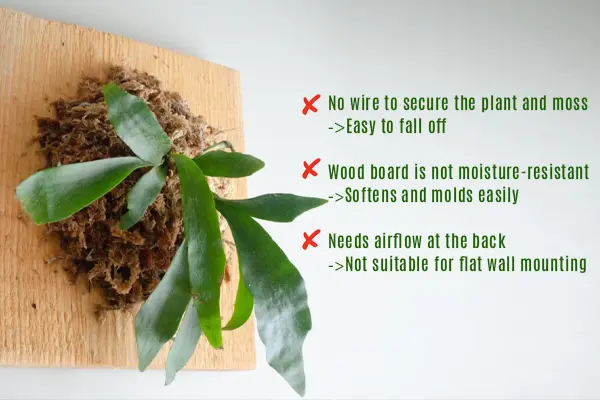
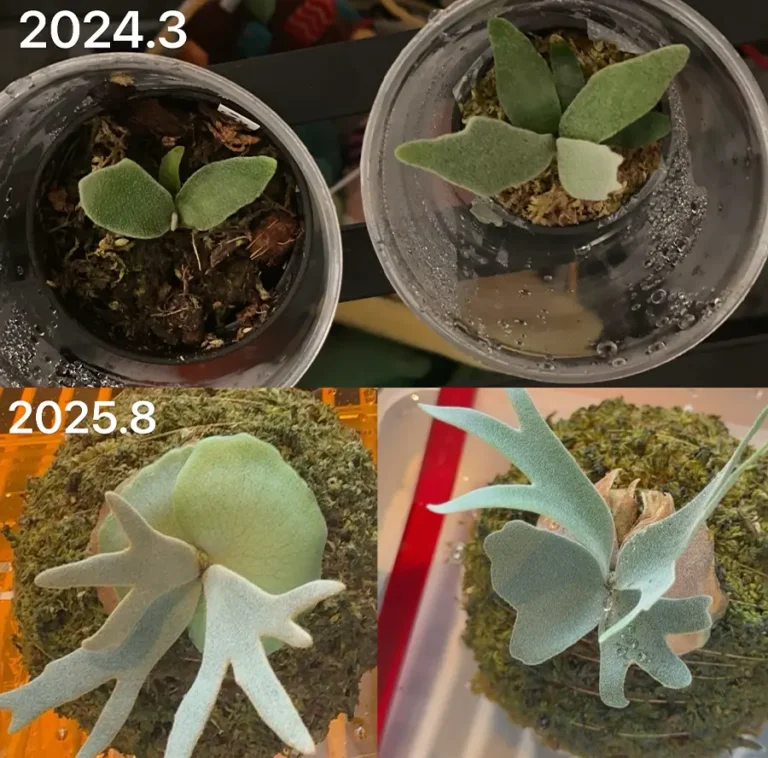
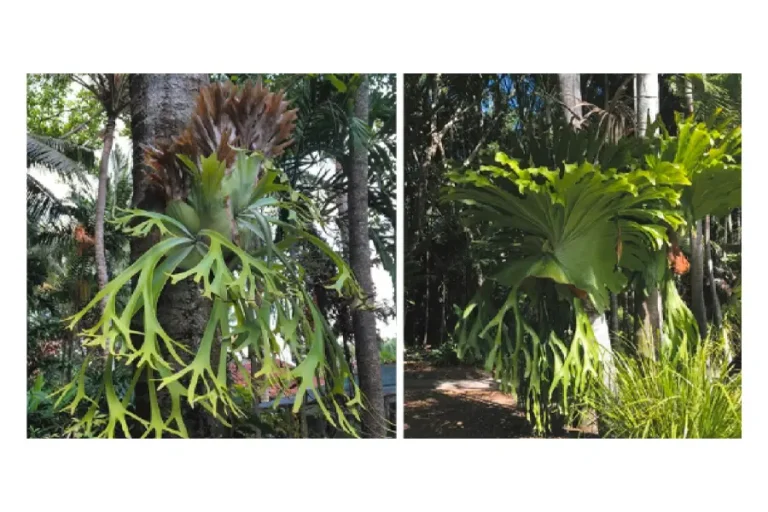
5. Mounting Staghorn Ferns (Platycerium)
For wall-mounted boards, sphagnum moss acts as the padding layer between the fern’s shield fronds and the wooden mount.
It:
• maintains humidity
• prevents the wooden board from dehydrating the root ball
• provides a gentle cushion for new frond growth
A thin layer is enough—you don’t want a wet ball of moss, which encourages decay.
Advantages of Sphagnum Moss
The advantages of sphagnum moss include high water retention, strong airflow around roots, mild antimicrobial properties, and excellent performance in propagation and plant recovery. Because the fibers stay moist without compacting, sphagnum creates a stable, oxygen-rich environment ideal for rooting tropical plants and maintaining humidity.
Disadvantages of Sphagnum Moss
The disadvantages of sphagnum moss include a high risk of overwatering, compaction over time, limited nutrients, and potential mold growth in low airflow. It can stay wet internally even when the surface looks dry, making it unsuitable for succulents or plants that require mineral-rich, fast-drying substrates.
How to Properly Hydrate Sphagnum Moss
One of the biggest mistakes we see new growers make is using moss too wet.
This is how we hydrate it properly in the studio:
- Submerge moss in water for 10–15 minutes.
- Lift and squeeze until no water drips out when lightly pressed.
- Fluff it to restore air pockets.
Moss that is too wet compacts and suffocates roots.
Correct moisture level:
If you squeeze it, it should feel like a damp sponge—not dripping.
Common Mistakes to Avoid
Mistake 1: Packing too tightly
Compressed moss loses its air space and becomes anaerobic, causing root rot.
Mistake 2: Keeping moss constantly wet
Moss should go through a light drying cycle on the surface. Overwatering leads to mold.
Mistake 3: Using low-grade moss for high-stress plants
Cheap moss breaks down into sludge quickly. For Anthurium seedlings, always use top-grade moss.
Mistake 4: Leaving moss around roots for too long
For permanent potting, plants eventually need structure beyond moss—bark, perlite, and organic matter.
How Long Does Sphagnum Moss Last?
Under normal indoor use:
• High-grade moss lasts 12–18 months before breaking down.
• Lower-grade moss lasts 6–12 months.
Signs it needs replacement:
• turns brown and mushy
• loses elasticity
• smells sour
• compacts into fine particles
When in doubt, replace it during repotting or propagation refresh.
Is Sphagnum Moss Sustainable?
Good quality moss must be harvested from managed peatlands.
Brands from New Zealand and Canada typically follow sustainable quotas and re-growth cycles.
Avoid unlabelled moss, especially extremely cheap bags, because:
• unregulated harvesting damages wetlands
• fiber quality is inconsistent
• contamination risk increases
If sustainability matters to you, look for packaging indicating origin and “sustainably harvested” certification.
Comparison: Sphagnum Moss vs Other Substrates
| Material | Moisture Holding | Oxygen Levels | Best Use | Notes |
|---|---|---|---|---|
| Sphagnum Moss | Very high | High | Propagation, moss poles, rescue | Antimicrobial; acidic |
| Coco Coir | High | Medium | Seed starting, soil blends | Cheap; compacts over time |
| Orchid Bark | Medium | High | Aroid mixes | Requires hydration |
| Perlite/Pumice | Low | Very high | Airiness | Does not hold moisture |
| LECA | Low–medium | High | Semi-hydro | Requires fertilized water |
Why moss is unique:
It is the only medium that provides both high moisture + high oxygen simultaneously.
When NOT to Use Sphagnum Moss
We don’t recommend pure moss for:
• Heavy drinkers like ferns (can stay too wet)
• Plants preferring mineral soils (Sansevieria, cacti)
• Long-term potting of large plants
• Any setup exposed to direct sun, which dries moss too quickly
Moss is best used as a tool, not as a universal potting mix.
How to Store Sphagnum Moss
Store unused dry moss in:
• a sealed bag
• a clean, dry shelf
• away from humidity
Once hydrated, if you want to store leftover damp moss, keep it in a breathable mesh bag and let it air dry before the next use.
Final Thoughts From Our Studio
Every time someone visits our workshop, they’re surprised how many ways we use sphagnum moss—propagation trays, moss pole cores, mounted ferns, rescue setups, even as humidity stabilizers in grow cabinets.
The more experience we gain, the more we appreciate sphagnum’s versatility. But the secret is always in the technique: hydration level, fiber quality, and packing density determine whether you’ll see lush roots or struggle with mold.
If you want a deeper dive into substrate science, we’ll soon publish our guide on airy aroid soil structure, where sphagnum plays an important supporting role alongside bark, pumice, and organic chunks.
FAQ About Sphagnum moss
What is the difference between sphagnum moss and normal moss?
The difference is that sphagnum moss is a long-fiber, highly absorbent growing medium harvested from peat bogs, while normal moss is a decorative surface moss with low water retention. Sphagnum supports root growth, propagation, and humidity control; decorative moss cannot be used as potting or propagation material.
Can I dry and reuse sphagnum moss?
Yes, you can reuse sphagnum moss if it comes from a healthy plant and still has long, springy fibers. Rinse it thoroughly, disinfect with boiling water or diluted hydrogen peroxide, and allow it to dry fully before reuse. Discard moss that is compacted, brown, or contaminated with pests.
Can orchids grow in sphagnum moss?
Many orchids can grow in sphagnum moss because it stays moist and airy, providing a stable humidity level around sensitive roots. Phalaenopsis, Paphiopedilum, and many seedlings thrive in it. However, moss must be packed loosely, and mature orchids may need a bark-mix to prevent long-term root suffocation.
What plants thrive in sphagnum moss?
Plants that thrive in sphagnum moss include aroid seedlings, Philodendron and Anthurium cuttings, Alocasia corms, Begonia species, carnivorous plants, and many orchids. Sphagnum works best for moisture-loving plants with fine or sensitive roots. Succulents and desert species should not be grown in sphagnum.
How often should I change sphagnum moss?
Sphagnum moss should be changed every 6–18 months depending on quality and use. Replace it sooner if it becomes compacted, brown, sour-smelling, or moldy. Propagation containers should be refreshed more frequently, while mounted ferns usually need new outer layers once a year.
Is sphagnum moss OK for ball pythons?
Sphagnum moss is safe for ball pythons when used as a humidity hide or shedding aid, but it should not be used as full enclosure bedding. Moss stays very moist and can cause scale or belly rot if overused. It works best as a controlled moisture zone, not as substrate.
Why Green Moss Grows Sphagnum?
If green moss grows on sphagnum, it means the surface is staying too wet and receiving light. The green layer itself isn’t harmful, but it signals poor airflow and excess moisture. Remove the top layer, improve ventilation, reduce watering, and replace with fresh sphagnum if the growth keeps returning.