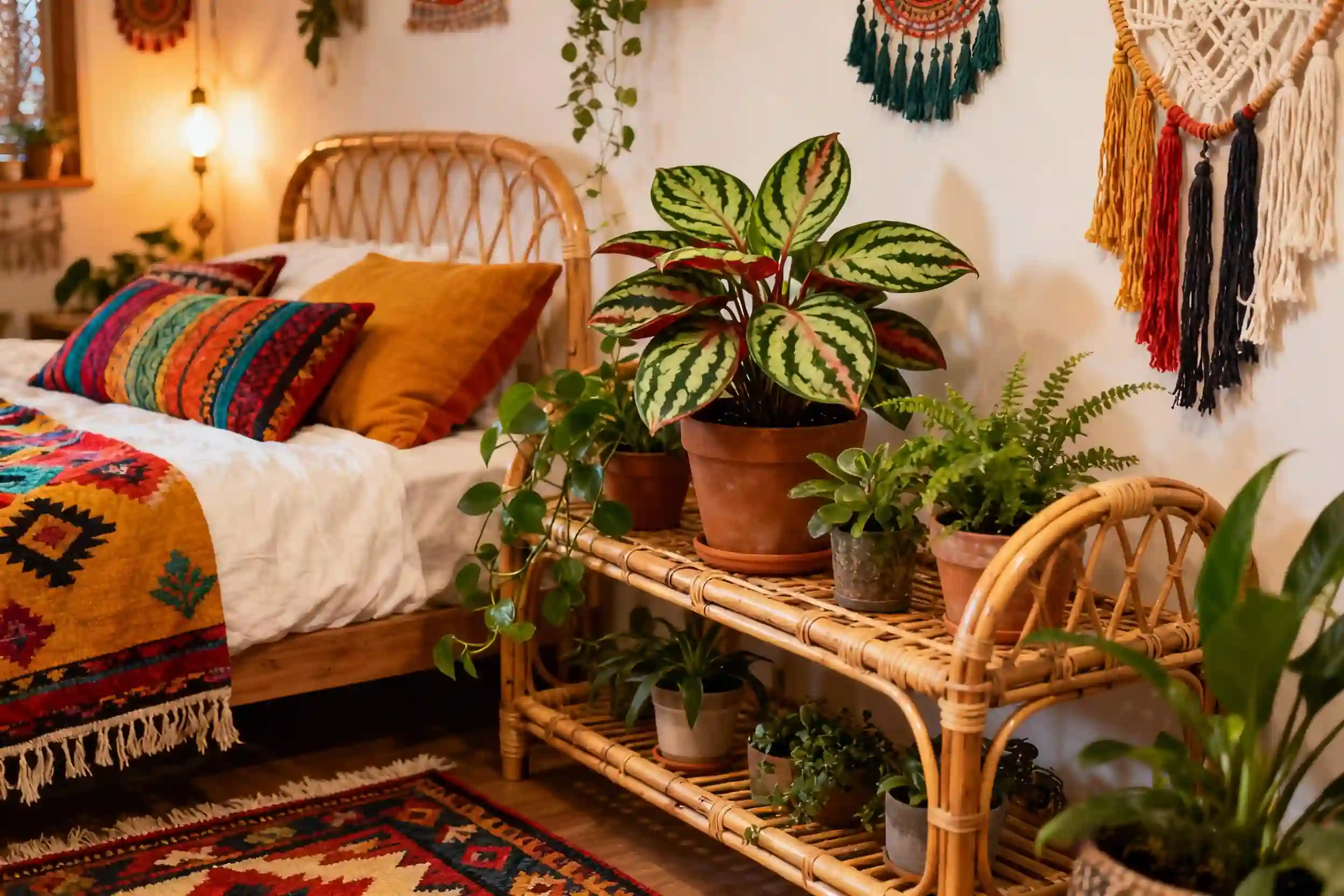
Watermelon Peperomia (Peperomia argyreia), with its round green leaves striped like a mini watermelon, is a beloved tropical houseplant.
Despite originating from the warm, shaded rainforests of South America, this compact plant adapts well to indoor life and is fairly easy to maintain. I’ve grown many of these charming plants at Tropicalplantkit, and in this guide I’ll share practical care tips and solutions to keep your Watermelon Peperomia thriving.
Whether you’re a first-time plant parent or an experienced indoor gardener, you’ll learn how to meet this plant’s needs and even enhance your home with its beauty and benefits. (Fun fact: according to NASA research, Peperomias can purify indoor air by reducing formaldehyde levels by up to 47%!)
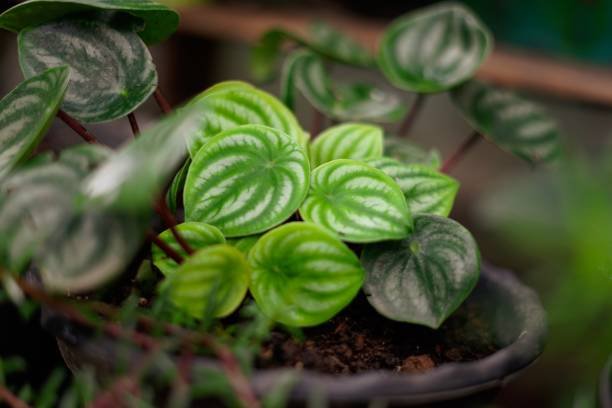
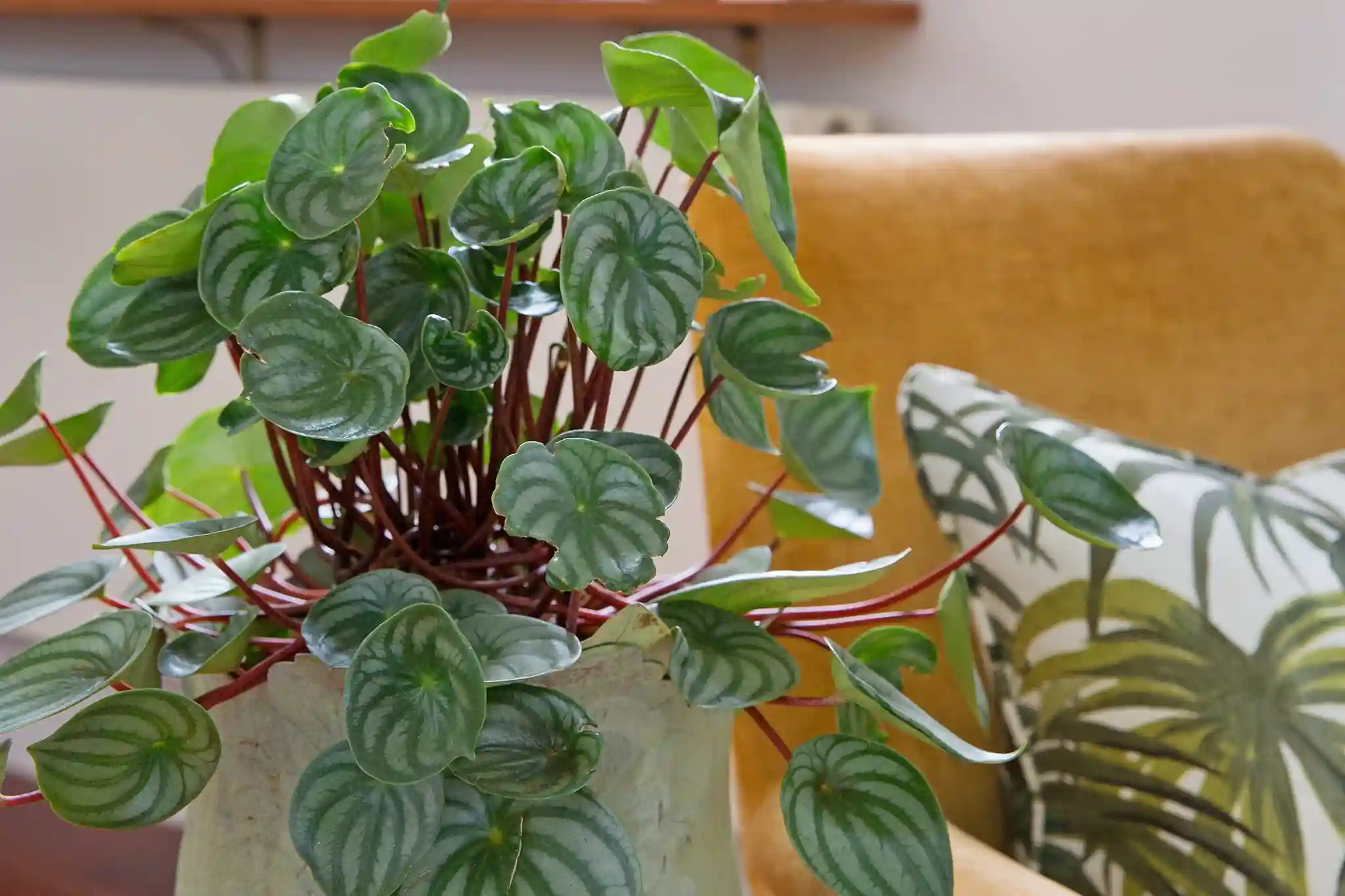
A healthy Watermelon Peperomia shows off its stunning silver-striped leaves (resembling watermelon rind) and occasional thin flower spikes. This compact tropical houseplant makes a great addition to any desk or shelf.
Key Takeaways
- Light: Provide bright indirect light. Avoid harsh direct sun which can scorch the leaves, but don’t keep it in deep shade or it will grow slowly and lose its variegation. A spot near an east or north window, or a few feet back from a sunny window, is ideal.
- Water: Water moderately. Let the top 1–2 inches (about 3/4 of the soil) dry out before watering again. Overwatering is the #1 killer – too little water or too much water can both cause drooping leaves. Always use a pot with drainage to prevent root rot.
- Soil: Use a well-draining potting mix. A rich, chunky mix (for example, half regular potting soil and half cactus/succulent mix with added perlite or bark) works great to keep roots healthy. Watermelon Peperomia’s roots need oxygen and dislike sitting in soggy soil.
- Temperature: Keep in comfortable room temperatures (65–80 °F / 18–27 °C). Avoid cold drafts or temps below ~55 °F (13 °C) – this tropical plant can suffer if chilled. If you’re comfortable, your peperomia is too.
- Humidity: Prefers moderate to high humidity (around 50%+), but Watermelon Peperomia is adaptable. Average home humidity is usually fine. If the air is very dry, occasional misting, a pebble tray, or a humidifier can help (some have even thrived at 11% humidity with a little extra care!).
- Feeding: A light feeder – apply a balanced, diluted houseplant fertilizer monthly in spring and summer. Do not over-fertilize (excess salts can burn roots and leaves). Skip feeding in winter when growth slows.
- Pet Friendly: Good news for pet owners – Watermelon Peperomia is non-toxic to cats and dogs. You can safely green up your space without worry.
- Size & Growth: A small, slow-growing plant. Usually stays about 6–12 inches tall and wide, making it perfect for desks, shelves, or terrariums. Its growth habit is bushy and compact, so it rarely needs pruning.
Below, we’ll dive into each aspect of Watermelon Peperomia care in detail, along with troubleshooting tips and answers to frequently asked questions.
Watermelon Peperomia Overview
| Plant Profile | Details |
|---|---|
| Common Name: | Watermelon Peperomia (Watermelon Begonia) |
| Scientific Name: | Peperomia argyreia (family Piperaceae) |
| Origin: | Rainforest understory of northern South America (Brazil, etc.) |
| Foliage: | Green oval leaves with silver stripes; red petioles (resembling watermelon rind) |
| Size: | Compact; typically 6–12 inches (15–30 cm) tall and wide at maturity |
| Light: | Bright, indirect light. Tolerates medium light, but very low light = slow growth; no harsh direct sun. |
| Water: | Moderate. Water when top soil is dry (~1–2 inches down). Avoid overwatering or waterlogging. |
| Soil: | Well-draining, aerated potting mix (e.g. peat-free houseplant soil mixed with perlite or orchid bark). |
| Temperature: | 65–80 °F (18–27 °C) ideal. Not frost-hardy; protect from cold (keep above ~55 °F/13 °C). |
| Humidity: | 40–60%+ preferred. Enjoys humidity but generally adapts to normal indoor levels. |
| Fertilizer: | Light feeder. Use diluted balanced fertilizer during growing season (about once a month). |
| Propagation: | By stem cuttings, leaf cuttings, or division. Fairly easy to propagate with patience. |
| Pet Safety: | Non-toxic to cats and dogs (per ASPCA). Pet-friendly houseplant. |
(Now, let’s break down the care requirements step by step…)
Light Requirements
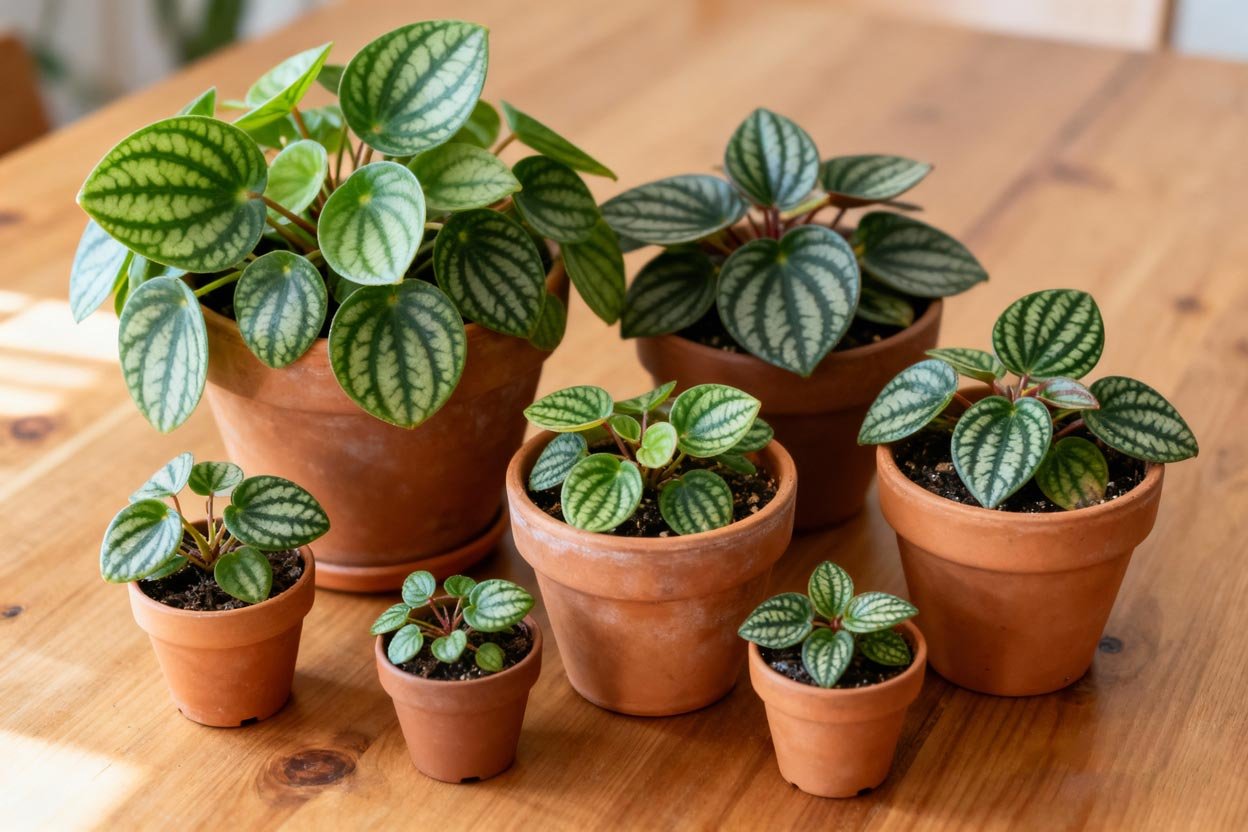
Watermelon Peperomia thrives in bright, indirect light. Think of the dappled light it would get under tree canopies in its native rainforest. In your home, place it near a window with filtered sunlight or bright ambient light.
For example, 3–5 feet away from a south or west-facing window (where it won’t get midday sunbeams), or right by an east-facing window.
Avoid strong direct sun, especially in the afternoon – too much can scorch the fleshy leaves or cause the signature stripes to fade. If you notice pale patches or brown tips on the leaves, it may be getting too much sun.
On the other hand, low light (far from any window or in a dim room) can make the plant grow leggy with smaller, pale leaves as it stretches for light. You might see the petioles elongate and the lovely watermelon pattern become less distinct in very low light. If that happens, move your plant to a brighter spot.
A good rule: if you can comfortably read a book in the spot during daytime, it’s probably bright enough for a Watermelon Peperomia.
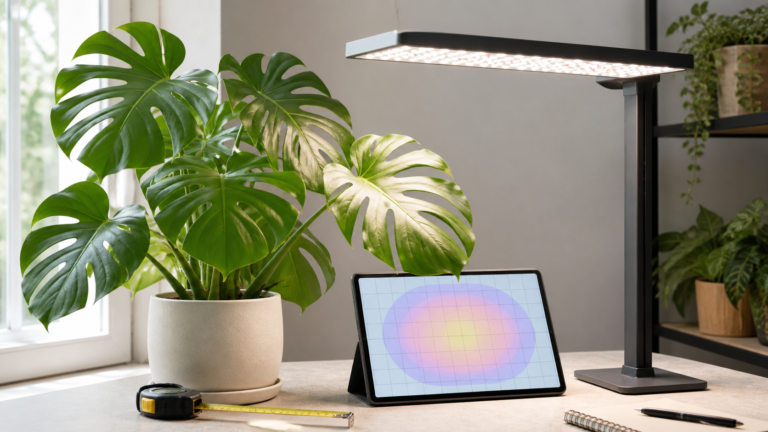
If the plant starts leaning toward one side (toward the light source), remember to rotate the pot every week or two for even growth. During winter months when daylight is weaker, you may want to move your peperomia closer to a window or supplement with a gentle grow light to maintain its leaf color.
This plant also does fine under typical office fluorescent lights, making it a great desk companion. Just avoid placing it in a completely dark corner – some light each day is needed to keep those leaves vibrant.
Watering
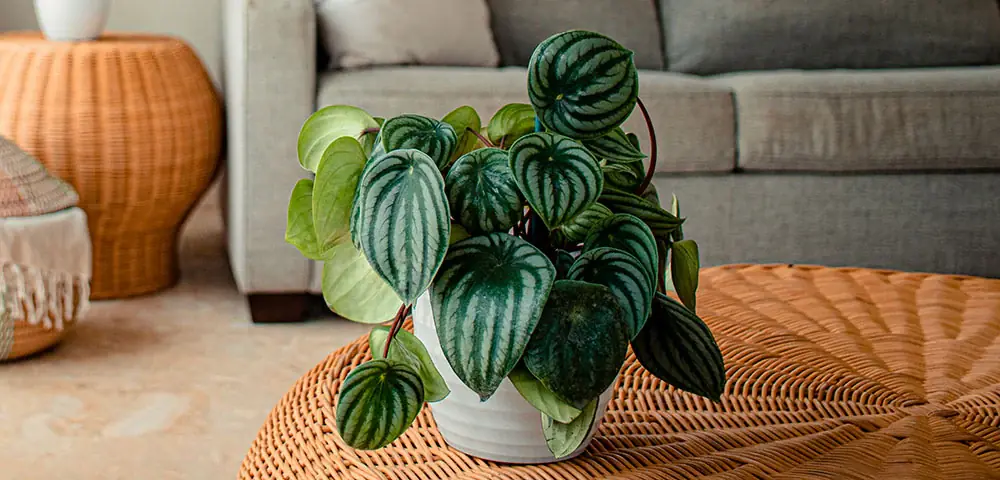
“How often should I water it?” is one of the most common questions – and there’s no one-size-fits-all schedule. The key is to water based on soil dryness, not the calendar. Always check the soil before watering your Watermelon Peperomia.
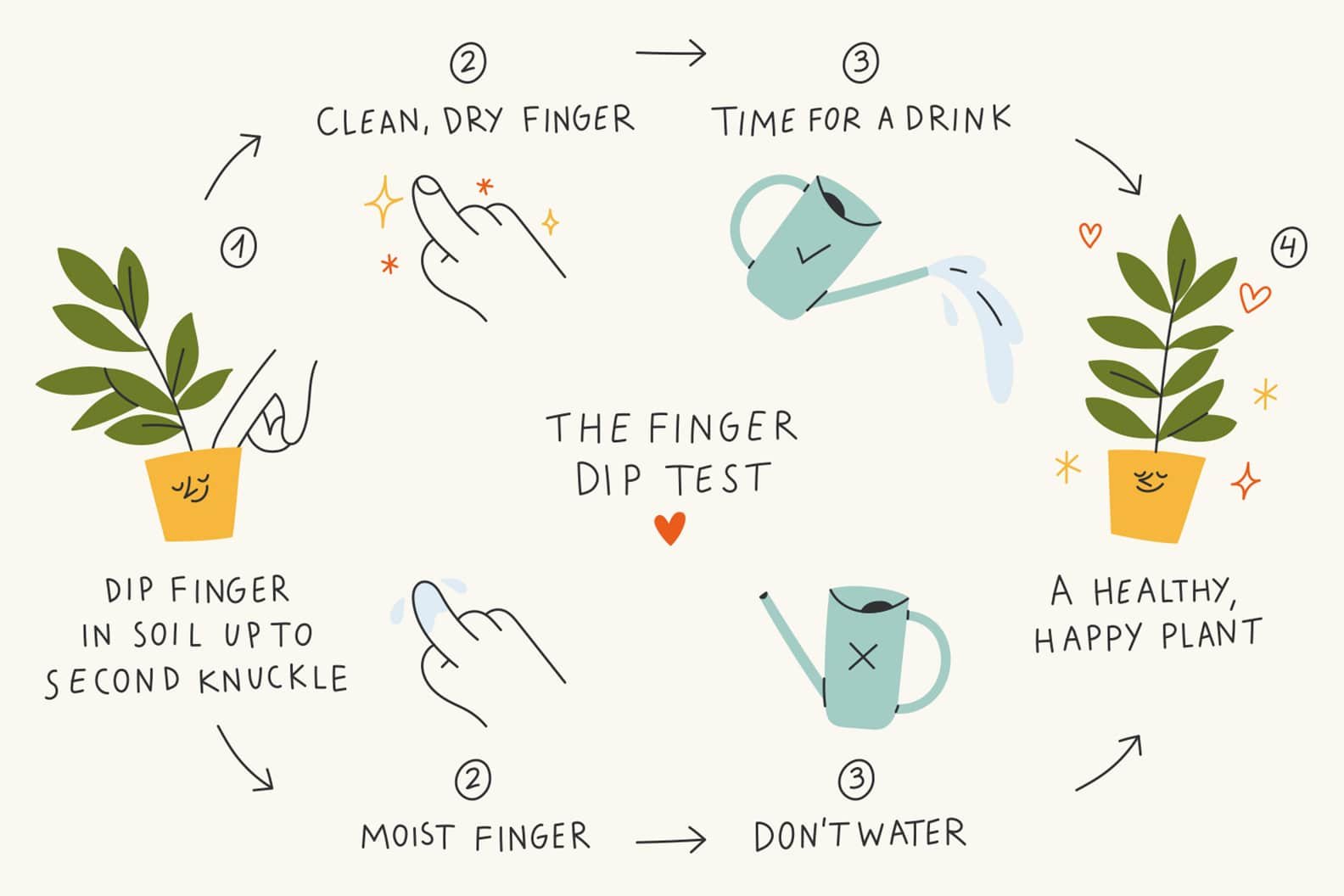
I use the finger dip test: stick your finger about 1–2 inches into the potting mix. If it feels dry at that depth, it’s time to water. If it’s still a bit damp, wait a few more days and check again.
When you do water, water thoroughly until you see excess water drain out of the bottom holes, then empty the drip tray. This ensures the roots get a good drink but aren’t sitting in water.
Never let the plant stand in water for long – peperomias hate “wet feet” and can develop root rot quickly. Using a well-draining soil and a pot with drainage (like an Indoor Planter from Tropicalplantkit’s collection, which has built-in drainage holes) will help prevent waterlogging.
Watermelon Peperomia is semi-succulent: its thick leaves and stems store water, meaning it can tolerate a bit of dryness but is prone to rot if kept too wet. In general, it’s better to err on the side of underwatering rather than overwatering.
If you forget to water and the plant gets too dry, you’ll see the leaves and stems droop noticeably – a sign it’s very thirsty. Conversely, overwatering can cause drooping too (the plant may collapse as roots suffocate), which can be confusing. The difference is in the soil: drooping + bone-dry soil = needs water; drooping + wet soil = too much water!
To give a rough idea: in a warm environment, you might water roughly once a week in summer, and every 2 weeks in winter. But this can vary widely. For instance, in my dry, warm climate, I water my peperomia about every 5–6 days in summer and every 7–12 days in winter. In a cooler or more humid home, you’ll water less often.
Always adjust to your conditions. Keep an eye on the plant’s signals: wilting or soft, wrinkled leaves mean it’s been dry too long (the plant should perk up after a good watering), while yellowing or mushy stems can indicate overwatering and root rot.
Pro Tip: Water around the base of the plant, directly onto the soil, rather than over the leaves. This avoids getting the leaves continually wet which can sometimes lead to spots or rot on the foliage. Also consider bottom watering occasionally – setting the pot in a tray of water and letting it soak up moisture from the drainage holes – as this can encourage roots to grow deeper. Just don’t forget to remove it from the water after about 10–15 minutes.
Temperature
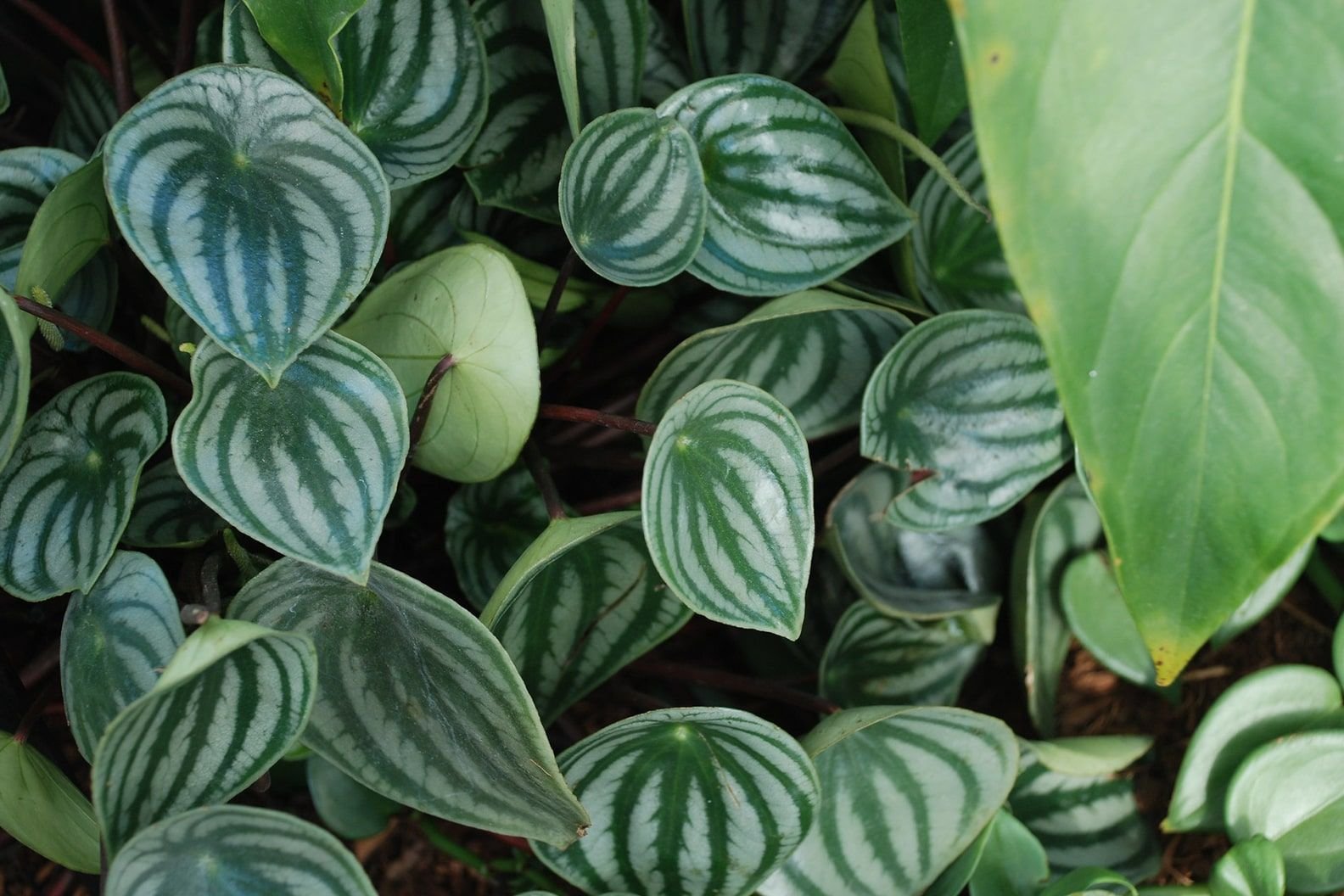
As a tropical houseplant, Watermelon Peperomia prefers the same range of temperatures that humans do. Room temperature of 65–80 °F (18–27 °C) is perfect. In fact, a simple guideline is: if you’re comfortable in your home, your peperomia will be comfortable too. Normal indoor temperatures year-round suit it fine, as long as it doesn’t get too cold.
Avoid cold drafts or extreme temperature swings. Sudden chills can cause leaf drop or blackened areas on the foliage. In particular, keep the plant away from winter windowpanes that get very cold, and don’t place it right next to exterior doors that open to freezing air. Also avoid placing it directly in the path of air-conditioning vents or heater blasts. Consistent warmth is key.
Watermelon Peperomia does not tolerate frost or near-freezing temps. Try not to let it experience anything below about 55 °F (13 °C). Prolonged exposure below this can cause damage (a condition known as chilling injury in tropical plants). If you put your peperomia outside in summer for extra light, remember to bring it back inside well before the nights get chilly.
On the higher end, this plant can handle short periods of heat as long as it’s not combined with intense sun and dryness. If your home gets above 85 °F (29 °C), you might need to water a bit more often and ensure adequate humidity so the plant doesn’t dry out too fast. Generally, though, the range of 65–80 °F is its sweet spot for steady growth.
Humidity
In the wild, peperomias grow in humid jungle environments, so they do appreciate a bit of humidity. Moderate to high humidity (around 50–60% or more) is ideal for Watermelon Peperomia, helping it keep those leaves plump and vibrant.
That said, one great thing about this plant is its adaptability to typical home humidity. It will usually do just fine in standard indoor conditions (which in many homes is around 30–50% humidity).
If your home is on the dry side, especially in winter with the heater on, you can give your Watermelon Peperomia a boost with a few simple tricks:
- Occasional misting: Lightly mist the leaves with water a few times a week. This provides a brief humidity bump. (Avoid excessive misting, as constantly wet leaves can invite fungus – a gentle mist now and then is plenty.)
- Pebble tray: Fill a shallow tray with pebbles and water, and set the pot on top (make sure the pot’s base isn’t submerged). As the water evaporates, it raises humidity around the plant.
- Group plants together: Houseplants release moisture into the air through transpiration. Clustering your tropical plants together can create a slightly more humid micro-climate around them.
- Humidifier: If you’re really concerned about very low humidity (below 30%), using a small room humidifier nearby is the most effective solution to maintain consistent moisture in the air.
Despite loving humidity, Watermelon Peperomia can surprise you with its tolerance. In fact, some growers have reported their peperomias doing fine in extremely dry air (even ~11% humidity) with a bit of extra care.
In my own experience at Tropicalplantkit, our showroom peperomias handle winter dryness by simply getting an occasional kitchen-sink “shower.” About once a month, I gently rinse the foliage with lukewarm water in the sink; this not only cleans the leaves of dust but also gives the plant a nice humidity boost.
I also take advantage of summer rain: setting the peperomia outdoors during a warm rainshower for an hour can perk it up (just avoid putting it outside if the sun is blazing, or if it’s chilly out).
One thing to note: because Watermelon Peperomia leaves are somewhat succulent, prolonged high humidity without airflow could encourage fungal issues (like botrytis or mildew on leaves).
So if you do increase humidity, also ensure the plant has some air circulation and that the leaves dry off after misting/showering. Generally, though, this plant isn’t too fussy – typical home humidity levels plus the occasional mist or wipe-down will keep it perfectly happy.
Soil and Repotting
Soil
Give your Watermelon Peperomia a loose, well-draining soil mix. This is super important because the roots are shallow and delicate, and they’ll rot in heavy, waterlogged soil.
In nature, many peperomias are epiphytes or grow in very chunky organic matter on the forest floor, so they like lots of air around their roots. A high-quality indoor potting mix works as a base, but I recommend amending it for extra drainage.
A tried-and-true recipe is a 50:50 blend of all-purpose houseplant potting soil and cactus/succulent mix. The cactus mix usually contains coarse materials like sand, perlite, or small bark chips which prevent the soil from compacting and improve aeration.
You can also mix in a handful of additional perlite, pumice, or orchid bark if you have it – the goal is a chunky texture. The soil should hold some moisture (since peperomia roots do need to drink) but never stay soggy for long. When you water, the excess should drain out freely. If you see water puddling on top for minutes, the mix is too dense.
Watermelon Peperomia also enjoys organic matter in the soil – in my mix I often add a scoop of compost or worm castings for gentle nutrition and soil health. Just ensure any organic component is well-decomposed and not in huge clumps.
The final mix should be rich but light, something that will dry out in a week or so after watering. This helps replicate that “moist but breathable” environment of leaf litter they naturally grow in.
Repotting
One piece of good news – you won’t need to repot frequently. Watermelon Peperomia has a relatively small root system and actually likes being a bit root-bound. It’s a slow grower and can stay in the same pot for quite a while.
I usually repot mine only every 2–3 years, or when I see signs it needs it (roots poking out of drainage holes, or the soil has broken down and holds water too long). Some hobbyists even report repotting only every 5 years or so, and that’s fine if the plant is healthy.
When you do repot, timing and technique help:
- When: The best time is spring or early summer, at the start of the growing season. Avoid repotting in winter when the plant is resting.
- Pot size: Only go one size up from the current pot. For example, if it’s in a 4-inch pot, move to a 6-inch pot at most. Resist the urge to over-pot! Too large a pot with excess soil can hold too much water and cause root issues. A slightly snug pot is perfectly fine for this plant.
- Pot type: Ensure the new container has drainage holes (repeat mantra: no standing water!). Many Indoor Planters from Tropicalplantkit are designed with both form and function in mind – they have proper drainage and come in sizes ideal for peperomias. Choosing a pot from our collection can give your Watermelon Peperomia a healthy home and elevate your décor at the same time.
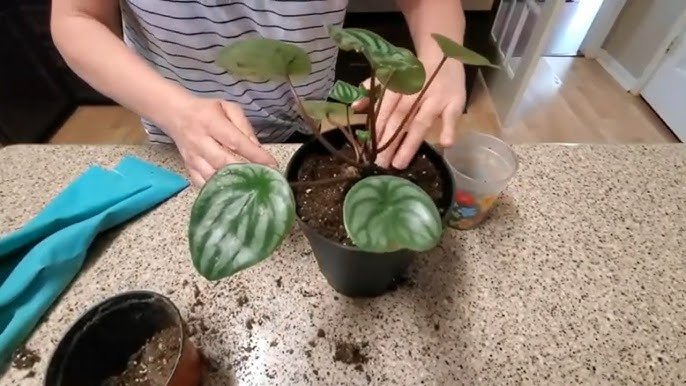
- How: Be gentle with the roots – they are fragile. Tip the plant out and loosen the root ball lightly with your fingers. If it’s root-bound (circling roots), you can tease a few apart. Place it in the new pot with fresh mix around it. Plant it at the same depth as before; don’t bury the stems too deep. After repotting, water lightly to settle the soil, but don’t soak it – the disturbed roots won’t like sitting in mud. They’ll grow into the new mix over a few weeks.
After repotting, the plant might droop slightly or stall growth briefly (a mild transplant shock). Keep it in a stable environment (same lighting) and resume normal care.
It should adjust and start sending out new roots and leaves. With a good soil mix and a properly sized planter, your Watermelon Peperomia will reward you with healthy growth and vibrant foliage.
Fertilizer and Feeding
Watermelon Peperomia isn’t a heavy feeder – in fact, it can suffer if you give it too much fertilizer. In rich natural soils they get steady but light nutrients from decomposing matter. So we’ll mimic that gentle feeding in cultivation. Here’s how to fertilize for best results:
- When to fertilize: Only during the active growing season, typically spring through early fall. I start feeding in late March and stop by mid-October. There’s no need to fertilize in late fall or winter, as the plant is growing very slowly and extra nutrients won’t be used (and could accumulate in the soil).
- How often: Moderate frequency at low strength is a safe approach. For example, use a balanced, general houseplant fertilizer diluted to half the recommended strength, about once a month in spring and summer. Some growers feed as often as every 2 weeks at quarter-strength, which can work too. Just avoid high concentrations. When in doubt, under-fertilize – this plant can subsist on minimal feeding.
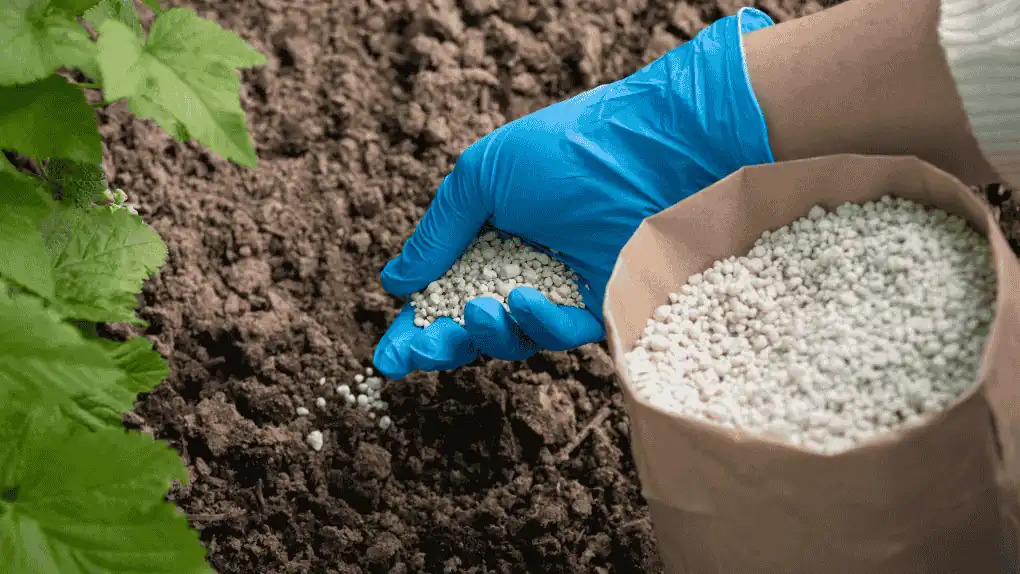
- Type of fertilizer: Any balanced (roughly equal N-P-K ratio, like 10-10-10 or 20-20-20) houseplant fertilizer will do, as long as it’s diluted. You can also use an organic fertilizer like fish emulsion or seaweed extract; these tend to be gentler and add micronutrients. I personally like to add a sprinkle of worm compost to the top of the soil each spring (about a 1/4 inch layer) – this slow-releases nutrients and improves soil texture. Then I supplement with a liquid fertilizer (like an all-purpose or a kelp-based feed) roughly 3–4 times over the summer. Tropicalplantkit offers organic plant food options that would work great for this purpose.
- Signs of under- vs over-feeding: If your peperomia hasn’t been fed in over a year and new leaves are coming in much smaller than old ones, or growth is very stunted despite good light, it may benefit from a bit of feeding. However, be cautious: over-fertilizing is more dangerous. Excess fertilizer salts can build up and scorch the roots, leading to brown leaf edges or patches and a sad-looking plant. If you ever notice a whitish crust on the soil or pot, that’s salt buildup – flush the soil with plenty of water and cut back on fertilizer. When using chemical fertilizers, it’s wise to flush the pot with clear water every few months to leach out any excess salts.
A few extra tips: Never fertilize a plant that is very dry (water it first, or you risk burning the dry roots) and never feed a stressed or sick plant. Fertilizer is not medicine – it won’t cure a plant that’s ailing from improper care, and might actually harm it. Also, avoid feeding in extreme heat. Overall, less is more with fertilizing Watermelon Peperomia. A light hand will keep the plant growing steadily and maintain that lush green-and-silver foliage without risk of tip burn or root damage.
Pruning and Leaf Care
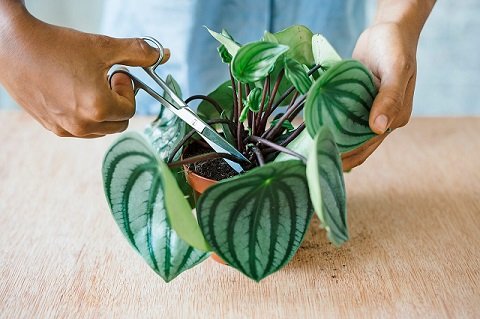
One of the perks of Watermelon Peperomia is that it stays small and neat, so it requires minimal pruning. You won’t be breaking out the pruning shears very often for this little guy. However, a bit of occasional grooming will keep it looking its best:
- Removing old leaves: As the plant grows, older leaves (especially the lowest ones) may eventually yellow or lose vigor. Simply snip off any yellowing or dead leaves at the base with clean scissors or pruning snips. This redirects the plant’s energy to new growth and prevents any decaying material from attracting pests or fungus.
- Shape control: Generally, Watermelon Peperomia maintains a compact, mounding shape on its own. It doesn’t vine or trail like some other peperomias. If you ever find a stem looking leggy or the plant slightly lop-sided (maybe it stretched a bit toward light), you can pinch back the stem tip to encourage branching. Pinch/prune just above a leaf node. This is rarely needed, but it’s an option if you want a fuller look. Typically, though, growth is slow enough that the plant stays pretty uniform.
- Flower spikes: This peperomia can produce thin flower spikes (they look like green or pale wand-like inflorescences). They’re not particularly showy – some people find them interesting, others find them a bit messy. They don’t harm the plant, so it’s up to you. If you like, you can trim off the flower spikes once they start to fade or dry up. They usually come off with a gentle tug or a quick snip. Removing them can direct the plant’s energy back to foliage growth, but leaving them is also fine if you enjoy them. (Either way, don’t expect big colorful blooms; the beauty of this plant is really its foliage.)
- Cleaning leaves: Those broad, waxy leaves can accumulate dust over time, which can dull their shine and slightly hinder photosynthesis. Every few weeks, dust off the leaves. You can use a soft cloth dampened with water to gently wipe each leaf’s surface. Support the leaf from beneath to avoid cracking it (the petioles are somewhat delicate where they attach to the stem). This not only makes the plant look more vibrant, but also helps it “breathe.” As mentioned earlier, I sometimes give the plant a quick lukewarm shower in the sink, which is an easy way to wash all leaves at once – just be sure to let it drain well afterward. Avoid using commercial leaf-shine products; they’re not necessary and can clog the leaf pores (stomata). A simple wipe with water will do.
- Handling with care: Be gentle when moving or handling your Watermelon Peperomia. The leaf stems (petioles) are fairly fragile and can snap or pop out if the plant is knocked over or if you handle it roughly. If a leaf breaks off, it won’t grow back in that exact spot (though you might try to propagate the broken leaf!). So treat your plant like the little living artwork it is – with care and respect.
Thankfully, beyond that, there’s not much pruning needed. No heavy trimming or shaping is required as with many other houseplants. This makes Watermelon Peperomia an easy-care houseplant in terms of maintenance. Just keep it clean and occasionally tidy, and it will remain a gorgeous display of miniature “watermelon” leaves.
Propagation Tips
If you’re loving your Watermelon Peperomia and want more of them (or have a friend eyeing yours for a cutting!), you’re in luck – they are relatively easy to propagate. There are a few methods you can try, and we’ll outline the most common ones:
1. Stem Cuttings (Best Method):
This is often the most successful way to propagate Watermelon Peperomia.
- Select a healthy stem that has at least one or two leaves on it. The ideal cutting is a growing tip or a stem with a couple of leaves attached.
- Cut the stem just below a node (a node is where leaves attach, and where new roots will sprout). A cutting of about 2–3 inches long is fine.
- Rooting medium: You can root the cutting in water or soil. If in water, place the stem (no leaves underwater) in a small jar of clean water. If in soil, use a very light mix (like half peat/coir, half perlite) to stick the stem in.
- Humidity & waiting: For soil propagation, it helps to cover the cutting with a clear plastic bag or put it in a propagation box to maintain humidity. For water, just keep an eye that the water doesn’t evaporate or get scummy (refresh it every week or so). Place the cutting in bright, indirect light.
- Roots appear: In a few weeks, you should see roots forming. In water, you’ll notice white roots emerging. In soil, you’ll know if gentle tugging meets resistance or if you see new leaf growth (you can also carefully unpot to check after a month).
- Potting up: Once roots are ~1–2 inches long (or a nice little root cluster has formed), transplant your baby plant into a small pot with the regular peperomia soil mix. Keep it slightly more moist than a mature plant for the first couple of weeks to help it establish.
2. Leaf Cuttings:
This method is fascinating, though a bit slower, and doesn’t always yield a high success rate – but it’s fun to try if you have a spare healthy leaf.
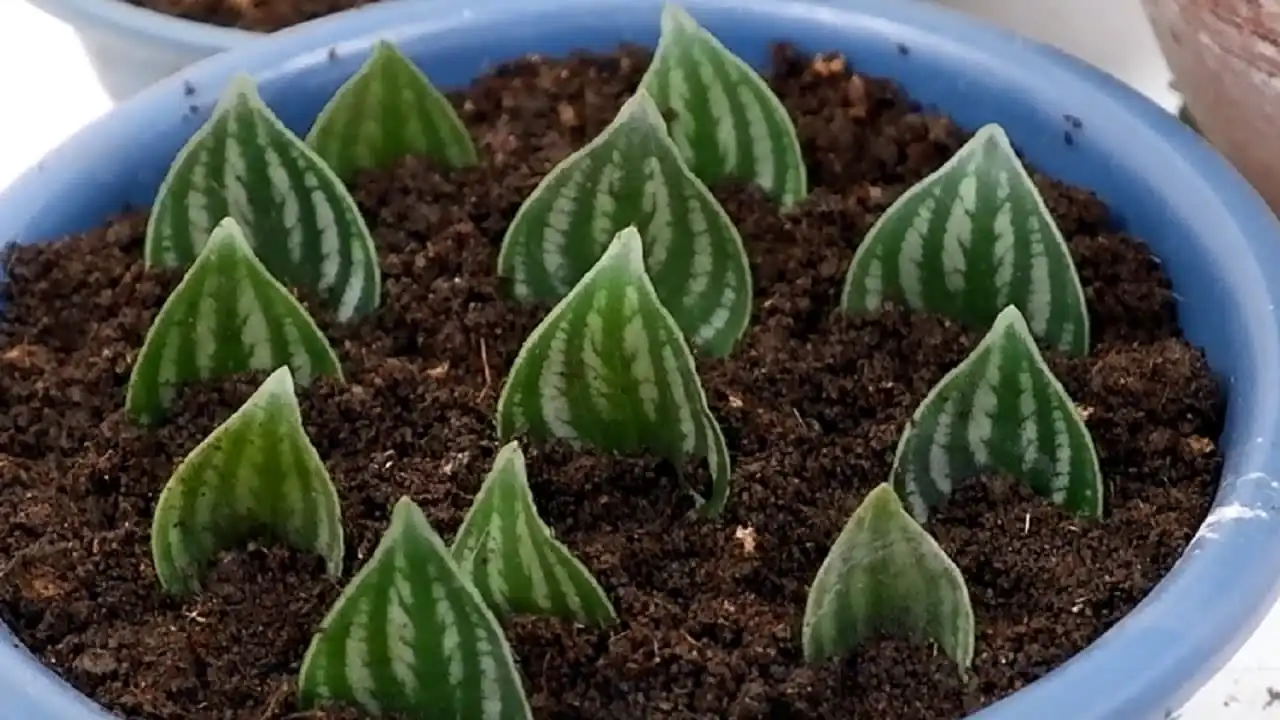
- Whole-leaf method: Cut off a healthy leaf with its petiole (the little stem attaching it to the main stem). Insert that petiole into moist propagating mix. Keep humidity high (cover with a dome or bag). After several weeks, tiny plantlets can emerge at the base of the petiole while the original leaf remains.
- Leaf section method: Some people even cut a leaf in half (horizontally across the midrib) and press the cut edge into soil. The idea is that new shoots can form from the cut veins. This definitely works for some peperomia species. Results can vary with Watermelon Peperomia, but it’s worth a shot if you’re curious. You might get small plantlets developing at the cut edges after a couple of months.
With leaf propagation, patience is key – it can take a few months to see a new plant. And not every leaf will take. That’s why it’s good to do multiple cuttings at once to increase your odds. Don’t be discouraged if a few fail.
3. Division:
If you have a mature, bushy Watermelon Peperomia with multiple clumps, you can sometimes divide it during repotting.
- Gently remove the plant from its pot and see if it naturally separates into two or more sections of stems and roots.
- If so, tease apart a section, making sure each division has some roots attached.
- Pot each division separately. This is low-stress for the plant if done carefully, and you get an instantly larger new plant. However, not all Watermelon Peperomias will have offshoots or pups to divide – often they grow from a single central root system.
Propagation tips: Keep new cuttings warm (around 70–75 °F if possible) and humid. Avoid direct sun on cuttings; they’ll dehydrate quickly without roots. Also, be aware that not every attempt will succeed – that’s normal. For example, leaf cuttings might rot before sprouting, or some stem cuttings just won’t take. Try a few methods to see what works for you. Once you see new leaves forming, you know you have a successful new plant.
Propagating is rewarding – not only do you get free new plants (great for sharing or filling out your collection), but you also learn more about how the plant grows. Watermelon Peperomia cuttings, with their little baby leaves, are absolutely adorable to watch develop. So give it a try when you have some healthy material to spare!
Common Problems and Solutions
Even with good care, you might encounter some common issues with Watermelon Peperomia. Don’t worry – most are easily fixed once you know the cause. Here’s a quick troubleshooting guide:
- Drooping or wilting leaves: If you see the whole plant looking limp, check the soil moisture. Dry soil? Then your peperomia is thirsty – give it a thorough watering, and it should perk up within a day. Wet soil? Then it’s likely overwatered and the roots might be struggling. Let the soil dry out; if it’s very soggy, consider gently removing the plant and letting excess water air off, or even replacing the soil if root rot is advanced. Remember, drooping can mean too dry or too wet, so always feel the soil to know which.
- Yellow leaves: A lower leaf turning yellow once in a while isn’t alarming – it can be natural aging. But if you see multiple yellow leaves, especially if they’re also soft or falling off, it’s often due to overwatering/root rot. The plant isn’t able to take up nutrients properly from compromised roots. Trim off the yellow leaves and check the roots if possible. Let it dry out and adjust your watering routine. Underwatering can also cause some yellowing (those leaves may turn crispy). If yellowing comes with dry soil and brittle leaves, water more frequently.
- Leaves curling inward: When leaves start to cup or curl, it’s usually a sign of stress. Underwatering and low humidity are common culprits – the plant is trying to conserve moisture. If the soil is bone dry, give it a drink and the leaves may unfurl. If humidity is very low, try misting or increasing humidity around the plant. Also, excess light or heat can cause leaf curling at edges; if it’s in a very bright spot with hot sun, move it to gentler light.
- Fading or bleached leaves: If the vibrant pattern is looking washed out or leaves have a bleached appearance, your peperomia might be getting too much direct sun. Move it a bit further from the window or provide a sheer curtain for diffusion. The stripes are most vivid in ideal light – bright but not scorching.
- Small, thin new leaves or “leggy” stems: This indicates insufficient light or possibly lack of nutrients. If your new growth is coming in tiny and spread out, try moving the plant to a brighter spot first (poor light is the more likely cause than poor nutrition). The plant may also stretch (long petioles) when craving light. After adjusting light, you can also ensure it’s been fed in the last few months, but avoid overfeeding in response – light is usually the answer to leggy growth.
- Brown spots or edges: Brown, crispy edges typically mean underwatering or very low humidity – the tips dried out. Brown or black spots in the middle of leaves could be a fungal disease (often from prolonged moisture on leaves combined with poor airflow). Remove any affected leaves, improve air circulation, and avoid getting water on foliage in the evening. Brown edges can also result from fertilizer burn if over-fertilized (salty buildup). In that case, flush the soil and cut back on feeding.
By paying attention to these signals, you can correct the issue and your Watermelon Peperomia will bounce back. This plant is quite forgiving once the problem is addressed.
Pests and Diseases
Watermelon Peperomia is thankfully not particularly prone to pests – another reason it’s a great indoor plant. The thick leaves and generally resilient nature mean you rarely get infestations, especially if the plant is healthy. However, no houseplant is completely immune. Here are a couple things to watch for:
- Mealybugs: These are probably the most common pest on peperomias. They appear as white, cottony fuzz usually in the nooks and crannies (leaf joints, undersides). If you spot them, act quickly. Isolate the plant (to prevent spread) and dab the mealybugs with a cotton swab dipped in rubbing alcohol – this dissolves their protective coating and kills them. For a larger infestation, you might spray the plant with diluted insecticidal soap or neem oil. Repeat treatment weekly until they’re gone.
- Spider Mites: Tiny reddish or pale mites that create fine webbing, usually under leaves. They thrive in very dry, warm conditions. Leaves may get speckled or stippled from their feeding. To combat mites, first give the plant a good rinse (spray down with water, even in the shower or sink to dislodge them). Then use a neem oil or insecticidal soap spray on all leaf surfaces. Increasing humidity also deters spider mites.
- Fungus Gnats: These are those little black flies that hover around the soil. They are more of an annoyance than a direct harm to peperomia, but they indicate the soil is staying too moist (they breed in moist soil). If you see them, let the soil dry more between waterings. You can trap the adults with yellow sticky traps and use a BTi product (a natural bacteria) in the water to kill larvae. Improving drainage and watering habits will solve gnat issues.
- Scale or Aphids: Less common on peperomia, but scale (brown oval sap-suckers that stick to stems) or aphids (tiny green/black bugs on new growth) can occasionally appear. Similar treatments apply: insecticidal soap or neem oil, manually remove what you can, and keep the plant separate until clear.
The best defense is a healthy plant. Pests often target plants that are stressed, overwatered, or suffering. So keeping your peperomia in good shape with proper care is the first step. When watering or pruning, give it a quick once-over: check under leaves, along stems, and at the soil surface for any signs of bugs. Early detection makes elimination much easier.
Diseases are uncommon, but root rot can occur if overwatered (as discussed). Also, crown rot or stem rot can happen if the plant is kept too wet at the base – you’ll see a mushy black or brown rot at the stem base. This is unfortunately hard to reverse; you’d need to take healthy cuttings to propagate and start over, and discard the rotted portion. Prevent it by not letting water sit around the crown of the plant and by using well-aerated soil.
A bit of preventative care: When you bring home any new plant (or if you propagate new cuttings), keep them quarantined away from your other houseplants for a couple weeks to ensure they’re not harboring pests. Wiping the leaves periodically, as mentioned in leaf care, not only keeps them clean but lets you notice any pest evidence early (like sticky residue from aphids or dots from mites).
In summary, pests and diseases are rarely a major issue for Watermelon Peperomia. With attentive care and prompt action at the first sign of trouble, you can easily maintain a pest-free plant.
Inclusion
With the tips and information in this guide, you’re well-equipped to care for a Watermelon Peperomia and enjoy its delightful presence in your home. It’s a plant that offers a lot of beauty for relatively little effort. Keep an eye on its light and water needs, give it some love (and maybe the occasional chat – we plant folks do that!), and it will reward you by staying healthy year-round.
Tropicalplantkit is here to support you in your plant parenthood journey – from curated indoor planters that ensure proper drainage, to quality soil mixes and accessories that can make all the difference in your plant’s health. We hope this comprehensive guide helps you feel confident about growing your Watermelon Peperomia. Happy planting!
References
- Wolverton, B. C., Douglas, W. L., & Bounds, K. (1989). Interior landscape plants for indoor air pollution abatement (NASA TM-101766). National Aeronautics and Space Administration.
- Wolverton, B. C., & Wolverton, J. D. (1993). Plants and soil microorganisms: Removal of formaldehyde, xylene, and ammonia from the indoor environment. Journal of the Mississippi Academy of Sciences, 38(2), 11–15.
- Kim, K. J., Kil, M., Song, J.-S., Yoo, E. H., Son, K.-C., & Kays, S. J. (2008). Efficiency of volatile formaldehyde removal by indoor plants: Contribution of aerial plant parts versus the root zone. HortScience.
- Montaluisa-Mantilla, M. S., García-Encina, P. A., Lebrero, R., & Muñoz, R. (2023). Botanical filters for the abatement of indoor air pollutants. Chemosphere, 345, 140483.
- Cummings, B. E., & Waring, M. S. (2020). Potted plants do not improve indoor air quality: A review and analysis of reported VOC removal efficiencies. Journal of Exposure Science & Environmental Epidemiology, 30(2), 253–261.
- Dela Cruz, M., Christensen, J. H., Thomsen, J. D., & Müller, R. (2014). Can ornamental potted plants remove volatile organic compounds from indoor air? A review. Environmental Science and Pollution Research, 21(24), 13909–13928.
- Clemson Cooperative Extension. (2024, June 21). Indoor plants – watering (HGIC 1459). Clemson University Home & Garden Information Center.
- American Society for the Prevention of Cruelty to Animals. (2025). Watermelon Peperomia. ASPCA Toxic and Non-Toxic Plants List.
- Wikipedia contributors. (2024). Peperomia argyreia. In Wikipedia, The Free Encyclopedia.
FAQ
Is Watermelon Peperomia a good beginner houseplant?
Yes. Watermelon Peperomia is an easy-care tropical houseplant as long as you provide bright indirect light, a well-draining soil mix, and avoid overwatering. Its compact size and relatively slow growth make it a great choice for small spaces, desks, and indoor plant beginners.
How much light does Watermelon Peperomia need indoors?
Aim for bright, indirect light. A spot near an east or north-facing window, or a few feet back from a bright south or west window, works well. Too little light leads to leggy growth and faded stripes, while harsh direct sun can cause leaf burn and washed-out variegation.
How often should I water my Watermelon Peperomia?
There’s no fixed schedule. Water when the top 1–2 inches of soil feel dry. In many homes that means about once a week in summer and every 1–2 weeks in winter, but it depends on light, temperature, pot size, and soil. Always check the soil instead of the calendar to avoid root rot.
Why are the leaves on my Watermelon Peperomia dro3oping or soft?
Drooping, soft leaves can indicate underwatering or overwatering.
- If the soil is very dry, the plant is thirsty—water thoroughly and it should perk up within a day.
- If the soil is wet or soggy, the droop may be from waterlogged roots. Let the mix dry out, improve drainage, and adjust your watering routine.
What soil and planter are best for Watermelon Peperomia?
Use a well-draining, airy mix—for example, half regular indoor potting soil and half cactus/succulent mix, plus extra perlite or orchid bark. Pair it with an Indoor Planter with drainage holes (such as Tropicalplantkit’s Indoor Planter) so excess water can escape and the roots stay healthy.
Does Watermelon Peperomia need high humidity?
It appreciates moderate to high humidity (around 50–60%), but it usually adapts well to normal home humidity. If your air is very dry, you can boost humidity with occasional misting, a pebble tray, grouping plants together, or a small humidifier. Brown, crispy edges and leaf curl can be signs the air is too dry.
Is Watermelon Peperomia pet safe?
Yes. Watermelon Peperomia (Peperomia argyreia) is non-toxic to cats and dogs, making it an excellent pet-safe houseplant for living rooms, bedrooms, and home offices where pets roam freely.
How do I propagate Watermelon Peperomia at home?
You can propagate it by stem cuttings, leaf cuttings, or division:
- Take a healthy stem with 1–2 leaves and root it in water or a light soil mix.
- Use whole leaves with petioles, or leaf sections pressed into moist mix, to grow new plantlets.
- When repotting a mature plant, gently divide clumps that have their own roots.
Keep cuttings in warm, bright, indirect light and evenly moist (not soggy) until new roots and leaves appear.
Why are my Watermelon Peperomia leaves turning yellow or losing their stripes?
Multiple yellow leaves usually point to overwatering and poor drainage. Check the roots and soil moisture, remove damaged leaves, and let the mix dry more between waterings. If the stripes are fading and the whole plant looks stretched, it’s likely low light—move it to a brighter spot and rotate the pot regularly for even growth.
What size does Watermelon Peperomia reach, and where should I place it?
Most Watermelon Peperomia stay around 6–12 inches (15–30 cm) tall and wide, so they’re ideal as a small indoor plant for desks, shelves, and bedside tables. Place it where you can easily check the soil, enjoy the foliage up close, and where it receives plenty of bright but indirect light.