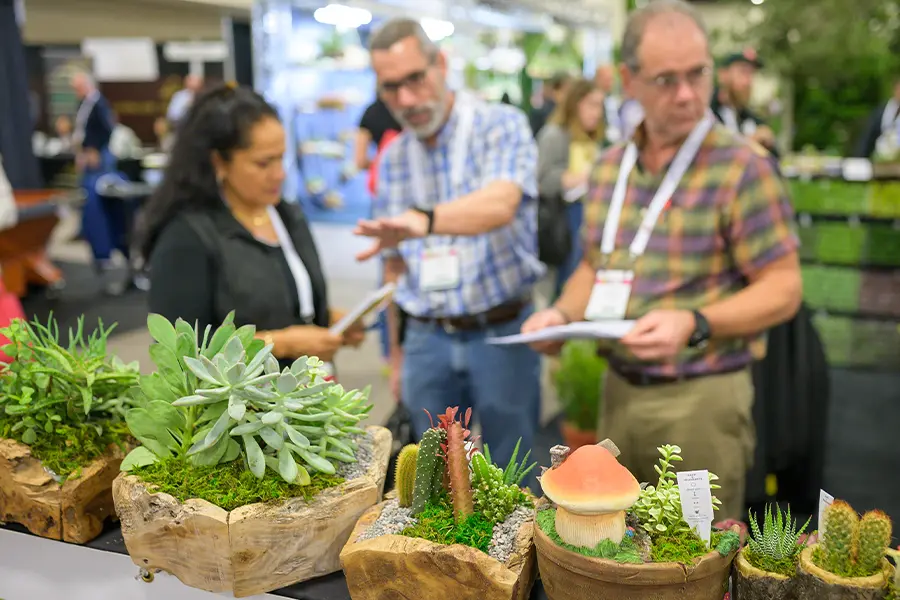
Missing new varieties, packaging ideas, and supplier contacts can stall a season’s planning. The foliage market moves fast. TPIE offers a concentrated way to compare products, meet decision-makers, and leave with actionable leads.
TPIE 2026 is worth attending for plant and floral trade professionals who need to source foliage and tropicals, evaluate new products on a show floor, and schedule vendor or buyer meetings in one trip. Expect structured show hours, education sessions, and an industry-focused environment rather than a consumer plant fair.
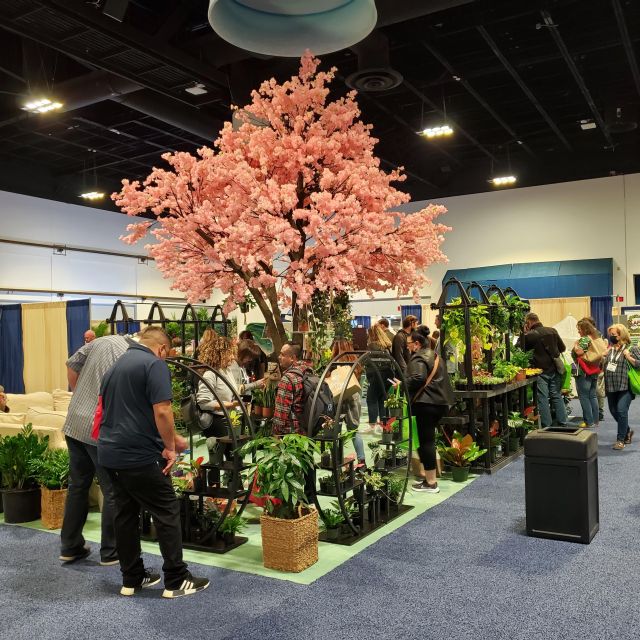
Continue for the practical details that matter most: exact show hours, address, registration path, travel logistics, and a plan to turn three days into real outcomes.
Quick Facts about Tropical Plant International Expo 2026
| Item | Details |
|---|---|
| Event | Tropical Plant International Expo (TPIE) |
| Dates (2026) | January 21–23, 2026 |
| Venue | Broward County Convention Center |
| City / State | Fort Lauderdale, Florida |
| Address | 1950 Eisenhower Blvd, Fort Lauderdale, FL 33316 |
| Show floor hours | Wed (Jan 21) 10:00am–5:00pm • Thu (Jan 22) 9:00am–5:00pm • Fri (Jan 23) 9:00am–2:00pm |
| Registration / badges | Official registration is linked from the TPIE site; badge processing is handled through Prereg |
| Badge price | Tradeshow badges listed as $30 each until January 6, 2026; confirm current pricing after that deadline on the official channel before visiting |
| Nearest airport | Fort Lauderdale–Hollywood International Airport (FLL) |
| Best fit for | Foliage, floral, and tropical plant professionals sourcing plants, hardgoods, packaging, and services |
Core event information
Dates, hours, and the “shape” of the show
TPIE 2026 runs January 21–23, 2026. The show floor is scheduled for three days with a shorter final day (ending early afternoon). That matters for flight planning: leaving Friday evening is usually realistic if meetings finish before the 2:00pm close, but a buffer is still useful for packing samples, checking freight options, and completing final booth walk-throughs.
The published show floor hours are:
- Wednesday, January 21: 10:00am–5:00pm
- Thursday, January 22: 9:00am–5:00pm
- Friday, January 23: 9:00am–2:00pm
Many attendees treat Wednesday morning as “badge + orientation”: arrive early, collect credentials, confirm where education sessions are staged, and identify the fastest routes between priority vendors and meeting points.
Location and address
TPIE 2026 is scheduled at the Broward County Convention Center in Fort Lauderdale, Florida, with the address published as:
- 1950 Eisenhower Blvd, Fort Lauderdale, FL 33316
Because the convention center sits near the waterfront, travel time can vary depending on bridges, cruise traffic, and local congestion. Build extra time into morning arrivals—especially if meetings are scheduled before the show floor opens.
Ticket price and booking channel
TPIE registration is routed through the official registration path linked from the event website, with badge processing hosted on Prereg.
- Tradeshow badges: Listed as $30 each until January 6, 2026.
- After January 6, pricing and refund rules may change. Confirm on the official channel before visiting if registration is being completed close to the show.
Practical tip: if travel is uncertain, review the cancellation/refund language on the registration platform before purchasing multiple badges for a team.
How to get there
Nearest airport: Fort Lauderdale–Hollywood International Airport (FLL) is the closest major airport, and local tourism information describes the convention center as a short drive from FLL.
Ground transport options to consider:
- Taxi / rideshare: Often the simplest for teams carrying materials (catalogues, samples, display elements).
- Driving: On-site and nearby parking may be available; confirm current parking locations and rates on the venue’s official site because construction and venue upgrades can affect access routes.
- Water Taxi: Local tourism guidance notes the convention center is accessible by Water Taxi, which can be useful for attendees staying along the Intracoastal Waterway (time-efficient in some traffic windows, less practical with large cargo).
What to prepare before arrival (trade show essentials)
- A tight target list: 15–25 “must visit” exhibitors, plus a separate list of “nice to compare” categories (planters, sleeves, media, labels, logistics, pest/IPM services).
- Meeting blocks: A trade show becomes productive when appointments are scheduled before the first morning.
- A capture system: A consistent method for logging booth number, product name, MOQ/lead time notes, and follow-up owner—paper notebook, spreadsheet, or CRM form.
- Shipping plan for samples: Many buyers collect items they cannot carry on a plane. Decide in advance: ship from vendors, consolidate at a hotel, or ship via a local service (confirm availability and rules).
Who should attend—and what will actually be on the floor?
High travel cost and limited time can make trade shows feel risky. Wandering without a plan wastes hours. A focused attendance strategy turns the show floor into structured sourcing and decision-making.
TPIE is designed for professionals in foliage, floral, and tropical plant categories. The show floor typically centres on plants, hardgoods, merchandising, and services—best approached with a defined buying or partnership brief rather than casual browsing.

Dive deeper: what “TPIE-ready” attendees do differently
TPIE positions itself as an industry marketplace, which changes the on-site experience compared with public-facing garden festivals. Most of the value comes from comparison and conversation: quality standards, availability windows, logistics, and “what is coming next” across plant and product categories.
A practical way to structure the floor is to sort objectives into three buckets:
| Bucket | Goal | What to collect |
|---|---|---|
| Sourcing | Identify suppliers and availability | Grower lists, availability calendars, minimum order guidance, lead times |
| Merchandising | Improve sell-through and presentation | Bench/fixture ideas, packaging formats, POS materials, care tags, display concepts |
| Operations | Reduce friction in production and fulfillment | Freight options, staging solutions, pest/IPM services, compliance/labeling support |
For buyers, the highest value conversations tend to happen at booths where product is visible and staff can speak to constraints: crop timing, substitution options, freight cadence, and packaging. For sellers, the best meetings are those where buyers arrive with SKU-level targets and a calendar.
On a practical level, the show floor can be treated like a decision funnel:
- First pass (60–90 minutes): Identify priority booths and confirm who can approve pricing or allocations.
- Second pass: Ask the questions that move decisions forward—availability window, freight cadence, shrink assumptions, and substitutions.
- Final pass (Day 2 or early Day 3): Close remaining gaps and confirm follow-up ownership.
This approach reduces the common failure mode: collecting brochures without actionable next steps.
How should registration, badges, and session timing be planned?
Arriving late or queueing for credentials can wipe out the most productive hours. Education sessions can also overlap with show-floor meetings. A timing plan prevents schedule collisions and missed priorities.
Registration is handled through the official registration path linked by the event site, with badge processing hosted on Prereg. Show floor hours are fixed; plan badge pickup and morning movement so the first show-floor hour is not lost.

Dive deeper: a practical timing plan for three show days
Use the published show floor hours as the backbone. The show opens later on Wednesday and starts earlier on Thursday and Friday, which is useful for structuring meetings:
Day 0 (arrival day):
- Arrive early enough to check into lodging, walk the route to the venue, and confirm ride options for morning peak hours.
- If multiple staff are attending, agree on roles: who covers plants, who covers hardgoods, who covers packaging/logistics.
Day 1 (Wednesday):
- Before 10:00am: Collect badges and orient—confirm hall layout, meeting points, and session rooms.
- 10:00am–12:30pm: Priority vendor meetings and “must-see” booths while energy is high.
- Afternoon: Category sweeps (planters, packaging, substrates/media, tools, services).
- End of day: Consolidate notes and assign follow-ups (do not postpone this to “after the show”).
Day 2 (Thursday):
- The earlier open (9:00am) makes Thursday the best day for deeper comparisons and second-round pricing or availability questions.
- Schedule longer vendor meetings on Thursday morning, with short “decision check-ins” late afternoon.
Day 3 (Friday):
- Because the show ends at 2:00pm, use Friday for:
- Closing any unresolved questions
- Confirming who will send samples and when
- Getting final photos/spec sheets for internal reporting
- Setting post-show call dates
Badge pricing note: tradeshow badges are listed as $30 each until January 6, 2026. If registration is being completed after that cutoff, confirm on the official channel before visiting rather than assuming the same price.
What on-site tactics help turn networking into measurable outcomes?
Business cards and quick chats are easy to collect. Outcomes are harder: quotes delivered, allocations confirmed, trials scheduled, and freight options defined. Without a system, leads decay quickly after the flight home.
The most effective on-site networking is structured. Set clear targets for meetings, log decision details immediately, and agree on next actions before leaving each booth.

Dive deeper: a simple workflow that improves follow-through
Three days is enough time to create a pipeline—if each interaction ends with a defined next step. A useful standard is the “3-point close” at every booth:
- What is the product decision? (trial request, price quote, availability check, MOQ confirmation)
- Who owns the follow-up? (name + email + role)
- When is the next contact? (specific date/time window)
For teams, a shared template prevents fragmented notes. Capture these fields consistently:
- Booth/company name
- Product/category
- Key constraints (availability window, lead time, minimums)
- Commercial notes (price bands or quote promised—no need for exact numbers if not shared)
- Logistics notes (shipping options, consolidation, claim process)
- Next action + owner + due date
On-site etiquette matters in trade contexts. The show floor is loud; complicated pricing discussions often work better in a quieter corner or at a scheduled time. If a booth is busy, book a follow-up slot instead of forcing a rushed conversation.
Finally, treat networking as two parallel tracks:
- Immediate sourcing track: vendors that match current season needs
- Strategic track: vendors for next season’s product direction (new lines, packaging changes, merchandising upgrades)
This prevents the common trade show outcome where immediate needs dominate and long-term opportunities are missed.
Event highlights
- International marketplace format: The event is positioned as a gathering point for foliage, floral, and tropical plant professionals, with a strong emphasis on meeting industry peers and comparing offerings in person.
- Structured show hours: Three-day floor access with an early finish on Friday supports disciplined planning and efficient wrap-up.
- Education and sessions: The published show schedule includes education programming and an opening session format; session availability and any add-on fees should be confirmed during registration.
- Road Show / tours: The official schedule lists a TPIE Road Show on January 20, 2026 (the day before the show opens), framed as a production-tour style add-on experience. Confirm capacity, eligibility, and any separate registration requirements on the official schedule.
- Best suited for: growers, brokers, wholesalers, retail and interiorscape buyers, and hardgoods suppliers working in tropical/foliage/floral categories.
- Who may not enjoy it: visitors expecting a consumer plant market or a casual festival atmosphere; the format is trade-forward and time-structured.
- Do not miss: a planned first-day orientation (badge + map + priority list), the highest-priority vendor meetings early in the show, and a final-day follow-up sweep before the Friday early close.
Watch a walkthrough before you go
For a quick sense of pacing, booth style, and the kind of product mix typically seen at TPIE, this official-channel video provides a concise overview:
Readers can also check our 2026 Event Calendar for a comprehensive overview of upcoming plant and garden events.
References
- Home – The Tropical Plant International Expo 2026 (TPIE)
- Show Floor Hours – The Tropical Plant International Expo 2026 (TPIE)
- Full Show Schedule – The Tropical Plant International Expo 2026 (TPIE)
- TPIE 2026 Registration Dashboard (Prereg.net)
- Convention Center venue overview and access notes (Visit Lauderdale)
- Broward County Convention Center (official venue site) (Broward County Convention Center)
- TPIE 2025 press release confirming 2026 return dates (FNGLA)
- Industry coverage with show-floor context (Greenhouse Grower)
TPIE 2026 is a practical January sourcing and networking trip for foliage and tropical trade professionals. With a meeting plan and a disciplined note system, the three-day format can produce fast, measurable follow-up.