Most staghorn ferns are sold in pots, so many growers assume “pot care” is the default. But when people search for staghorn fern home care, they see dramatic wall-mounted plants everywhere, and that creates a real question: is potting wrong, or is mounting just for display?
Mounting is often better for long-term health when airflow and soak-and-dry watering are realistic, because staghorn roots prefer oxygen and fast drainage. Potting is often better for seedlings, small plants, and dry homes because it buffers moisture and reduces how often growers must water. We compare both methods across common home conditions and recommend the easiest option to maintain.

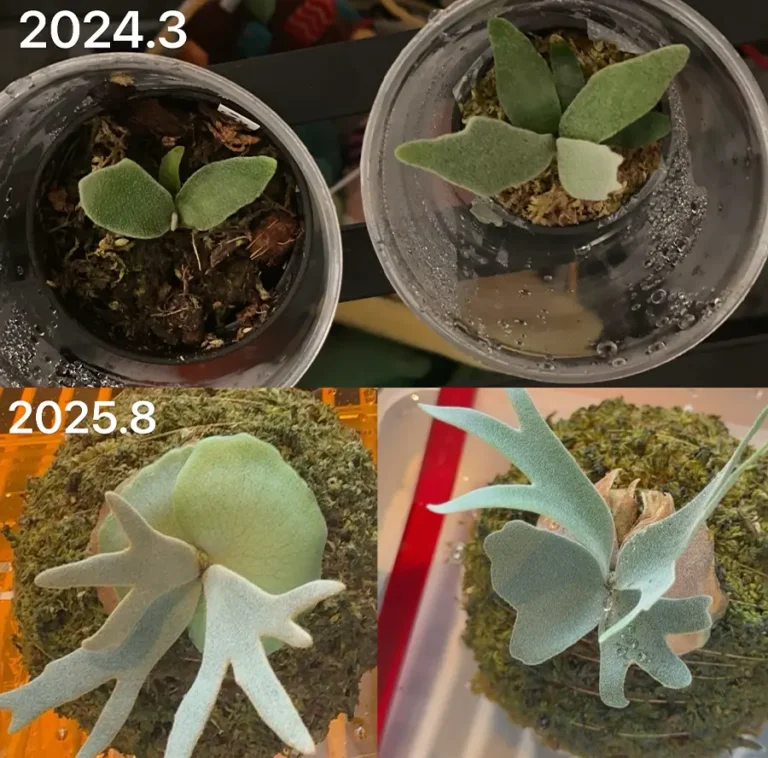
I bought it in March 2024.
At that time, it was very small.
It could only be grown in a cup.
Because its roots were very fragile, it needed a high-humidity environment.
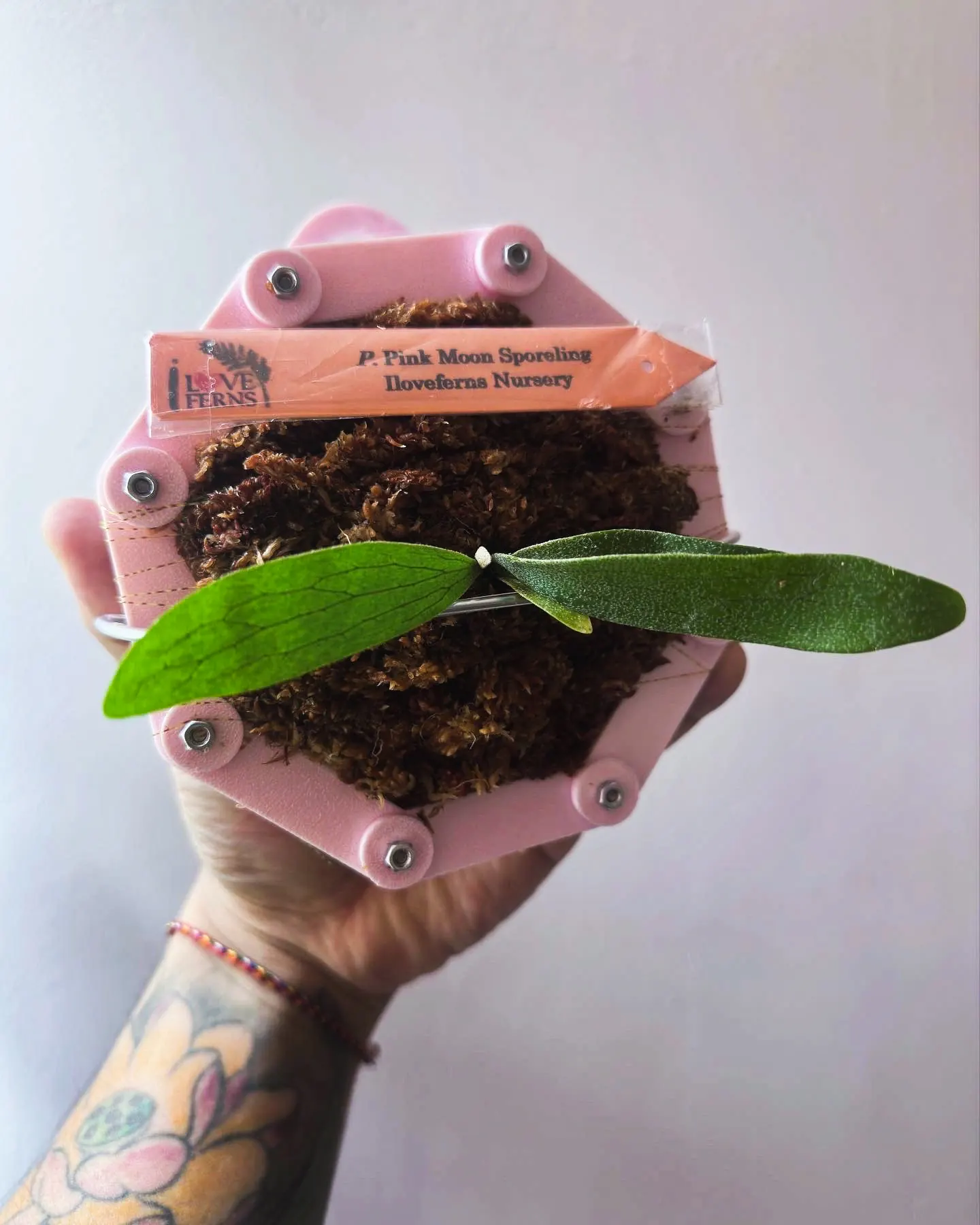
By mid-2025, I moved it to an acrylic mounting board.
I made a sphagnum moss ball (with long fiber moss) about 14 cm (about 5.5 inches) in diameter.
This was when I officially started mounting the staghorn fern on a board.
A staghorn fern becomes “easy” when the setup fits the room and the grower’s watering habits. The sections below explain what mounting actually is, when it makes sense, what materials and media work, and how to avoid the most common failure patterns.
Table of Contents
What is mounting a staghorn fern?
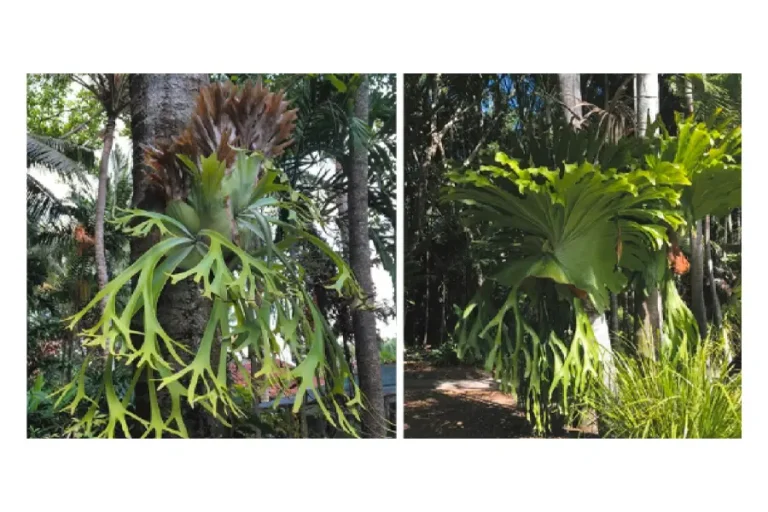
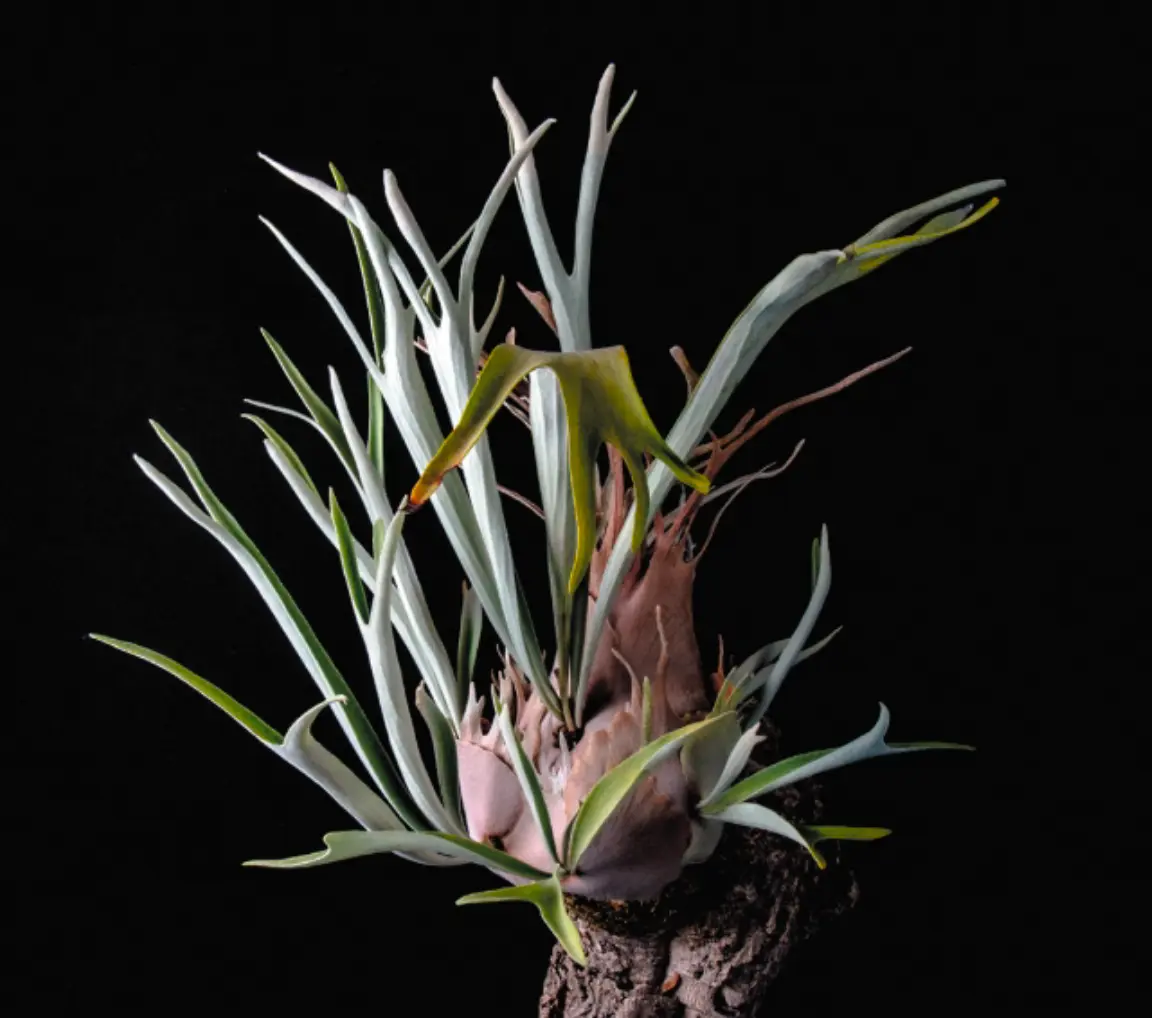
Mounting a staghorn fern means growing it the way it lives in nature. Most staghorn ferns are epiphytes, so they do not root in ground soil. In the wild, they attach to tree trunks and branches, and their roots grab onto bark while catching leaf litter, rainwater, and airflow. That “wet after rain, airy between rains” pattern is what keeps the base healthy.

Indoors, mounting copies that habitat using a board or slab as the “tree,” plus a small, breathable pad of medium as the “forest debris.” A common method is to place the fern’s root area into a thin layer of long-fiber sphagnum moss, position it on a mount like Portuguese cork bark (or another suitable board), and secure it temporarily with fishing line, soft cord, or mesh until new roots attach. After the fern anchors, the ties mainly act as support, and watering happens by soaking the moss pad and letting it fully drain and dry with good airflow.
How to choose a board that stays safe long-term
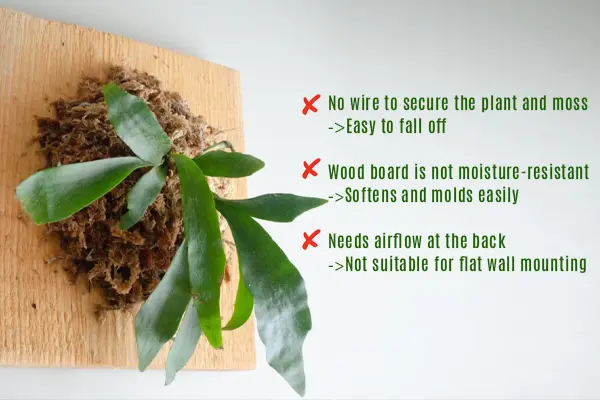
Many growers think “any wood is fine,” then the board molds, softens, or cracks. Other growers choose a very flat, sealed surface that traps moisture behind the pad. A good mount material stays rigid when damp, allows safe hardware attachment, and does not create a wet pocket.
Common options include cork bark, rot-resistant wood boards, tree fern panels, and open baskets. Each option changes drying speed and root grip, so the best choice depends on the grower’s home conditions.A mount has to survive repeated wet-to-dry cycles and still hold hardware safely when the board is at “wet weight.” Many mounts fail because the board softens, warps, or cracks, or because the hanging hardware is under-rated.
- A thick, rigid board helps prevent flexing and wobble.
- Rot-resistant material reduces mold and softening over time.
- Back-side airflow matters because the root pad needs a drainage path, not a sealed pocket.
- A mount needs secure hardware because the plant can become much heavier right after soaking.

Board material and build details that reduce mold
Many growers use wood because it looks natural, but wood can fail if it stays damp or if it is too soft.
- A sealed or protected board surface can slow rot and reduce mold.
- A board with enough thickness holds screws and hanging hardware more reliably.
- Ventilation holes or a design that allows airflow behind the pad reduces trapped moisture.
- A mount should hang with clearance so it can drip freely.
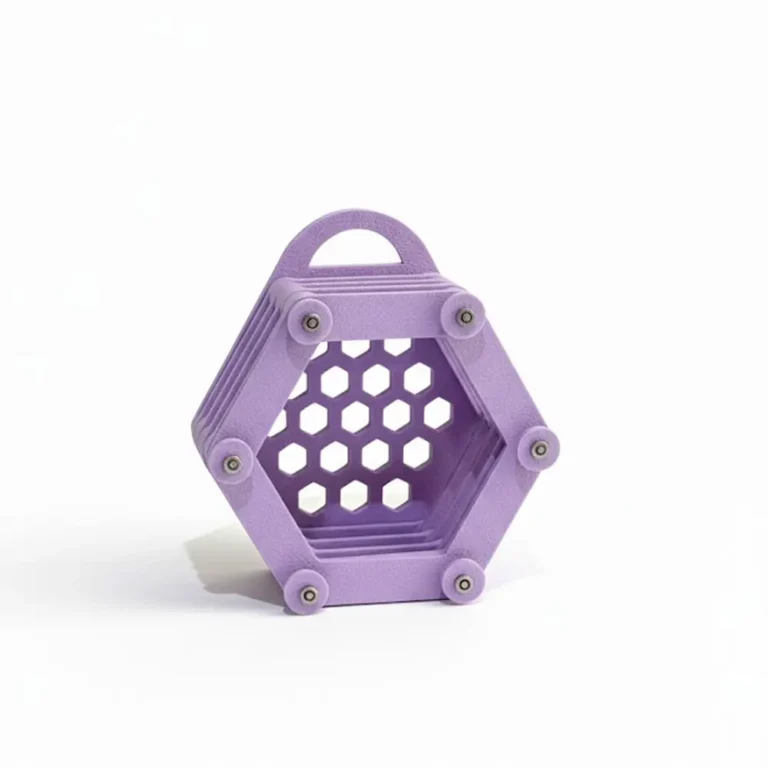
TropicalPlantKit offer staghorn fern mounting boards and wall mounted cages made from PLA eco-friendly plastic. We also use laser-cut acrylic boards designed specifically for growing staghorn ferns. Our focus is on affordability and durability, while breaking away from traditional mounting aesthetics and offering a more modern look.
Material comparison that matches real home conditions
| Material | What it does well | Common downside | Best fit |
|---|---|---|---|
| Cork bark | textured, rot-resistant, natural look | cost and size limits | long-term wall mounts |
| Rot-resistant wood board (sealed edges) | strong and easy to build | can degrade if kept constantly damp | growers who ensure dry-down |
| Tree fern panel | roots grip fast, natural feel | can hold moisture longer | warm rooms with airflow |
| Wire basket | airflow on all sides | dries very fast | humid spaces or frequent watering |
What are the benefits of mounting a staghorn fern on a board and hanging on the wall?
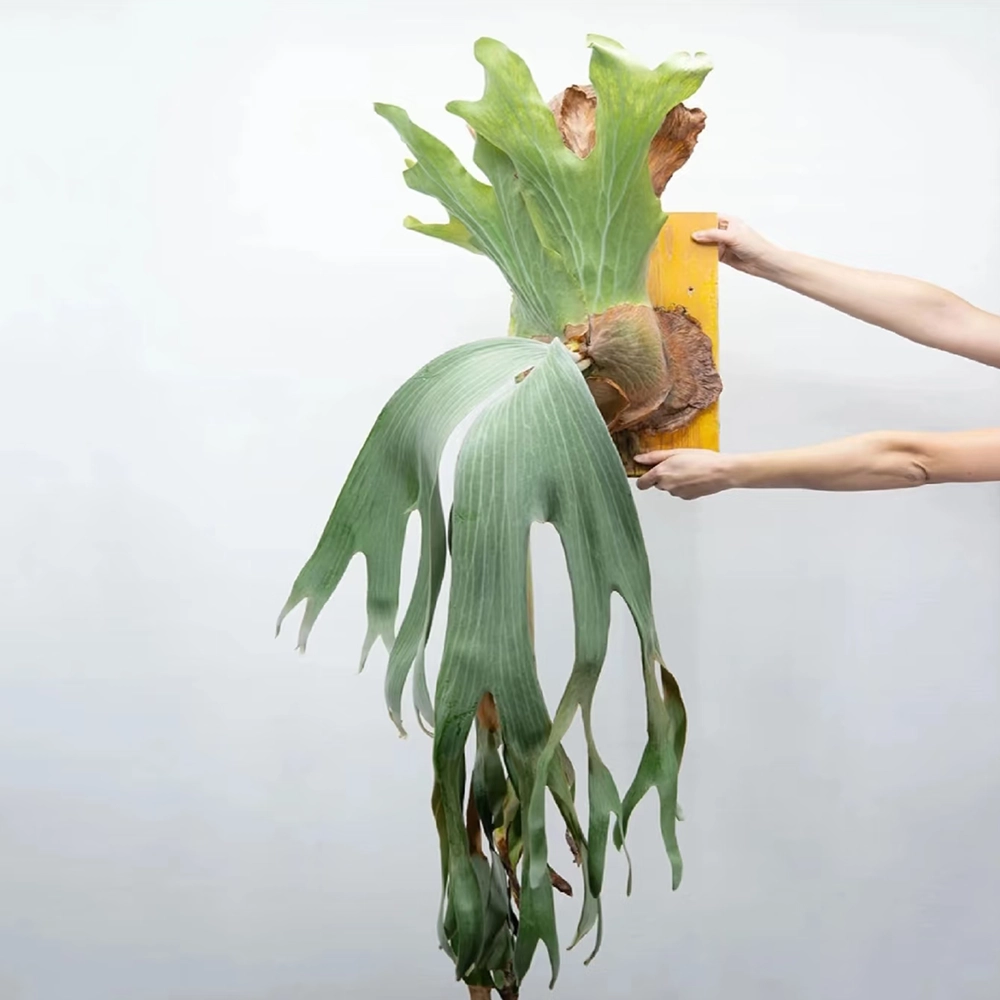
Mounting often produces the “classic” staghorn look, so growers assume the benefit is mainly aesthetic. But the real advantage is functional: staghorn roots want oxygen, and the base hates stale moisture. A mount can make that easier—if the pad is modest and airflow is real.
Mounting benefits include stronger airflow around the base, faster drainage, easier inspection of the root zone, and cleaner shield development over time. Mounting can also save floor and shelf space, which reduces accidental damage to fronds.
Cause → effect → outcome: why mounts can reduce rot risk
- Cause: a thin pad and open airflow reduce stagnant water at the crown
- Effect: roots stay oxygen-rich and the base dries between watering events
- Outcome: the plant holds structure better and is less likely to collapse from crown rot
How to fix the staghorn ferns on board? line vs plastic wrap
When a plant is first mounted on a board, its root system has not yet fully attached to the surface. At this stage, it cannot stay in place on its own, let alone be hung vertically. For this reason, the plant needs to be securely fixed to the board during the early period.
With some plants, such as orchids, the fixing wire can be removed later once the roots have grown and firmly attached to the board. However, staghorn ferns are different. They do not have thick, fleshy roots; instead, their roots mainly hold onto the sphagnum moss rather than the board itself. Because of this, I recommend keeping the fixing wire in place long-term, as it provides much better stability and is safer for the plant.
Growers usually secure a mount with (1) line/cord/mesh or (2) plastic wrap film.
Line (fishing line, nylon cord, soft ties)
- A line tie keeps the root pad open to airflow.
- A line tie supports a faster dry-down and more predictable wet/dry cycling.
- A line tie is easier to “tension-check” as the fern swells and grows.
Plastic wrap film (cling film / “saran-wrap” style)
- Plastic film can hold shape very well and can keep a thin pad evenly moist while the plant is re-attaching.
- Plastic film can also reduce pad evaporation, which can help a newly mounted plant push roots faster in very dry indoor air.
Plastic film becomes risky when a room is cool, airflow is weak, or the pad is thick. Those conditions trap moisture at the base, and that can create mold and rot pressure. Our team treats plastic wrap as a temporary tool, not a permanent tie. A grower can use it for short “rooting support,” then remove or loosen it once the plant anchors, especially before cooler seasons.

What size or growth stage is ready for mounting a staghorn fern?
Mounting looks like the “correct” way to grow a staghorn, so some growers mount too early and then struggle. The most common mounting confusion is speed: a mount can dry much faster than a pot, especially in a heated home with low humidity. That can push growers into daily watering, and that often becomes exhausting.
Growers should choose mounting when the plant is beyond the fragile seedling stage, the room has bright indirect light and airflow, and the grower can soak thoroughly and allow a real dry-down. Mounting also makes sense when space is limited and a vertical display is the easiest way to keep plants healthy and uncluttered.
A practical “ready to mount” checklist is simple:
- The plant pushes new fronds regularly (not just old fronds holding on).
- The base feels firm, and the crown does not wobble easily in the pot.
- The root area is established enough that the plant does not fall apart when the nursery mix is gently removed.
- The plant can dry slightly between waterings without new fronds collapsing.
- The fern has at least a few mature fronds and a developing shield zone, so it can store moisture and recover after a soak.
Why seedlings and tiny plants often struggle on boards
Most growers buy staghorns already potted because nurseries can ship and retail them easily. Small plants often have small, delicate root systems and less stored moisture in the fronds and shields.
- A mounted pad can dry too fast for a small root mass.
- Frequent re-wetting can keep the surface damp but still leave the center uneven.
- “Watering too often” can also backfire because constant dampness at the base invites rot.
In a greenhouse or high-humidity grow space, mounting small plants can be easy. In a typical home without a plant cabinet, small plants often do better in a breathable pot or basket until they build size.
When mounting is the easiest choice
Mounting becomes the easiest method when it matches the room:
- Bright, indirect light supports active growth and safe water use.
- A fan or natural airflow helps the base dry between soakings.
- A grower can water by soaking (not by misting only).
- The plant is large enough to tolerate faster dry cycles.

Hanging pots as a practical compromise
Some growers want the natural look but also want more moisture buffering than a flat board provides. A hanging basket or slotted “orchid-style” container can work as a middle ground. It keeps airflow high but gives the root zone more volume than a thin mount pad.
You can also consider this hanging planter. Unlike traditional pots that grow upward with an open top, our improved design allows the plant to grow forward, better simulating its natural growth habit. This design is especially beginner-friendly when it comes to tying and mounting. Even if the sphagnum moss ball is not perfectly round or neatly shaped, it doesn’t matter—the plant will still look beautiful once mounted.
When is potting the better stage, and what are the benefits of potting a staghorn ferns?
Potting is often dismissed as “not natural,” but it can be the most beginner-friendly setup in a normal home. The risk is not the pot itself. The risk is using dense soil and burying the crown. When a pot uses an epiphyte-style mix and the crown stays airy, potting can be very stable.
Potting is usually best for seedlings, small plants, newly separated pups, or any plant that is still establishing after shipping. Potting benefits include moisture buffering, less frequent watering than most mounts, and easier recovery when a grower is still learning the plant’s drying rhythm.

Why potting often helps early growth
Small staghorns often struggle more from inconsistent hydration than from “too much air.”
- A pot holds moisture longer, so a small root system stays evenly hydrated.
- A pot can reduce the “too dry overnight” problem in heated homes.
- A pot can stabilize the plant so it grows shields before facing faster dry cycles.
The potting rule that prevents most rot
A staghorn fern should not be buried like a pothos or philodendron. The rhizome and the active crown should sit proud and airy. The medium should support the plant, not swallow it.
Which pots work for staghorn ferns, and which pots should be avoided?
Many staghorn pot failures come from the wrong pot shape. Deep decorative pots and tight cachepots create a wet lower zone that never dries. Staghorns can rot at the base even while the surface looks dry, which leads to repeated overwatering.
Pots that work well usually have fast drainage and side airflow, like orchid pots, slotted baskets, and shallow containers with many holes. Pots to avoid include self-watering planters, tall pots with minimal drainage, and any setup where runoff water sits under the plant.

Pot selection from an “airflow-first” perspective
| Pot type | Why it can work | Main risk | Best fit |
|---|---|---|---|
| Slotted orchid pot | high airflow, fast drainage | dries quickly in very dry rooms | warm rooms, frequent waterers |
| Shallow plastic nursery pot | stable moisture buffering | stays wet if mix is fine/dense | dry homes with chunky mix |
| Wire or wood basket | airflow + display flexibility | can dry very fast | humid spaces or cabinet growers |
| Shallow terracotta | breathable walls | can over-dry | humid rooms, stable routines |
Pots and setups that usually fail
| Pot or setup | Why it fails for many homes |
|---|---|
| Deep ceramic with one small drainage hole | creates a wet bottom zone |
| Self-watering or reservoir planters | keeps constant moisture at the crown |
| Cachepot with standing water | blocks oxygen and causes sour conditions |
| No-drainage containers | prevents flushing and salt control |
A simple “before watering” check that works for potted staghorns
A schedule-based watering plan often fails. A check-based plan is safer.
- The pot should feel noticeably lighter before watering.
- The center should not smell sour or stagnant.
- The crown should never sit cold and wet for days.
How should growers choose media for mounting vs potting?
Media choice is where most confusion turns into rot. Many growers use dense potting soil because the plant came that way. Many growers also use a thick moss pillow because it feels “natural.” Both can fail if they trap water at the crown.
Mounted staghorns usually do best with a thin, breathable pad that wets evenly and dries evenly. Potted staghorns usually do best with an epiphyte-style mix that is chunky, airy, and resistant to compaction, with only a small portion of moisture-holding material.
Media needs are different because volume is different
A mount pad is thin, so it needs even wetting and fast drainage. A pot has depth, so it needs structure that stays airy in the center.
| Setup | What the media must do | What usually works | What usually fails |
|---|---|---|---|
| Mounted | wet evenly, drain fast, stay breathable | thin long-fiber sphagnum pad | thick moss “sponge” that stays wet inside |
| Potted | resist compaction, stay airy in center | chunky bark + aeration + small sphagnum portion | peat-heavy, fine potting soil mixes |
Practical media starting points (adjust to your room)
For mounting (thin pad approach)
- Long-fiber sphagnum as a thin pad, soaked then squeezed damp.
- Optional: a small amount of chunky bark at edges for structure.
For potting (structure-first approach)
- Chunky orchid bark as the backbone.
- Pumice or perlite for air space.
- A smaller portion of long-fiber sphagnum for moisture buffering.
- Optional: charcoal to help keep structure stable.
Conclusion
Mounting usually suits established staghorn ferns when airflow and soak-and-dry watering are consistent, because it keeps the crown oxygen-rich and supports classic shield growth. Potting usually suits seedlings, pups, and dry homes because it buffers moisture and reduces maintenance stress. Tropical Plant Kit chooses the method that stays airy at the base and predictable in drying speed.
Staghorn ferns often look healthy at the nursery, then stall at home because the growing method does not
Lastly, we will be publishing a new tutorial video on how to mount staghorn ferns. You can follow our YouTube channel, where we’ll show you how to mount the plant properly and how to identify growth points.
Before that, you may want to read our article “What Is a Staghorn Fern?” to get familiar with the basic structure of the plant.