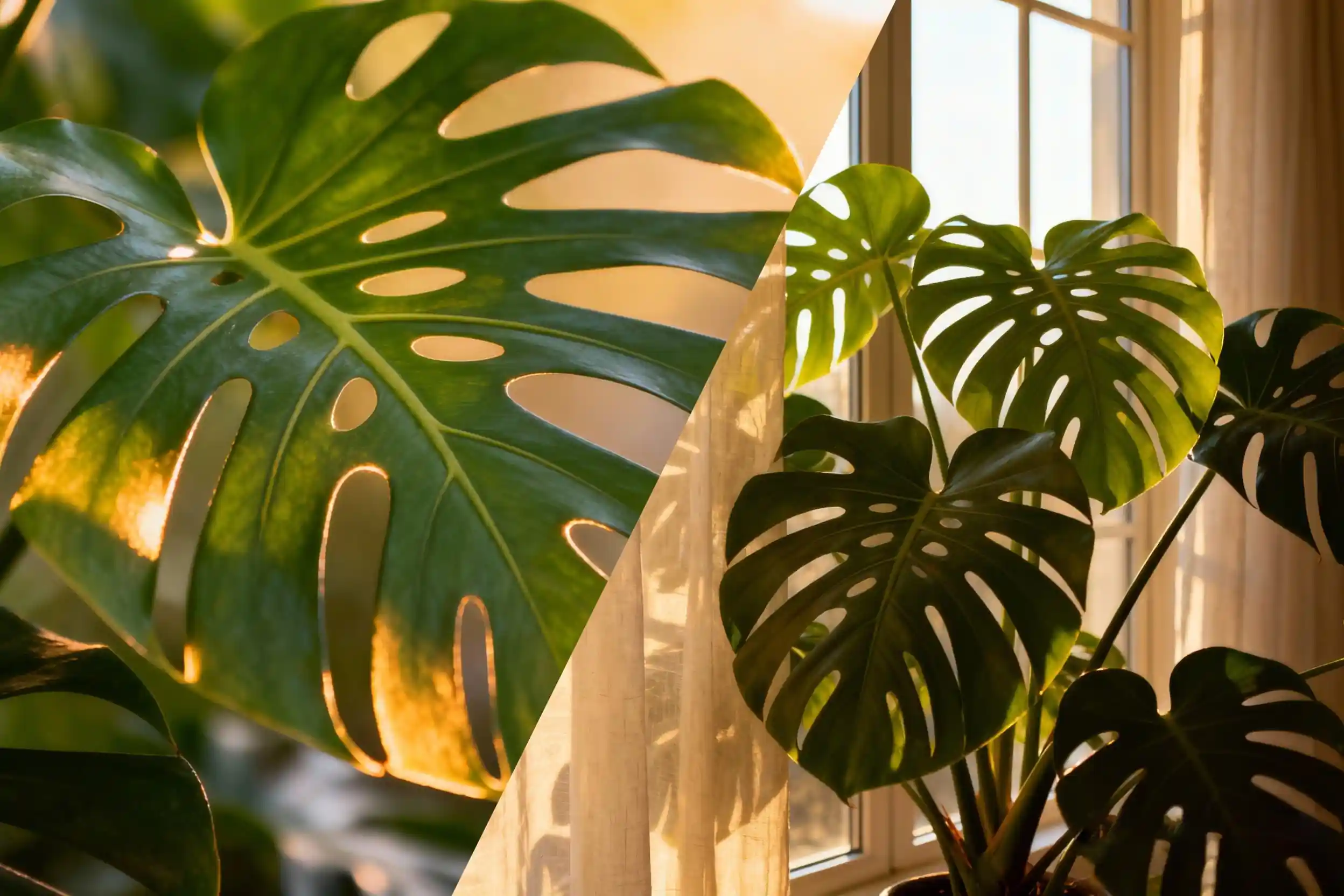
Why Monstera Light Requirements Matter for Healthy Growth
When people ask me how to grow a big, dramatic Monstera, I always start with the same thing: light. We’ve already written a full beginner-friendly guide to Monstera care, covering watering, soil, humidity, and troubleshooting—if you haven’t seen it yet, you can read it here: Monstera Complete Care for Beginners. In this article, I want to go deeper into just one topic from that guide: how much light a Monstera really needs if you want those large, beautifully fenestrated leaves instead of small, plain ones.
Table of Contents
Understanding Monstera Light Requirements
Monstera Deliciosa Light Needs in the Wild vs Indoors
In the wild, Monsteras grow under a rainforest canopy. They start on the forest floor in shade, then climb tree trunks toward pockets of filtered sunlight. Those iconic holes (fenestrations) likely help the plant capture more light in that dappled environment, letting sunflecks reach lower leaves as it climbs. Indoors, if we don’t give them similar bright but filtered light, they simply can’t show their full potential.
The good news? You don’t need a greenhouse to get this right. In this guide, I’ll walk you through how to recreate ideal Monstera light conditions in a typical home, how to fix common light problems, and how a few smart tools can make your Monstera grow bigger, lusher, and healthier.
Light is just one part of a healthy Monstera routine—if you’re still setting up watering, soil, and humidity, you can follow my full Monstera care for beginners indoors guide for the complete step-by-step checklist.
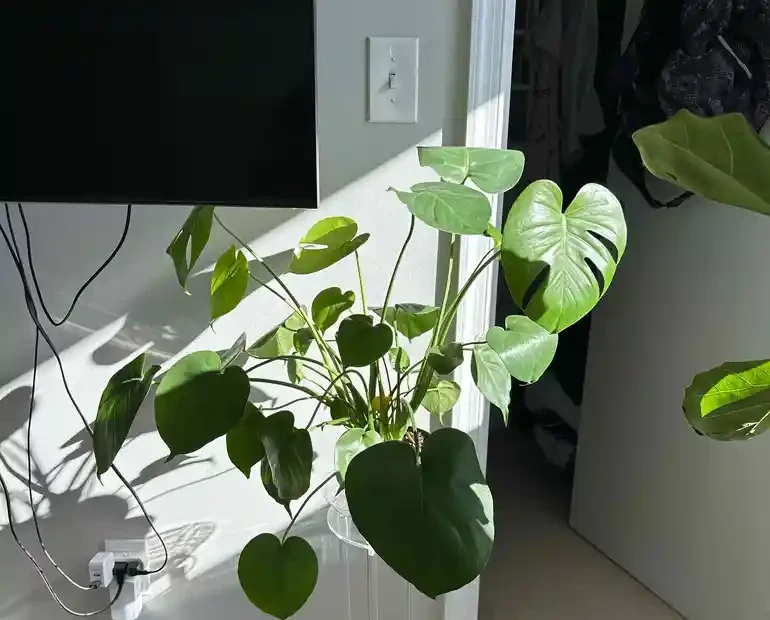
Key Takeaways: Bright Indirect Light for Monstera at a Glance
Bright, Indirect Light is Best: Monsteras thrive with abundant indirect sunlight (about 5–8 hours daily), similar to the dappled light under tropical tree canopies. Direct sun can scorch their leaves, so place them near an east, south, or west-facing window with a sheer curtain if needed.
Signs of Low Light: Slow growth, very small or no fenestrations (holes) in new leaves, legginess (stretched stems), and yellowing foliage indicate your Monstera isn’t getting enough light. In low light, soil may stay wet longer, risking root issues. Moving the plant closer to a window or supplementing with a grow light can revive it.
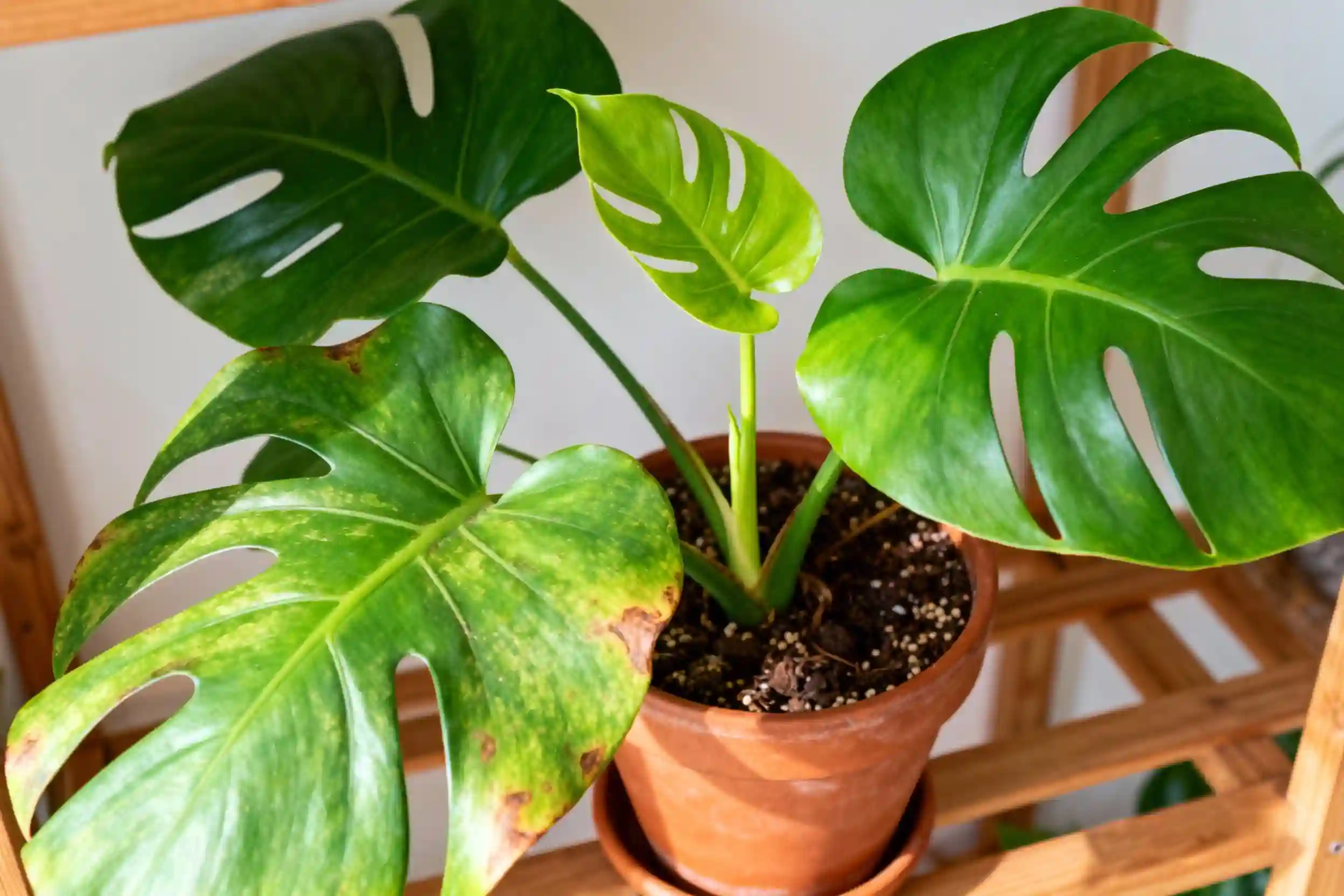
Signs of Too Much Light: Yellow or brown patches on leaves, crispy edges, and curling tips mean your Monstera is getting too much sun. Direct midday rays can burn leaves (leaving bleached or dark scorch marks). If this happens, provide immediate relief by moving the plant to filtered light and trimming damaged leaves to encourage recovery.
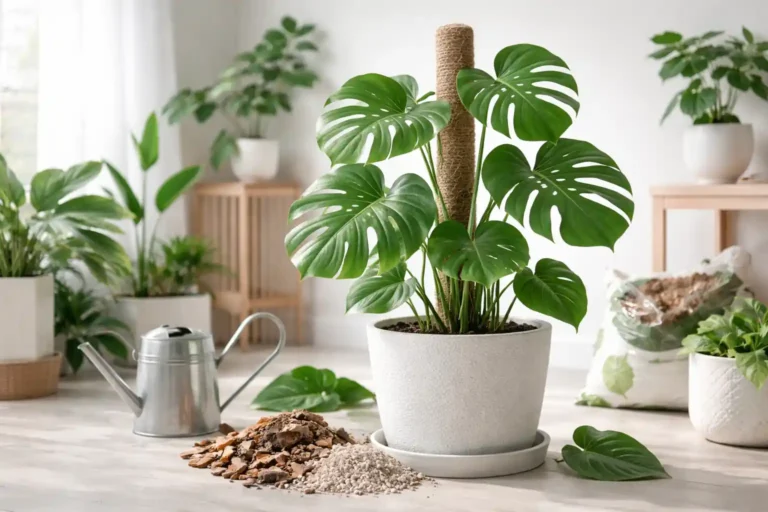
Mimic Natural Habits: In the wild, Monsteras climb trees to reach light. Indoors, give them a moss pole or support to encourage vertical growth and larger leaves. TropicalPlantKit’s Moss Pole & Support system (our sturdy moss pole kit) helps your Monstera grow upward toward the light, resulting in stronger stems and more pronounced fenestrations – just like it would high in a rainforest canopy.
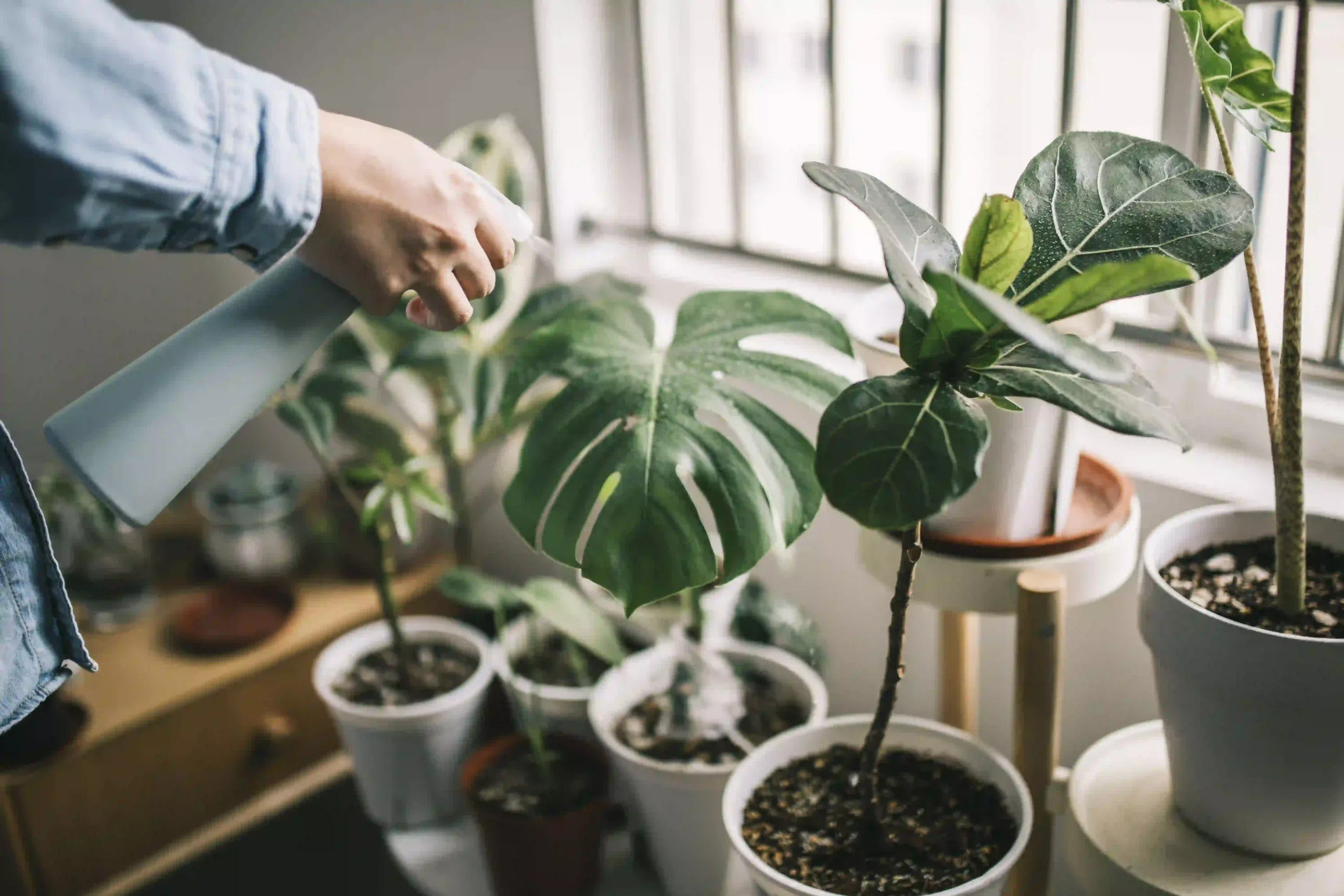
Optimize Light & Environment: Rotate your Monstera every week so all sides get light and it grows evenly (preventing it from leaning). Keep leaves clean and dust-free for maximum light absorption. If placing near a bright window, maintain humidity (mist the leaves or use a humidifier) to prevent dry leaf edges. TropicalPlantKit’s Indoor Plant Care Kit (which includes a gentle mister and plant probiotic) can help maintain ideal humidity and leaf health for Monsteras in bright spots.
What Is “Bright, Indirect Light” for Monstera?
How Much Light Does a Monstera Need Each Day?
When we talk about Monstera light requirements, “bright, indirect light” is the sweet spot. In your home, that means the brightest area you have where harsh sunbeams don’t sit on the leaves for hours.
Think of light under a tree in the tropics: it’s bright, but softened. Indoors, you can copy that by placing your Monstera near a window, not right against the glass in midday sun.
- East-facing window: ideal – gentle morning sun and bright light for the rest of the day.
- South or west-facing window: also great, but you may need a sheer curtain to diffuse intense midday and afternoon rays, especially in summer.
I usually keep my Monstera about 3 feet from a south-facing window behind a gauzy curtain. It gets plenty of light without leaf burn. Aim for about 5–8 hours of bright light daily. This doesn’t need to be direct sun the whole time – just a consistently bright environment.
Simple Ways to Check If the Light Is Right
You don’t need special tools to dial in your Monstera’s lighting. Start with these quick checks:
- Hand-shadow test: On a sunny day, hold your hand about 30 cm (1 ft) above the leaves.
- Sharp, dark shadow = very strong light.
- Very faint shadow = light is probably too low.
- Soft but clear shadow = ideal bright, indirect light for Monstera.
Some advanced growers like to measure illuminance: Monsteras do well around 10,000–20,000 lux, which roughly equals bright indoor light. But for most of us, the plant itself is the best indicator:
- In good light, new leaves appear regularly in spring and summer.
- Leaves are large, glossy, and develop splits or holes once the plant is mature.
- Variegated Monsteras hold clear, vibrant variegation instead of fading.
If the light is borderline, you’ll notice slower growth and the plant starting to lean or stretch toward the window. That’s your sign to move it closer to the light or supplement with a grow light.
Simple At-Home Tests to Check Monstera Light Levels
A little direct sun is okay – and sometimes helpful.
- Early morning or late afternoon sun is usually gentle and can boost growth.
- My Monstera deliciosa gets a short splash of sunrise light and responds with strong, healthy leaves.
The problems start with strong midday sun:
- Intense sun through glass can heat up and scorch the foliage quickly.
- Full, unfiltered sun can create hot spots and dry out the potting mix much faster.
If you see direct sunlight hitting your Monstera’s leaves around noon or early afternoon for more than 1–2 hours, it’s time to soften or reduce that exposure:
- Add a sheer curtain or light-filtering blind.
- Move the plant a little farther from the window (even 30–60 cm / 1–2 ft can make a big difference).
In nature, Monsteras grow under taller trees, enjoying bright but filtered light. Their leaves simply aren’t built like cactus pads to handle desert-style sun. For healthy growth, your goal is:
Bright light with protection from long stretches of direct, intense sun.
Once you’ve dialed that in, you’ll be ready to read your Monstera’s “body language” – the signs of too little or too much light – and adjust before small issues turn into big problems.
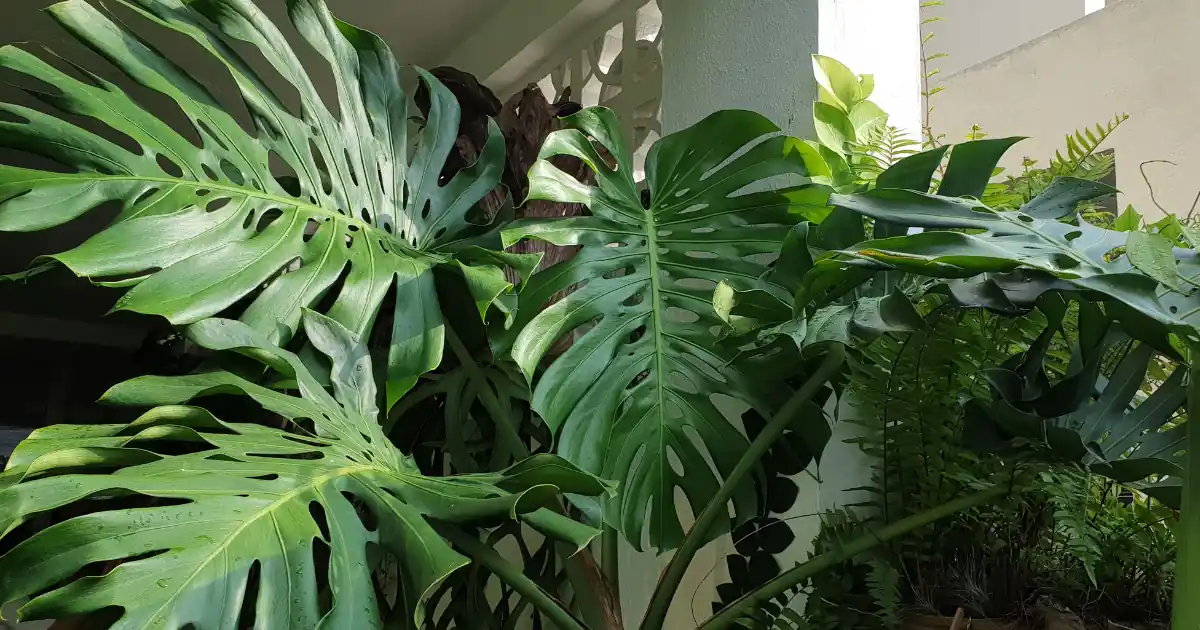
Can Monstera Take Direct Sun? Finding a Safe Balance
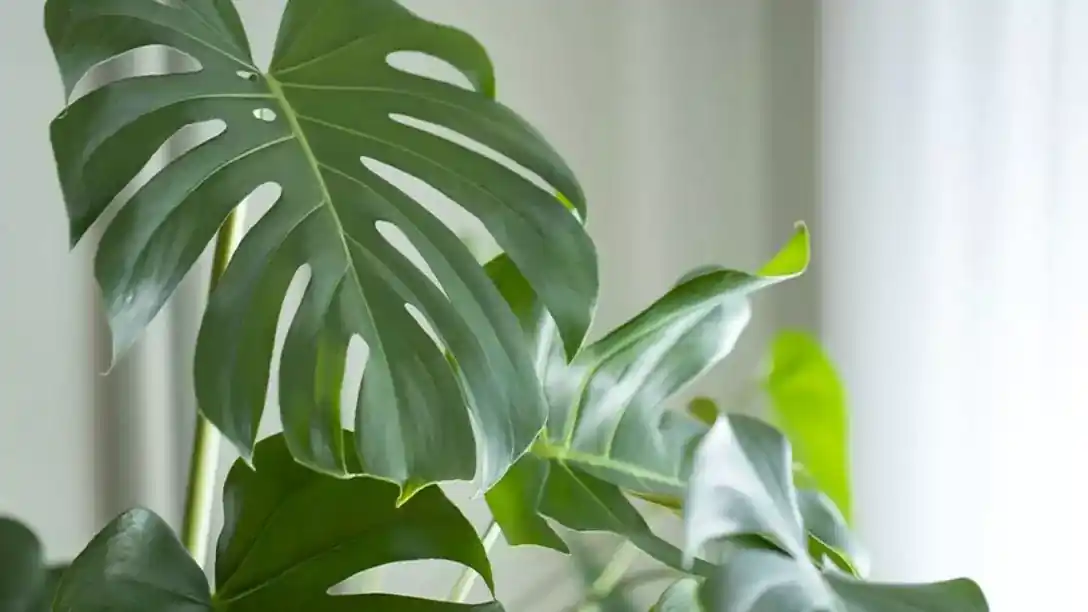
When a Monstera is starved for light, it will let you know through its appearance and growth habit. I’ve seen this firsthand when I tucked a Monstera away from a window to fit my décor – the poor thing started complaining in no time!
How to Recognize Low-Light Stress in Monstera
- Leggy, Stretched Growth: The stems elongate and space out, with large gaps between leaves (called internodes). The plant is literally stretching towards the nearest light source. You might notice it leaning strongly to one side. This legginess is a classic symptom of low light. New leaves might also emerge further apart and often smaller.
- Small or No Fenestrations: A healthy, mature Monstera in good light will develop splits and holes in its leaves. If yours is old enough for fenestration but the new leaves come out plain (no cuts or just a few small ones) and significantly smaller in size, inadequate light could be the culprit. Essentially, the plant doesn’t “invest” energy in making big, fancy leaves when it’s struggling to photosynthesize.
- Yellowing Leaves (especially lower ones): Light-starved Monsteras sometimes start shedding older leaves. You’ll see one or two bottom leaves turn yellow for no obvious reason (not overwatering, not pests) and eventually die off. While some natural turnover of leaves is normal, multiple yellowing leaves can indicate the plant isn’t supporting all its foliage due to low light. Do note: Yellow leaves can have other causes too (like overwatering), so consider the context – if the soil is staying soggy (also because low light slows drying) and the plant is sparse, light could be a factor.
- Soil staying wet and fungus gnats: This is more an indirect sign. In low light, a Monstera’s water use plummets. You might find you’re watering on schedule but the soil is still moist days later. Persistently damp soil can lead to root rot and invites fungus gnats. If you’re encountering this, check your light situation – moving the plant to better light helps it drink and dry more normally, preventing rot.
- No new growth or very slow growth: Monsteras typically put out multiple new leaves in the growing season. If yours hasn’t grown in many months (and it’s spring/summer), it may simply be languishing from insufficient light. Low light is one of the only things (aside from cold) that can really stall a Monstera.
How to Fix a Low-Light Monstera Step by Step
So, how do we fix a low-light Monstera and get it growing happily again?
The most effective solution is simple: move your Monstera to a brighter spot. Even shifting the plant a few feet closer to a window can make a noticeable difference within a few weeks. I once relocated a Monstera from a dark corner across the room to a spot near a balcony door. Within a month, it pushed out a new leaf almost twice the size of the previous one, with beautiful fenestrations.
If window space is limited, you still have options:
- Use a plant stand with wheels so you can roll your Monstera into brighter light for a few hours each day.
- Supplement with a grow light if your room is naturally dim, especially in winter or in basement spaces.
A quality LED grow light designed for houseplants is usually more than enough. Monsteras don’t need extremely high-intensity grow lights. Look for a full-spectrum LED and aim for about 10–12 hours of supplemental light per day to mimic a bright tropical day indoors.
For best results:
- Position the grow light approximately 12–18 inches above the top leaves.
- Avoid placing the light too close, as even artificial lights can cause leaf burn or crispy edges if the intensity is too strong or the distance is too short.
- Use a timer so your Monstera gets a consistent light schedule without you needing to remember to switch it on and off.
Dealing With a Leggy Monstera
If your Monstera has already become leggy (long, stretched stems with wide gaps between leaves), don’t worry — you can absolutely bring it back to a fuller, healthier shape.
Here’s how I approach it:
- Improve the light first
Move the plant closer to bright, indirect light or add a grow light. Better light will encourage sturdier, more compact growth over time. - Prune stretched stems
Use clean, sharp shears to cut back extra-long vines. You can trim just above a node (where a leaf and aerial root meet the stem) to encourage branching and fuller growth. - Propagate your cuttings
Place healthy stem cuttings in water or moist soil to root new baby Monsteras. You can keep them, combine them back into the original pot for a fuller look, or gift them to friends. - Rotate regularly
In low or one-sided light, Monsteras naturally lean toward the nearest window. Rotate the pot 90° every 1–2 weeks so all sides of the plant receive light. This prevents a lopsided, bent appearance and encourages balanced growth.
As you increase the light, your Monstera will start using water more quickly. That means you’ll likely need to adjust your watering schedule:
- Check the top 2–3 cm (about an inch) of soil with your finger.
- When it feels dry, it’s time to water again.
- Don’t stick to a fixed “once-a-week” schedule — brighter light = faster drying soil.
With these changes in light, pruning, rotation, and watering, your Monstera should gradually reward you with bigger, healthier leaves and more fenestrations, even if it previously struggled in low light.
Signs Your Monstera Isn’t Getting Enough Light (and How to Fix It)
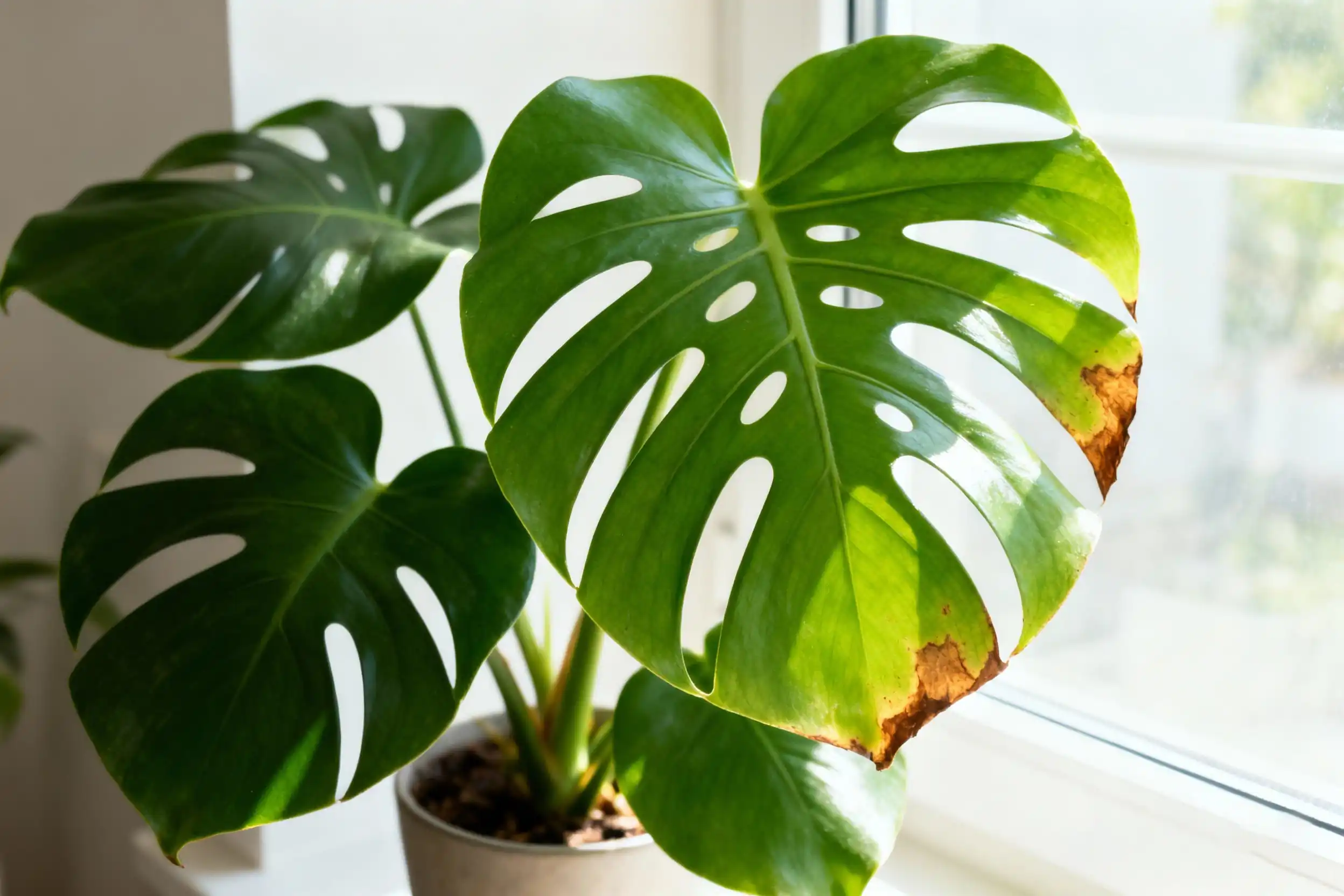
Even though Monstera light requirements are often described as “bright, indirect light,” it’s easy to overdo it. I learned this the hard way by putting my Monstera directly in a south-facing window during a heatwave. I assumed more sun meant faster growth – instead, my plant ended up with a serious sunburn.
Visual Signs of Low Light: Leggy, Stretching, and Small Leaves
Monsteras can absolutely suffer from too much light and direct sun exposure. Here are the main signs to watch for:
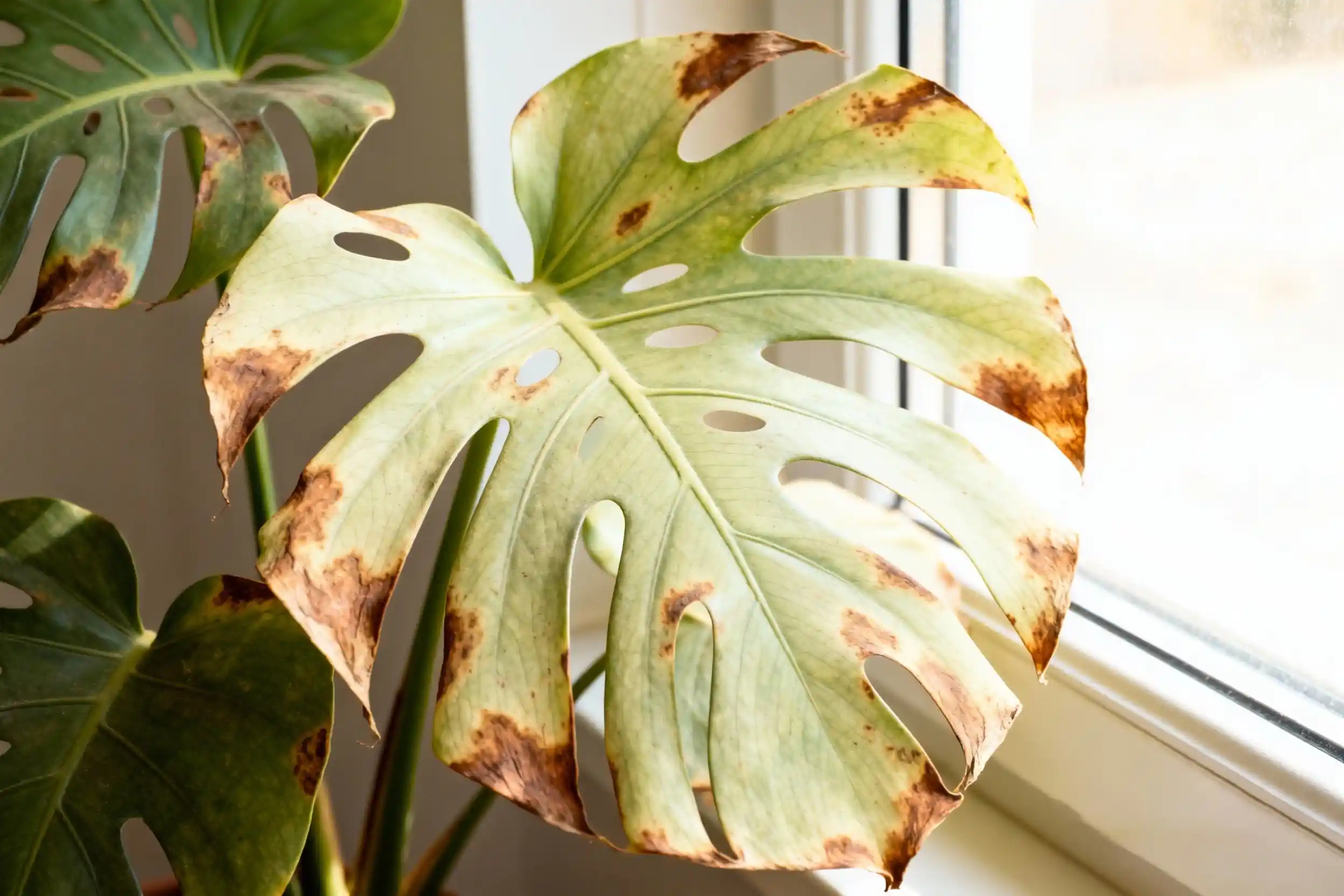
1. Scorched or Bleached Patches on Leaves
The most obvious sign of too much light is scorching:
- Patches on the leaves turn tan, light brown, or whitish.
- The affected areas feel papery or crispy to the touch.
- In severe cases, the entire leaf may yellow and dry out very quickly.
These are true burn marks where intense sunlight has damaged the leaf tissue. Unfortunately, these scorched spots will not heal – the goal is to prevent new damage.
2. Brown, Crispy Edges
Another classic symptom of too much direct sun is browning along the leaf edges:
- Margins become dry, brown, and brittle.
- Leaf edges may start to curl inward.
- Damage is usually worse on leaves that face the window, while leaves in shade look better.
This can resemble underwatering, but if you know your Monstera is watered properly, excessive light and heat are likely the real cause.
3. Leaves Fading to Yellow or Pale Green
Not all light damage shows up as dark burn spots. Some Monsteras react to high light by losing their deep green color:
- Leaves turn a lighter yellow-green or chartreuse.
- You may see brown tips combined with overall fading.
If you’ve already ruled out nutrient deficiencies and watering issues, a recent jump in light (for example, moving the plant closer to a window or into direct sun) can be responsible. Think of it as your Monstera being “sun-bleached.”
4. Potting Mix Drying Out Very Quickly
Too much light often comes with too much heat:
- The potting mix dries out much faster than normal.
- You find yourself watering more frequently, yet the plant still wilts by midday.
If your Monstera is constantly thirsty and drooping, the location may simply be too hot and bright for it.
5. Stunted or Damaged New Growth
When a Monstera is extremely stressed by light:
- New leaves may brown or crisp before they fully unfurl.
- Growth can slow to a crawl or stop completely, even in summer.
At this point, the plant is in survival mode and is no longer focusing on producing healthy new foliage.
Step-by-Step: How to Fix a Low-Light Monstera
The good news is that if you spot these signs early, your Monstera can recover. The key is to reduce light intensity quickly and then support the plant while it grows new, healthy leaves.
1. Move Your Monstera to a Shadier Spot
The fastest way to relieve light stress is to change the plant’s position:
- Increase the distance from the window by 1–4 feet.
- Aim for bright, indirect light instead of direct midday sun.
I moved my own sunburned Monstera about four feet back from a south-facing window. It still receives plenty of light, but no harsh rays, and the new leaves stopped burning. If your Monstera is outdoors, bring it into bright shade or indoors near a filtered window.
2. Filter Harsh Sunlight
If you love your plant’s current location, you can soften the light instead of moving it:
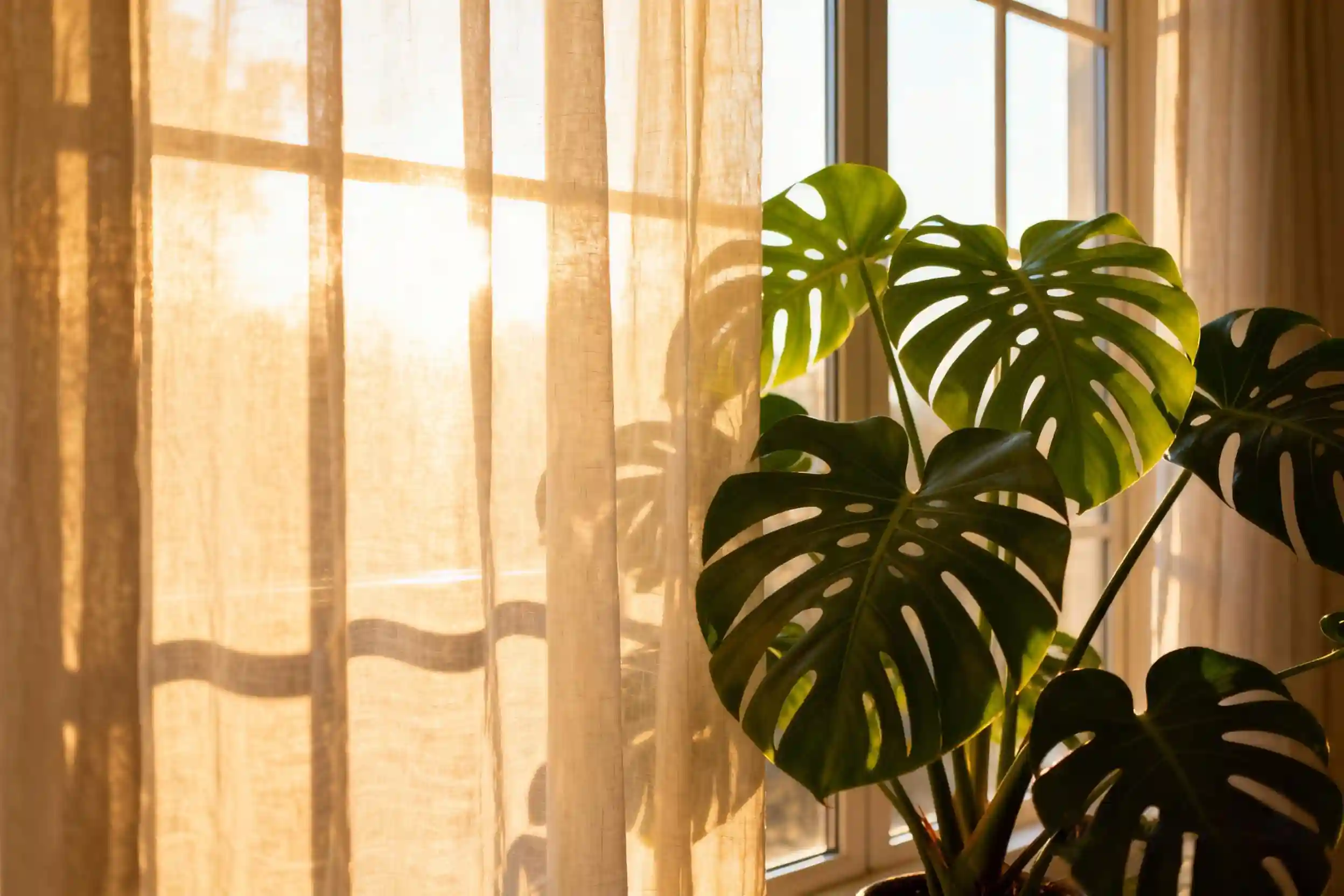
- Hang a sheer curtain or install light-filtering blinds.
- Use window film or a thin fabric to diffuse midday sun.
Sheer curtains are one of my favorite tools – they turn harsh beams into a gentle glow, almost like giving your Monstera a pair of sunglasses. This keeps the light bright enough for photosynthesis, without scorching the foliage.
3. Trim Damaged Leaves and Prioritize New Growth
Badly burnt leaves won’t recover, so it’s better to remove the worst damage:
- Use clean, sharp scissors or pruning shears.
- Trim off leaves that are more than 50% burnt.
- For minor damage, you can carefully cut away brown edges, following the natural outline of the leaf.
Removing severely damaged tissue helps your Monstera redirect energy into fresh growth. After I pruned my burned leaves, the plant rewarded me with a new, lush leaf within a few weeks in its safer, indirect-light spot.
4. Increase Humidity and Keep Hydration Steady
Too much light often comes with extra dryness in both soil and air. Help your Monstera bounce back by:
- Watering thoroughly when the top 2–3 cm (about 1 inch) of soil is dry, avoiding waterlogging.
- Raising humidity to around 50–60% if possible.
- Using a mister or humidifier to keep the remaining foliage from drying out further.
I like to mist my Monstera’s leaves (avoiding harsh direct sun while doing so) to cool them and keep the tissue hydrated. This is where the TropicalPlantKit Indoor Plant Care Kit shines – its fine-mist spray is ideal for gently rehydrating stressed leaves without drenching the soil. Just avoid misting at midday in direct sunlight, as water droplets can intensify the rays and cause more burn. Morning or evening misting is best.
5. Monitor Progress and Adjust Over Time
Once you’ve made changes, give your Monstera one to two weeks and watch closely:
- New leaves should emerge with healthy green color and no scorch marks.
- Existing leaves should stop developing fresh burn patches.
- The soil should start drying at a more moderate, predictable pace.
If you still see signs of stress, move the plant even farther from the window or shift it to a room with softer light. Every home is different – a south window in one apartment might be gentle, while another gets intense, unobstructed sun all day. Let your plant’s response guide you.
Can a Severely Sunburned Monstera Recover?
In extreme cases – for example, if you come back from vacation to find many leaves fried – your Monstera may drop a lot of foliage. It can look heartbreaking: a pot full of stems and maybe a couple of struggling leaves.
Don’t panic. Monsteras are surprisingly resilient:
- Move the plant to medium, indirect light so it’s no longer under stress.
- Maintain your regular watering and humidity routine.
- Avoid repotting or heavy pruning during this recovery phase.
I once rehabilitated a nearly bald, sun-scorched Monstera by relocating it to a softer light spot and gradually increasing humidity. Within about two months, it produced two fresh, bright-green leaves and slowly began to fill out again.
The key is balance: give your Monstera ample light to meet its needs, but not so much that it causes damage. When in doubt, slightly lower light intensity and then adjust gradually. It’s always easier to increase light later than to try to fix severe sunburn.
And remember, as seasons change, so does the sun:
- Gentle autumn and winter light can be ideal for windows that are too intense in summer.
- In late spring and summer, you may need to pull plants a bit farther from west or south windows or rely more on sheer curtains.
I typically move my Monstera a little further from west-facing windows in June and then bring it closer again in October. This simple seasonal tweak keeps the plant safe and maintains consistent, healthy growth year-round.
Helping Your Monstera Reach for the Light – Using Supports and Smart Placement
Help Your Monstera Climb Toward the Light
One of my favorite things about Monstera plants is their natural growth habit as climbers. In the wild, Monsteras use aerial roots to grab onto tree trunks and climb higher into brighter light. We can recreate that in our homes by giving our Monstera a structure to climb.
When you support your plant vertically, you:
- Keep the stems upright and healthier
- Lift the leaves into brighter, more even light
- Encourage larger leaves with more dramatic splits and fenestrations
From my experience, a supported Monstera that grows closer to the light source often develops larger, more fenestrated leaves than a trailing plant of the same age. In other words, when your Monstera “thinks” it has made it to the top of the canopy, it starts to show off.
Moss Poles and Trellises for Better Monstera Light Exposure
Moss poles and trellises are the easiest way to mimic a tree trunk indoors and improve your Monstera’s light conditions.
Gently tying your Monstera’s stems to a moss pole (using soft plant ties or even old pantyhose) helps train it upward. As the pole stays slightly moist, you’ll notice that aerial roots eventually cling to it, just like they would to a mossy tree in nature.
I like using the TropicalPlantKit Moss Pole & Support Kit, because it’s modular and extendable. As your Monstera grows taller, you can simply add sections instead of replacing the whole pole. This gives your plant a clear vertical path to follow, preventing it from:
- Sprawling across the floor
- Snaking out of the pot searching for light
- Bending awkwardly toward the nearest window
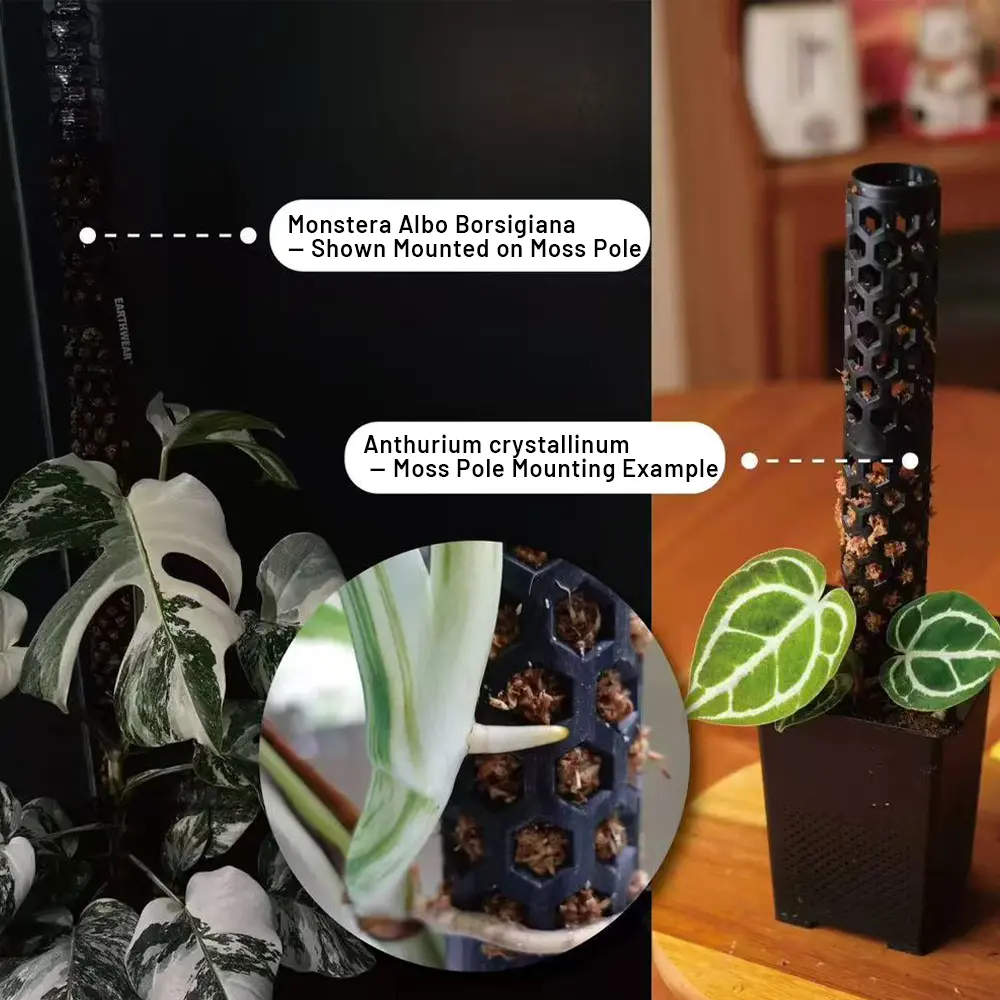
Instead, the plant climbs up, which brings the top leaves closer to your window or grow light. I’ve seen Monsteras on a moss pole produce fenestrated leaves much sooner than trailing Monsteras kept in the same room.
Just as important, support protects your Monstera’s structure. Without a pole or trellis, a heavy plant can bend, crease, or even snap its main stems as leaves get larger. A supported Monstera is less likely to collapse under its own weight and more likely to grow straight, strong, and well-lit.
Preventing a Top-Heavy Monstera: Pots and Stability
When you add a moss pole, you’re raising your plant’s center of gravity. That’s why I always think about stability at the same time.
A few simple rules:
- Use a wider, heavier pot for climbing Monsteras
- Avoid tall, narrow pots that tip easily
- Add weight (like stones) to the bottom if needed
At TropicalPlantKit we often say a moss pole can make a Monstera “top-heavy,” which is why we recommend pairing your support with generous, weighty containers.
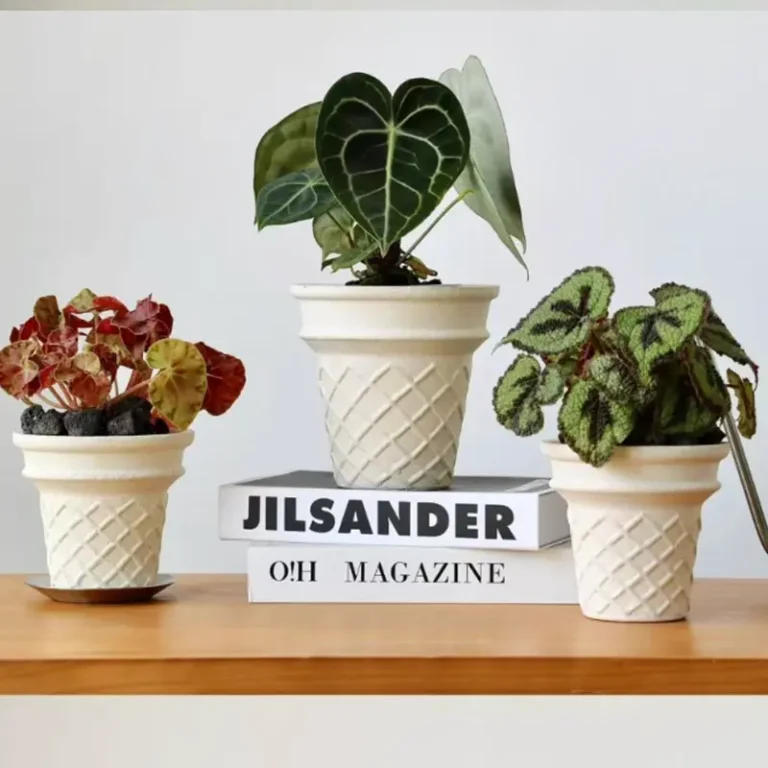
For example, our TropicalPlantKit Ceramic Planter Collection features wide-base planters that work beautifully with moss poles. They:
- Keep your Monstera and pole from tipping over
- Protect stems and roots from sudden falls
- Double as a stylish décor piece that fits easily into living rooms, offices, and plant corners
If your plant is still sitting in a small nursery pot, consider either upsizing the pot or slipping it into a heavier cachepot (decorative pot) for extra ballast. I often tuck a few stones at the bottom of the container to add weight. It’s cheap “insurance” against a toppled, damaged Monstera—and a scratched floor.
Creative Monstera Placement for Optimal Light
Support is only half the story. Where you place a climbing Monstera makes a huge difference in how much light it receives.
Here are a few light-smart placement ideas:
1. Use Vertical Space Near Windows
If floor space right in front of your windows is limited, raise your Monstera:
- Place it on a plant stand so the leaves line up with the window
- Position it slightly to the side of strong direct sun for bright, indirect light
- Let the moss pole guide the plant upward into the brighter part of the room
This simple change often gives both better light and better visibility, especially on smaller mobile screens where vertical “hero plants” photograph beautifully.
2. Try Wall-Mounted Planters for Smaller Monsteras
A huge Monstera deliciosa can be too heavy for a wall planter, but smaller Monsteras (like Monstera adansonii, the “Swiss cheese vine”) or cuttings are perfect candidates.
For that, I like using the TropicalPlantKit Decorative Wall Planter, which is designed for tropical plants and mounts securely to the wall. When you place it near a bright window, you get:
- Great light from the side and above
- A living piece of wall art
- A plant that stays off the floor and out of the way
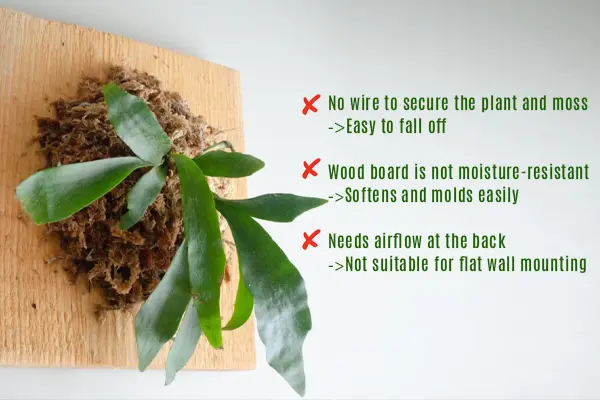
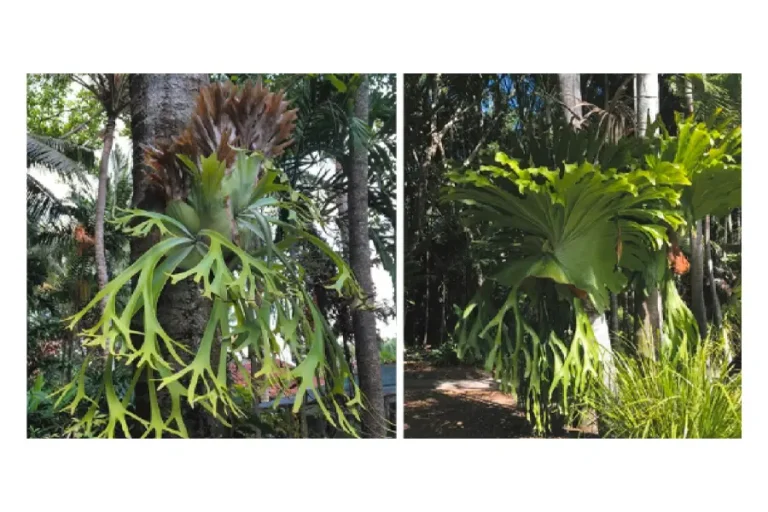
I’ve seen customers mount a Monstera adansonii on a wooden board (similar to a staghorn fern mount) near a window, and the effect is stunning—a green, textured “painting” that quietly enjoys bright filtered light. If you try this, just make sure the wall fixture can handle the weight and that you can still reach the plant for watering.
3. Create an “Indoor Jungle” by Grouping Plants
Monsteras love company—especially from other bright-light tropical plants. Grouping them is good for both light management and humidity.
You can:
- Cluster Monstera with plants like bird of paradise, fiddle leaf fig, or peace lily in one bright corner
- Use one sheer curtain or grow light setup to serve the entire group
- Enjoy a small humidity boost as all the plants transpire together
I have a sunny bay window where I group my Monstera with a philodendron and a peace lily (which also appreciates bright, indirect light). They seem to support each other in more ways than one: the leaves stay firm, the air feels more humid, and the light is easy to manage in a single zone.
Use Vertical Light Sources to Improve Monstera Growth
Finally, think about the angle of light in your home. Most of us rely on side light from windows, but Monsteras also respond beautifully to light from above.
If you have:
- A skylight
- A high clerestory window
- Or a ceiling-mounted grow light
then a climbing Monstera can grow up toward that top-down light and develop more balanced growth. I once saw a Monstera in an atrium that had climbed all the way to the second-story skylight – it looked like it had checked into Monstera heaven.
You don’t need a double-height space to get similar benefits. Even a reasonably tall moss pole under a ceiling-mounted grow light helps:
- Reduce uneven, one-sided growth caused by light from just one window
- Encourage upright, symmetric leaves
- Keep more of the plant within the “ideal light zone” in your room
If your Monstera is currently by a window, that’s perfectly fine—just remember to rotate the pot every 1–2 weeks so all sides get their share of light. If you add overhead illumination as well, you’ll often see an improvement in leaf shape and evenness.
Summary: Let Your Monstera Climb Into Better Light
In short, help your Monstera help itself:
- Give it a sturdy moss pole or trellis
- Stabilize the pot so it doesn’t tip
- Use vertical space and smart placement to maximize bright, indirect light
By guiding your Monstera upward, you prevent the common “sprawling problem,” where stems crawl across the floor in search of support and light. Instead, you’re leveraging the plant’s natural climbing behavior so more leaves sit in that “sweet spot” of good light every day.
The results are easy to see:
- Better photosynthesis
- Larger, more fenestrated leaves
- A stronger overall structure
- And a truly stunning statement plant in your home
A well-supported Monstera with a full crown of fenestrated leaves doesn’t just meet its light requirements—it becomes a living centerpiece that elevates your interior design on both desktop screens and mobile displays.
Seasonal Monstera Light Care: How to Adjust Light Through the Year
Your Monstera’s basic light requirements stay the same all year – it loves bright, indirect light – but the amount of light available in your home changes with the seasons. Short winter days and intense summer sun can both affect how much light your Monstera actually receives. Adjusting your setup a little each season keeps your plant growing steadily instead of struggling.
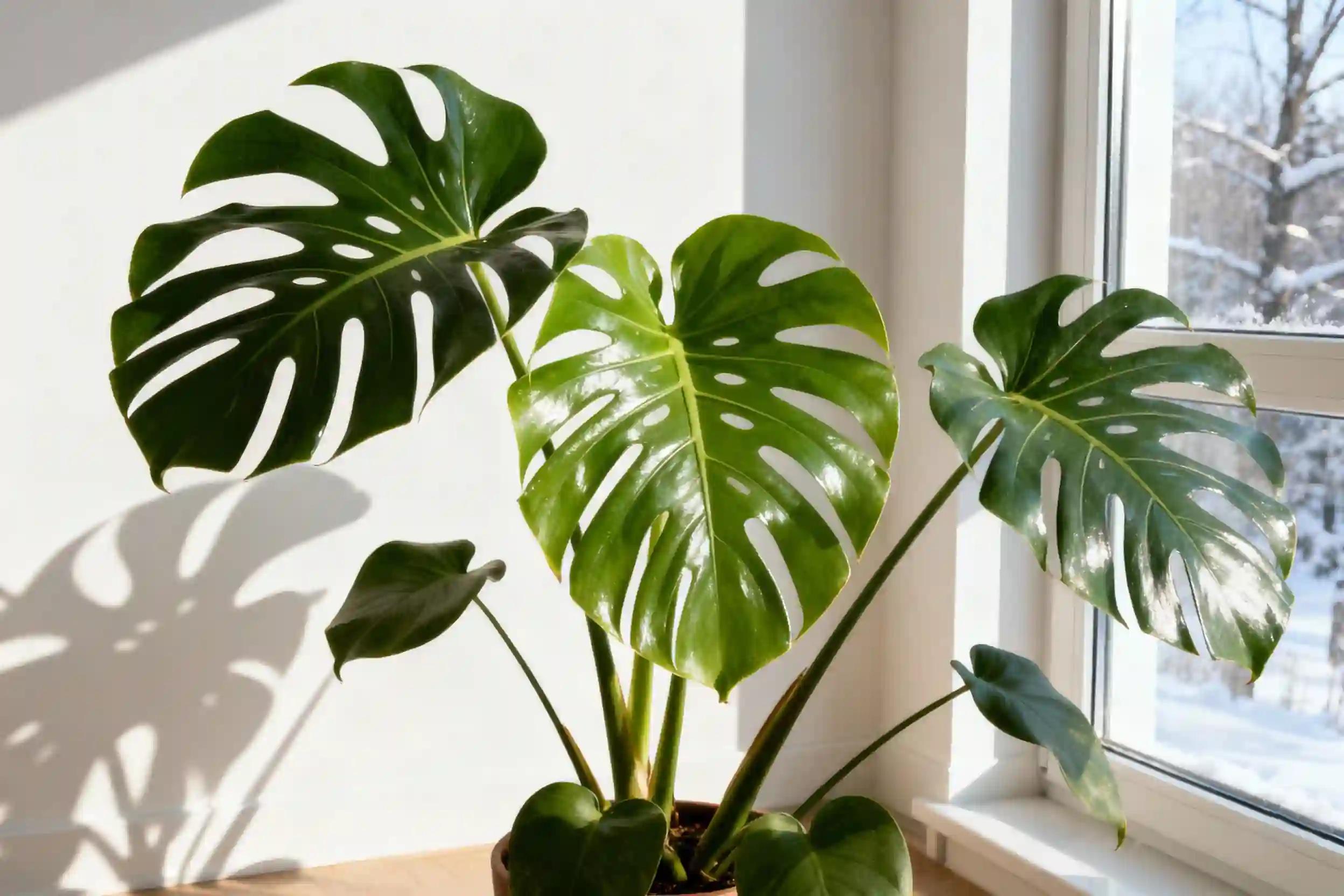
Winter Monstera Light Requirements
In winter, light intensity drops noticeably:
- Days are shorter
- The sun sits lower in the sky
- Previously bright corners can become surprisingly dim
To keep your Monstera happy in winter:
- Move it closer to the window.
That bright summer corner may be too dark in December and January. Don’t be afraid to shift your Monstera to a brighter windowsill than you’d use in summer. - Use south-facing windows wisely.
A south-facing window that might scorch your Monstera in July can be perfect in winter, offering gentle direct light for an hour or two without burning the leaves. - Protect it from cold drafts.
Avoid placing your Monstera right next to leaky windows or doors. If you notice cold air at night, pull the plant a little farther back after sunset or insulate the window to prevent cold stress. - Supplement with grow lights in very dark homes.
In far-north climates or heavily shaded apartments, even the best window might not be enough. A simple LED grow light on a timer can add a few extra hours of “daylight” and keep your Monstera from going into a deep sulk. Just remember to switch it off at night – Monsteras need darkness to rest and reset their internal rhythms.
In short, Monstera winter care is all about giving it more access to whatever light you do have, while keeping it warm and draft-free.
Summer Monstera Light Requirements
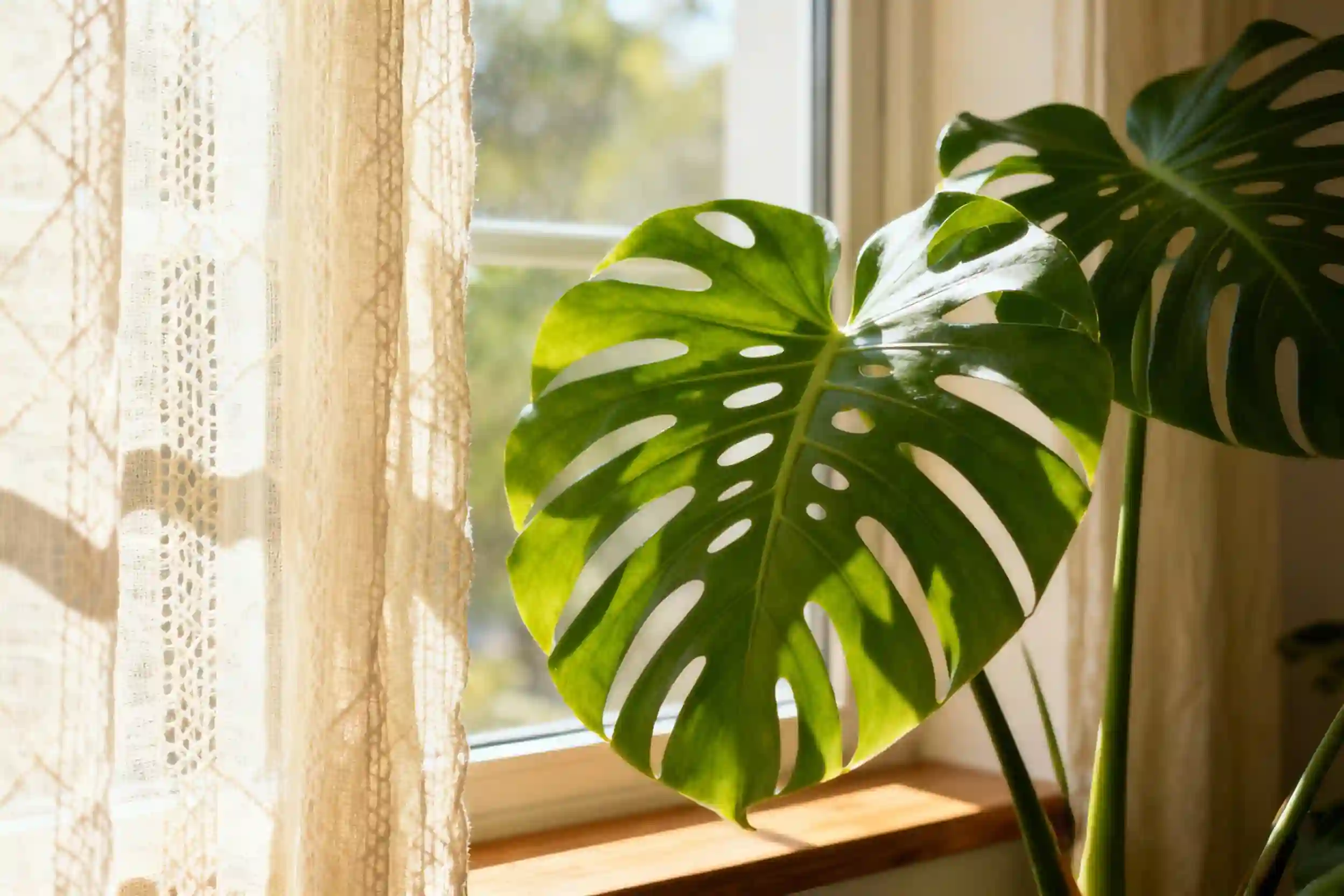
Summer flips the problem: now the sun can be too strong, especially through glass.
As the sun’s angle changes in late spring and summer:
- Sunbeams may reach deeper into the room
- A spot that was safely bright and indirect in spring can become harsh, direct light in summer
To keep your Monstera safe from summer sun damage:
- Watch for sudden direct sun.
Check your plant’s location around midday in late spring and early summer. If you see strong beams hitting the leaves, that’s your sign to move the plant slightly back or filter the light. - Use sheer curtains or window film.
A sheer curtain is one of the easiest ways to create bright, indirect light for Monsteras. It softens harsh rays while keeping the room bright and plant-friendly. - Acclimate plants slowly if you move them outdoors.
If you give your Monstera a “summer vacation” outside, never put it straight into full sun. Outdoor sun is much stronger than indoor sun filtered through glass. Start it in full shade, then move to bright shade (like a covered porch or under a tree). Full midday sun will quickly scorch Monstera leaves. - Check soil moisture more often.
Long, bright days mean your Monstera uses more water and dries out faster. In summer, you may need to:- Water more frequently
- Monitor the top few centimeters of soil regularly
- Increase feeding slightly (because higher light = more growth and more nutrient use)
Think of summer Monstera care as protecting the plant from excessive heat and light, while supporting its faster growth with proper watering and feeding.
Rotating and Cleaning: Simple Habits That Improve Light Use
No matter the season, two simple habits can dramatically improve how effectively your Monstera uses light: rotating the plant and cleaning the leaves.
Rotate Your Monstera for Even Growth
Monsteras naturally lean toward their light source. If the light is coming from only one direction (like a window):
- Stems will bend toward the light
- Growth can become one-sided or lopsided
To prevent this:
- Rotate your Monstera a quarter turn every week or two
- Make this part of your regular watering or checking routine
This helps every side of the plant receive similar light, encouraging balanced, upright growth instead of a plant that’s constantly leaning or twisting.
Clean the Leaves to Boost Photosynthesis
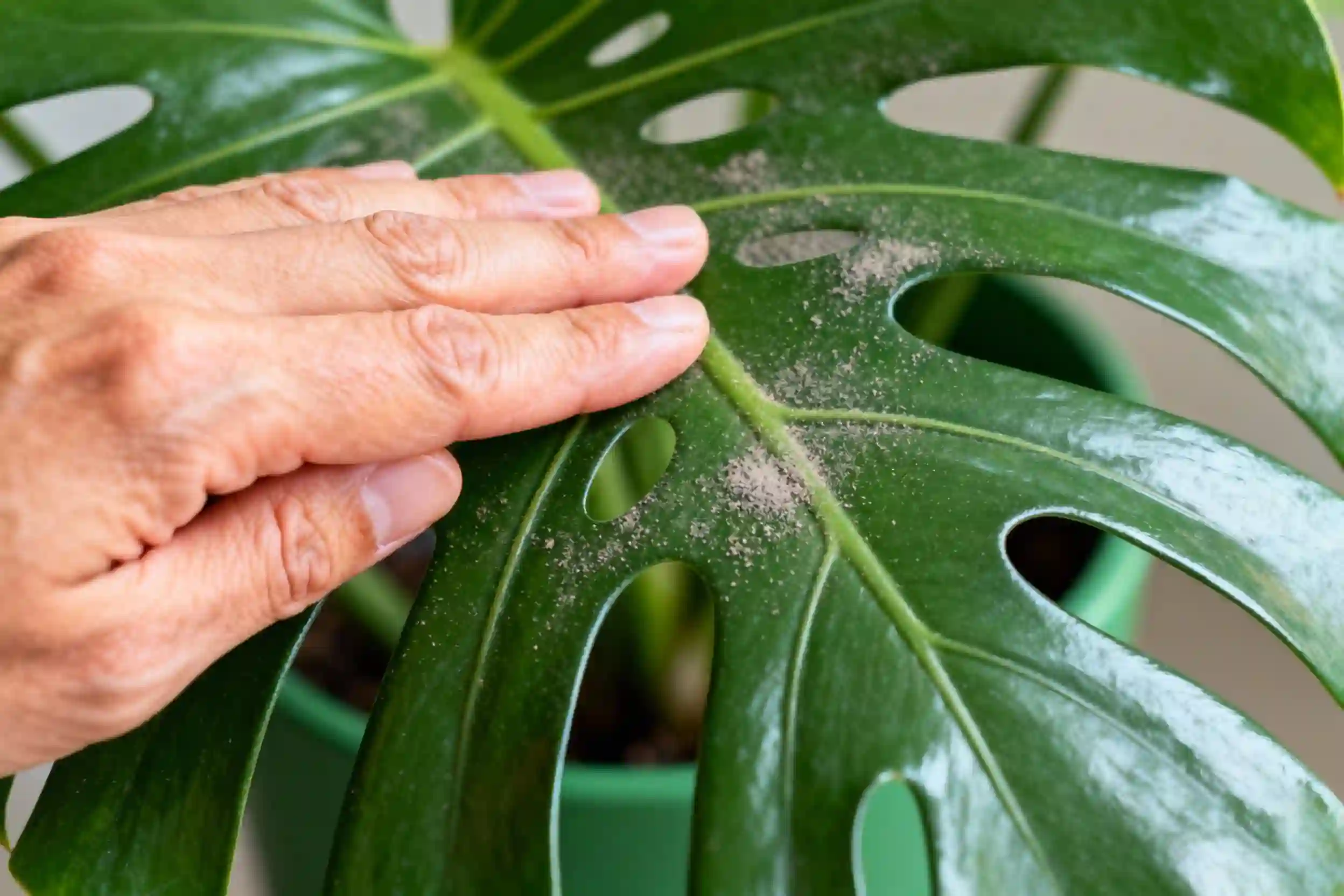
Monstera leaves are broad and beautiful – which also makes them dust magnets. A thin layer of dust:
- Blocks light from reaching the leaf surface
- Reduces photosynthesis efficiency
- Can make leaves look dull and tired
A simple cleaning routine keeps your Monstera looking and performing its best:
- Every few weeks, wipe each leaf with a soft, damp cloth
- Support the leaf with one hand underneath while wiping with the other to avoid bending or tearing
- For large plants, you can occasionally give the whole plant a gentle lukewarm shower in the bathtub to rinse away dust
Clean leaves are like clean windows – more light gets through, and your Monstera can make the most of the light you’re giving it.
Observation Is Key: Adjust Light Based on Your Plant’s Feedback
The most powerful tool you have for perfecting your Monstera light setup is simple: observation.
Every home is different:
- Window sizes and directions vary
- Nearby buildings and trees change how much light comes in
- Even within the same room, one corner can be much brighter than another
Make it a habit to:
- Check how your Monstera looks at different times of day
- Watch for changes in leaf color, leaf size, or growth speed
- Re-evaluate light first whenever the plant looks unhappy
In my experience, most Monstera issues come down to light or water. When you get light right – bright, indirect, and adjusted with the seasons – you prevent many problems before they start. A well-lit Monstera:
- Grows more robustly
- Resists pests and diseases better
- Shows off bigger, healthier leaves with more fenestrations
If you use the tips from this guide – providing bright indirect light, avoiding extremes, using supports, rotating and cleaning regularly, and adjusting with the seasons – you’ll see your Monstera deliciosa, Monstera adansonii, or any Monstera variety flourish. There’s nothing more rewarding than seeing those dramatic new splits appear and knowing it’s because you created the perfect light conditions.
Light is a huge part of that equation, and seasonal tweaks are the secret to keeping your Monstera thriving all year round, on both sunny windowsills and in cozy indoor corners.
Conclusion: Getting Monstera Light Requirements Right
Caring for a Monstera becomes much simpler once you understand its light requirements. To recap, your goal is to provide as much bright, indirect light as possible – this is the cornerstone of long-term Monstera health. Avoid the extremes:
- Don’t let your plant sit in a dark corner, or you’ll end up with slow growth, leggy stems, and undersized leaves.
- Don’t expose it to harsh, direct midday sun, which can scorch and discolor those beautiful leaves.
When you strike that happy balance, your Monstera will reward you with vigorous growth and large, fenestrated leaves that instantly give your home a lush, tropical feel.
Remember, plant care is a journey, not a one-time setup. Don’t be afraid to move your Monstera and experiment with different spots in your home. I move my plants more often than my furniture, and that’s okay—your Monstera will “vote” with its foliage, showing you whether it loves or hates a new location. With each small adjustment, you’re getting closer to true “Monstera parent” mastery.
Whenever you’re unsure, come back to these fundamentals:
- Bright, indirect light for at least several hours a day
- Moderate watering that lets the topsoil dry slightly between waterings
- Sturdy support, like a moss pole, to help it grow upward toward the light
- Consistent care and a little patience
Follow these basics and fine-tune your light setup, and you won’t just have a surviving Monstera—you’ll enjoy a thriving, statement-making plant that may one day outgrow its corner and become the centerpiece of your indoor jungle, on both desktop and mobile screens.
Once you’ve dialed in your Monstera light requirements, your next step is to refine watering, soil, and repotting—everything you’ll find in my Monstera care for beginners indoors guide.
Monstera Light Requirements FAQ
How much light does a Monstera really need?
A Monstera grows best in bright, indirect light for about 5–8 hours a day. In practice, that usually means placing it a few feet away from an east-, south-, or west-facing window where the sun is filtered, not hitting the leaves directly.
Can a Monstera live in low-light conditions?
A Monstera can survive in low light, but it will not thrive. You’ll often see slower growth, smaller leaves, fewer or no fenestrations, and leggy stems stretching toward the window. If your home is naturally dim, supplement with an LED grow light to meet its basic light requirements.
Is direct sunlight bad for Monstera leaves?
Strong, direct midday sun can scorch Monstera leaves, causing brown, crispy patches or bleached spots. Gentle morning or late-afternoon sun is usually fine, but avoid prolonged direct sun through glass. If you notice burn marks, move the plant farther from the window or filter the light with a sheer curtain.
How far should I place my Monstera from a window?
For most homes, 3–5 feet (about 1–1.5 m) from a bright window is a good starting point for bright indirect light. East-facing windows can be closer, while south- or west-facing windows may require a bit more distance or a sheer curtain to prevent leaf burn. Adjust based on how your plant responds.
What are the signs my Monstera isn’t getting enough light?
ommon signs of insufficient light include:
1. Leggy stems with big gaps between leaves
2. Small, non-fenestrated new leaves
3. Yellowing of older leaves and persistently wet soil
4. Overall very slow or stalled growth
If you see these symptoms, move your Monstera to a brighter spot or add a grow light to meet its light requirements.
Can Monstera grow under artificial light only?
Yes, a Monstera can grow under high-quality LED grow lights as long as it receives enough intensity and duration—roughly 10–12 hours per day of bright, indirect-equivalent light. Position the light 12–24 inches (30–60 cm) above the foliage, and avoid placing it so close that it heats or bleaches the leaves.
Do Monstera leaves need light on both sides of the plant?
Ideally, yes. Monstera leaves will lean toward the strongest light source. To keep growth even and prevent a one-sided plant, rotate the pot 90° every week or two so different sides receive light over time. This is especially helpful in rooms with a single bright window.
References
- Muir, C. D. (2013). How did the Swiss cheese plant get its holes? The American Naturalist, 181(2), 273–281.
- Qin, Y., Zhang, X., & Liu, H. (2024). The role of light in regulating plant growth, development and sugar metabolism. Frontiers in Plant Science, 15, 1507628.
- Shibata, M., et al. (2023). Adaptation of indoor ornamental plants to various lighting levels in office environments. Scientific Reports, 13, Article 12345. (Study on Epipremnum aureum, Pachira aquatica, Rhaphidophora tetrasperma under different indoor light intensities).
- Li, J., & Park, J. (2022). Natural vs. artificial light: A study on the influence of light source on indoor plant growth. Buildings, 12(6), 1482.
- Zhang, L., & Chen, Y. (2022). Effect of lighting environment on the CO₂ concentration reduction in indoor spaces using potted plants. Buildings, 12(11), 1848.
- Lee, D. W., & Fetcher, N. (1993). Photosynthetic responses of tropical forest plants to contrasting light environments. In Photosynthesis in contrasting environments (pp. 1–32). Springer.
- Cervantes, V. H., et al. (2011). Epiphytic plants responses to light and water stress. Asian Journal of Plant Sciences, 10(2), 97–107.
- University of Maryland Extension. (2022). Lighting for indoor plants. Retrieved 2025, from the University of Maryland Extension website.
- University of Florida IFAS Extension. (2025). Light for houseplants. Retrieved 2025, from UF/IFAS Gardening Solutions.
- The Spruce Editorial Team. (2024). Monstera light needs: How much light does a Monstera need? The Spruce.
- Greg Plant Care. (2024). Light requirements for your Monstera deliciosa. Greg app knowledge base.
- Garcia, M. (2025). Monstera light requirements: Perfect bright indirect guide. Alibaba Gardening.