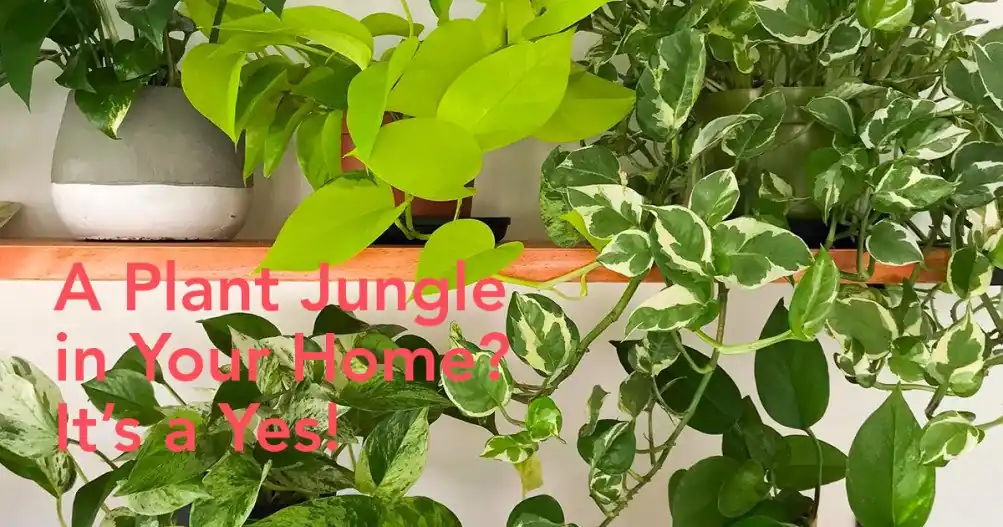
Picture walking into your living space and instantly being wrapped in a tranquil sanctuary that evokes the vibe of a vibrant jungle oasis. Though integrating nature indoors might sound like a challenging endeavor, it’s far more manageable than you’d anticipate.
Suspended indoor plants are renowned for their ability to whisk you away to a serene, soothing setting—one where the pressures of daily life gradually fade into the background. These trailing greenery pieces let you effectively craft a dense, jungle-inspired ambiance right within your own home.
Indoor hanging plants are your gentle, forgiving allies—they dangle gracefully, purify the air, and layer your rooms with that lush, layered vibe without overwhelming your shelves or surfaces.
Let’s dive into 12 of our favorite picks that are practical, resilient, and ready to help you craft your own home jungle. We’ll cover care basics so you can nurture them with confidence, turning your space into a sanctuary that feels just right for you.
Why Indoor Hanging Plants Are Your 2026 Must-Have for a Serene Home Jungle
Picture this: soft vines cascading from ceilings, fern fronds unfurling like secrets, and tiny blooms adding pops of color—all while filtering out the day’s worries from your air. Hanging plants aren’t just decor; they’re a heartfelt nod to biophilic design, that science-backed way of weaving nature into our lives to boost mood and focus.
According to NASA’s Clean Air Study, many of these trailing wonders actively scrub toxins like formaldehyde and benzene, making your home healthier without extra effort.
The beauty of these plants? They’re adaptable to real-life rhythms—whether you’re a busy parent juggling zoom calls or a weekend warrior testing propagation hacks. By choosing the right ones for your light levels (bright indirect, medium, or low), you can layer them like a natural canopy: taller ferns up high, delicate strings below.
Not just hanging plants? There are also water plants that don’t require soil for you to choose from: Discover the Joy of Hydroponics: Thriving Indoor Plants in Water Alone.
No interior design degree required—just a sturdy hook, some empathy for their needs, and a willingness to spritz or water on the regular. Ready to pick your jungle squad? Here’s our curated list of 12 indoor hanging plants, each with quick care notes to keep things simple and sustainable.
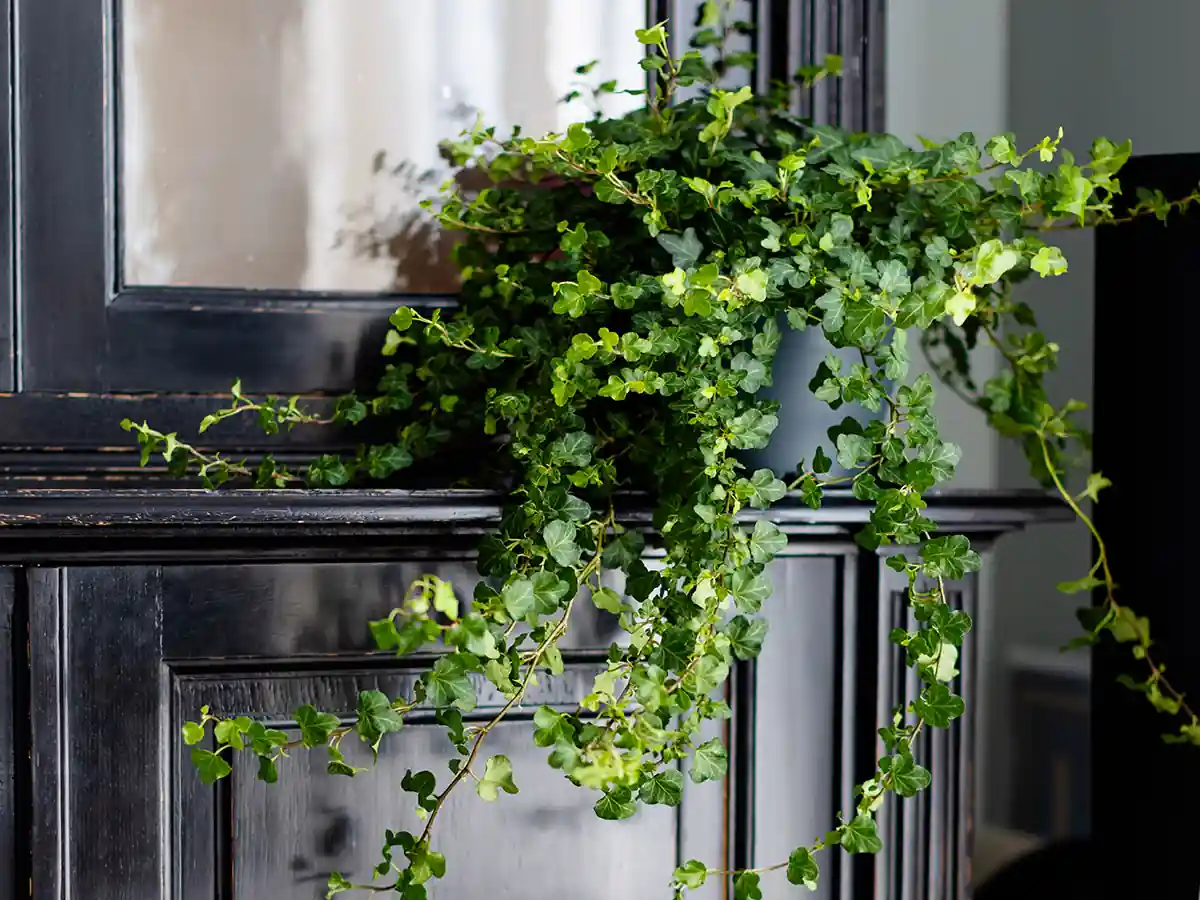
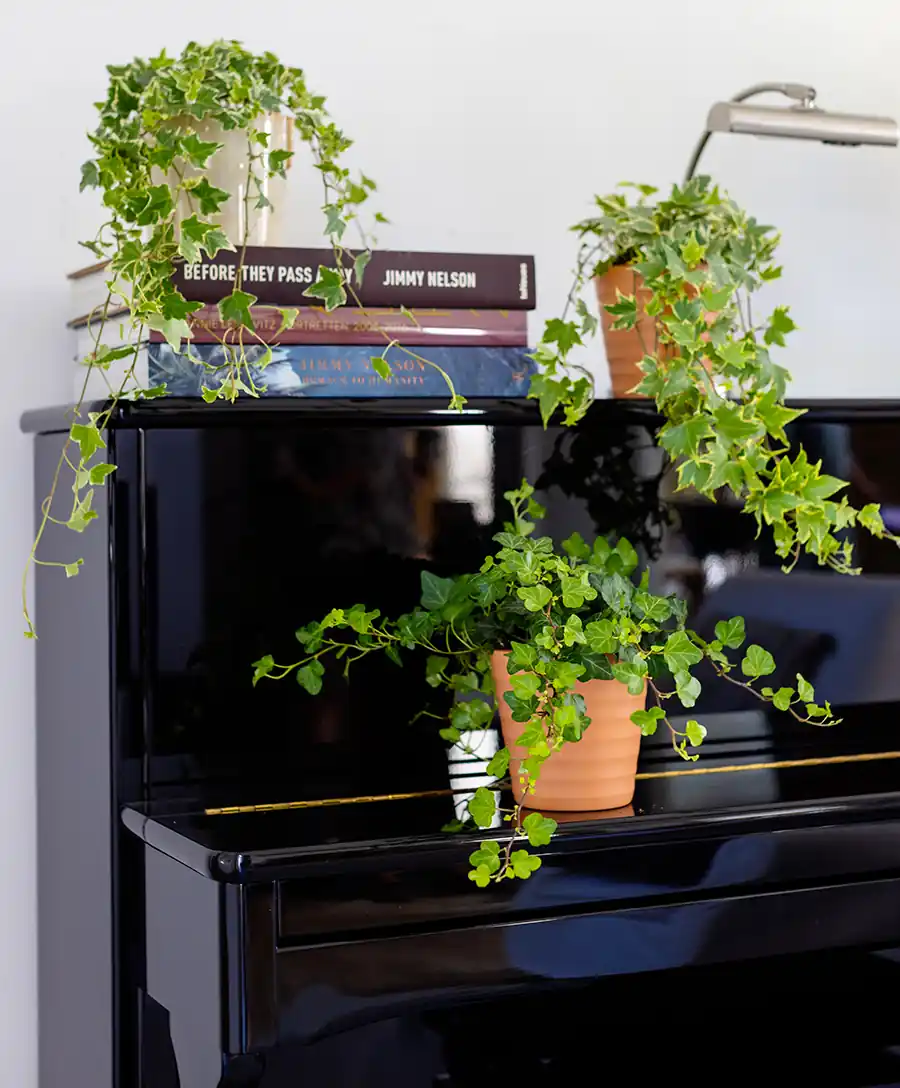
1. English Ivy (Hedera helix): The Versatile Trailblazer
Kick off your indoor hanging plant collection with English Ivy – a frequently underrated yet remarkably efficient pick for crafting a lush indoor oasis. Scientifically named Hedera helix, this adaptable and easy-care trailing plant excels at infusing indoor areas with a refreshing burst of greenery.
Its cascading growth habit has made it a go-to selection for hanging planters, as its stems can stretch to considerable lengths, creating a beautiful waterfall effect when suspended from baskets or trellises.
Beyond its trailing charm, the plant’s dainty, lobed foliage boasts a vivid green hue that injects vitality into any room’s decor. As it matures, English Ivy can also be trained to climb vertical surfaces like walls or trellises, resulting in a striking showcase of dense foliage.
Complementing its visual allure, this plant has earned widespread praise – including recognition from Air So Pure – for its natural air-purifying capabilities. Renowned for filtering out harmful toxins and pollutants from indoor air, English Ivy stands out as an excellent choice for enhancing both the beauty and air quality of your home.
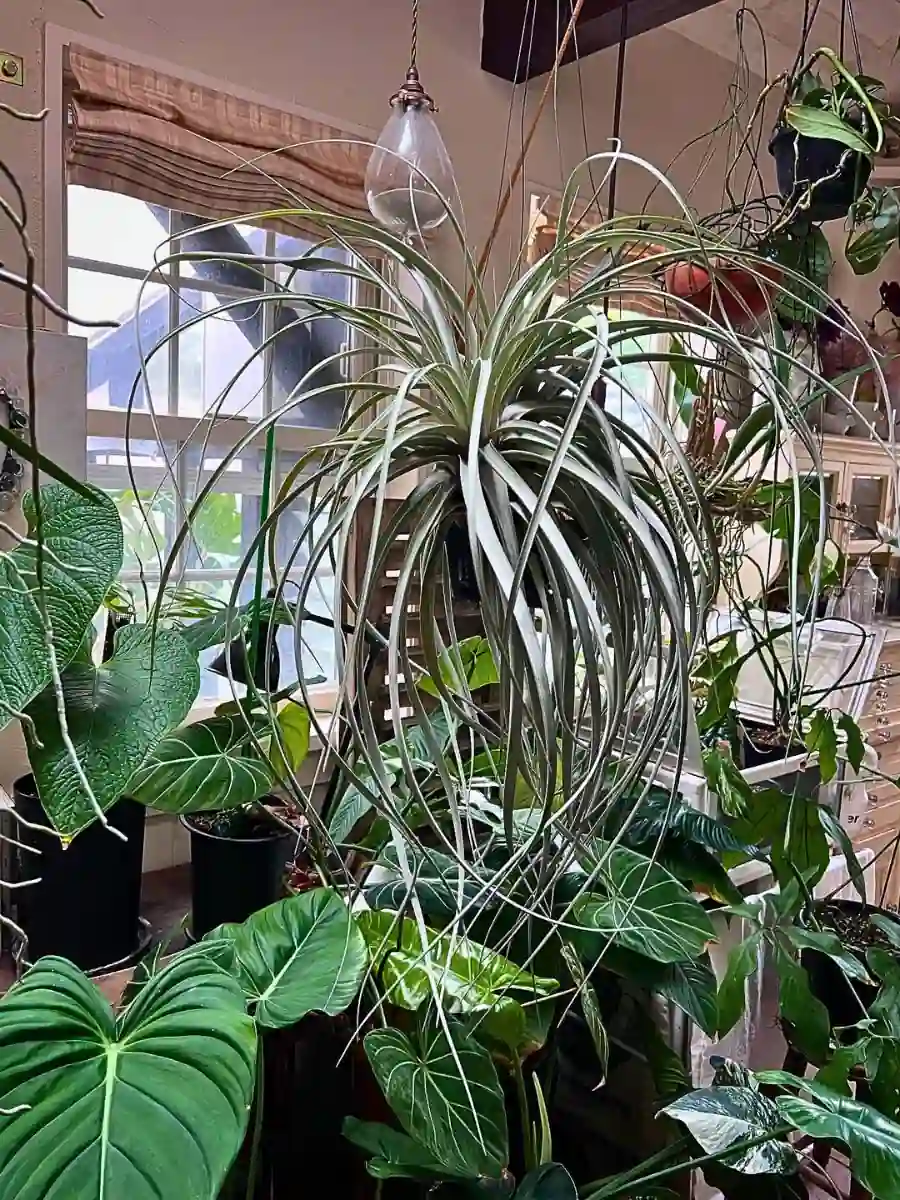
2. Air Plant (Tillandsia): The No-Soil Wonder
No curated collection of plants would be complete without the air plant, scientifically classified as Tillandsia. These charming specimens thrive in bright, indirect sunlight—be sure to position them in a location where they can soak up a gentle daily amount of sunshine to keep them healthy and vibrant.
Regarded as one of the top seven indoor hanging plants for transforming your living space into a lush, jungle-like retreat, Tillandsias stand out for their unique growth habits.
Unlike most plants, they can take root on virtually any surface and don’t need potting soil to flourish. To maintain their optimal condition, mist them with water once a week to provide the necessary moisture they need to thrive.
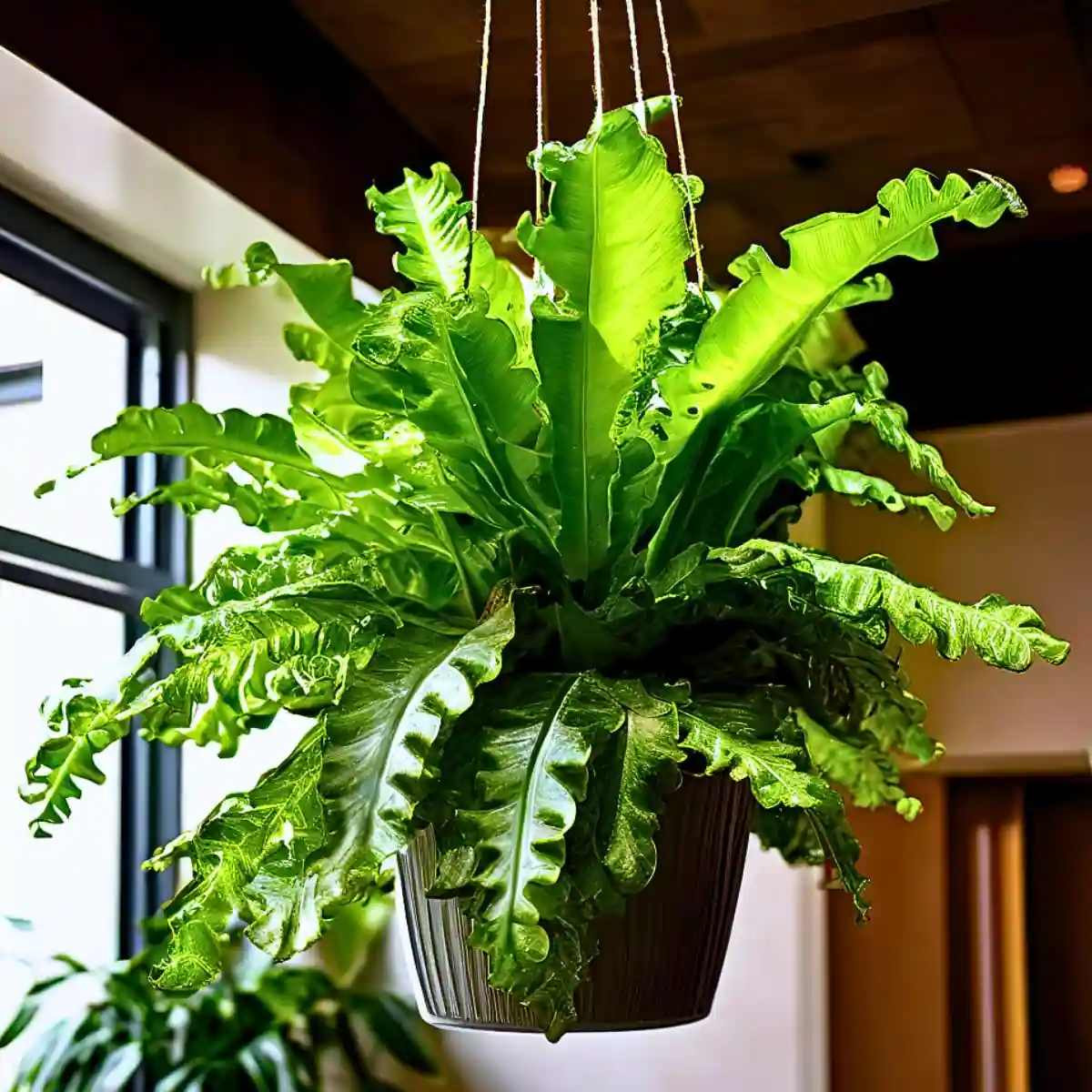
3. Bird’s Nest Fern (Asplenium nidus): The Lush Canopy Starter
Asplenium nidus, widely recognized by its common name “bird’s nest fern,” is a fern species distinguished by its distinctive nest-shaped growth habit.
This beloved houseplant has become a go-to option for indoor décor, thanks to its visually appealing fronds and the ease of caring for it—requiring minimal upkeep.
It also excels as an indoor hanging plant: the bird’s nest fern exhibits versatile growth patterns, either reaching upward toward sunlight or developing long, cascading fronds.
For optimal growth, horticultural experts advise positioning it in a location with indirect illumination, as direct sunlight should be avoided. Additionally, this fern thrives remarkably well in environments with moderate humidity!
4. Peperomia: The Compact, Pet-Safe Charmer
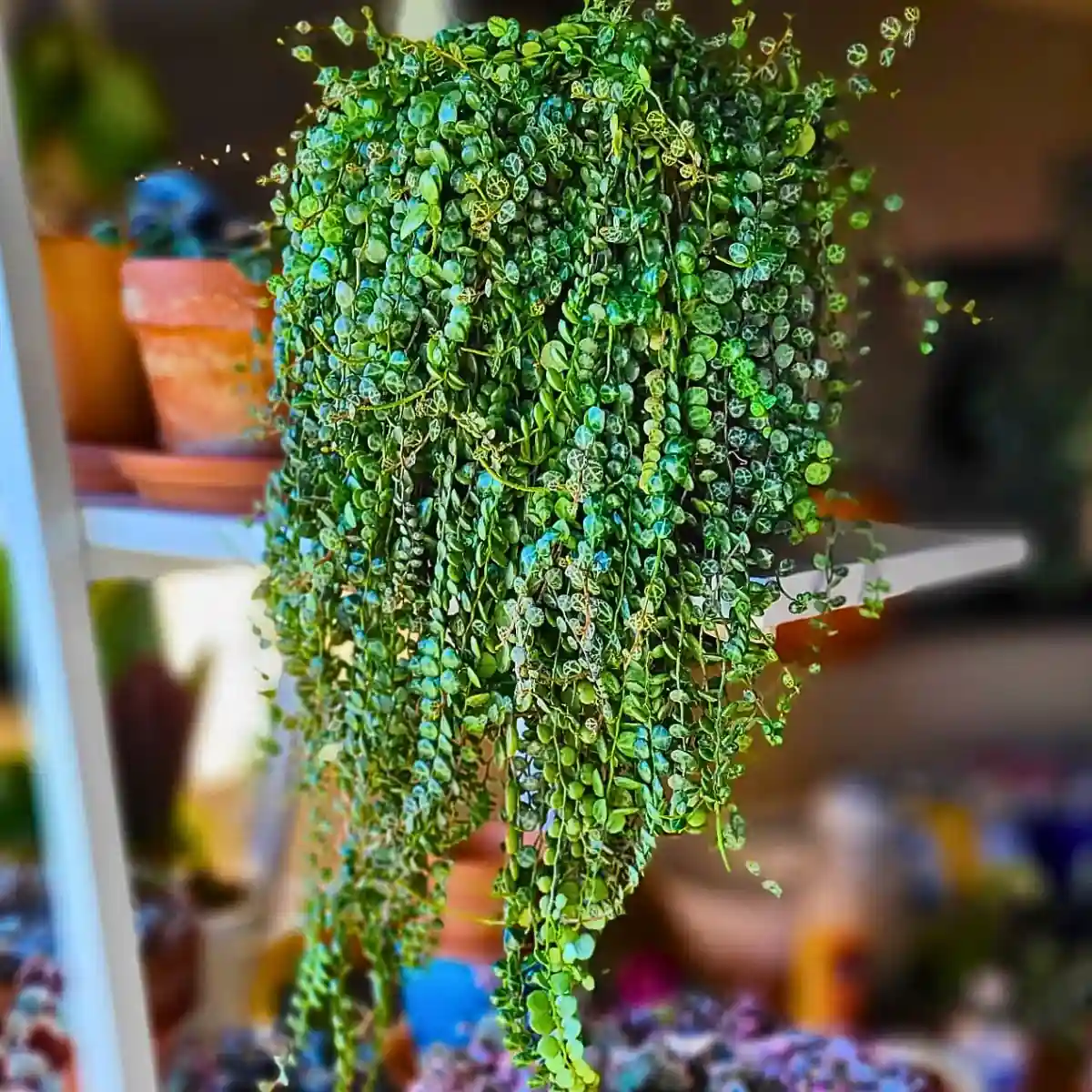
Referred to colloquially as “radiator plants,” the Peperomia genus encompasses hundreds of cultivars that have become a hit among plant enthusiasts aiming to transform their living spaces into lush indoor jungles.
Boasting charming, eye-catching foliage and a highly adaptable, low-effort growth trait, these plants secure a spot among the top seven indoor hanging specimens ideal for home cultivation.
A standout feature of many Peperomia varieties is their perfectly rounded leaves, which have excellent water-retention capabilities. This means frequent watering is unnecessary, offering a welcome reprieve for busy plant parents.
What’s more, pet owners can breathe easy—these plants are non-toxic to furry companions! For optimal growth, they thrive in environments with medium indirect light, complemented by occasional dappled sunlight.
5. Spider Plant (Chlorophytum comosum), aka Grass Lily: The Prolific Air Hero
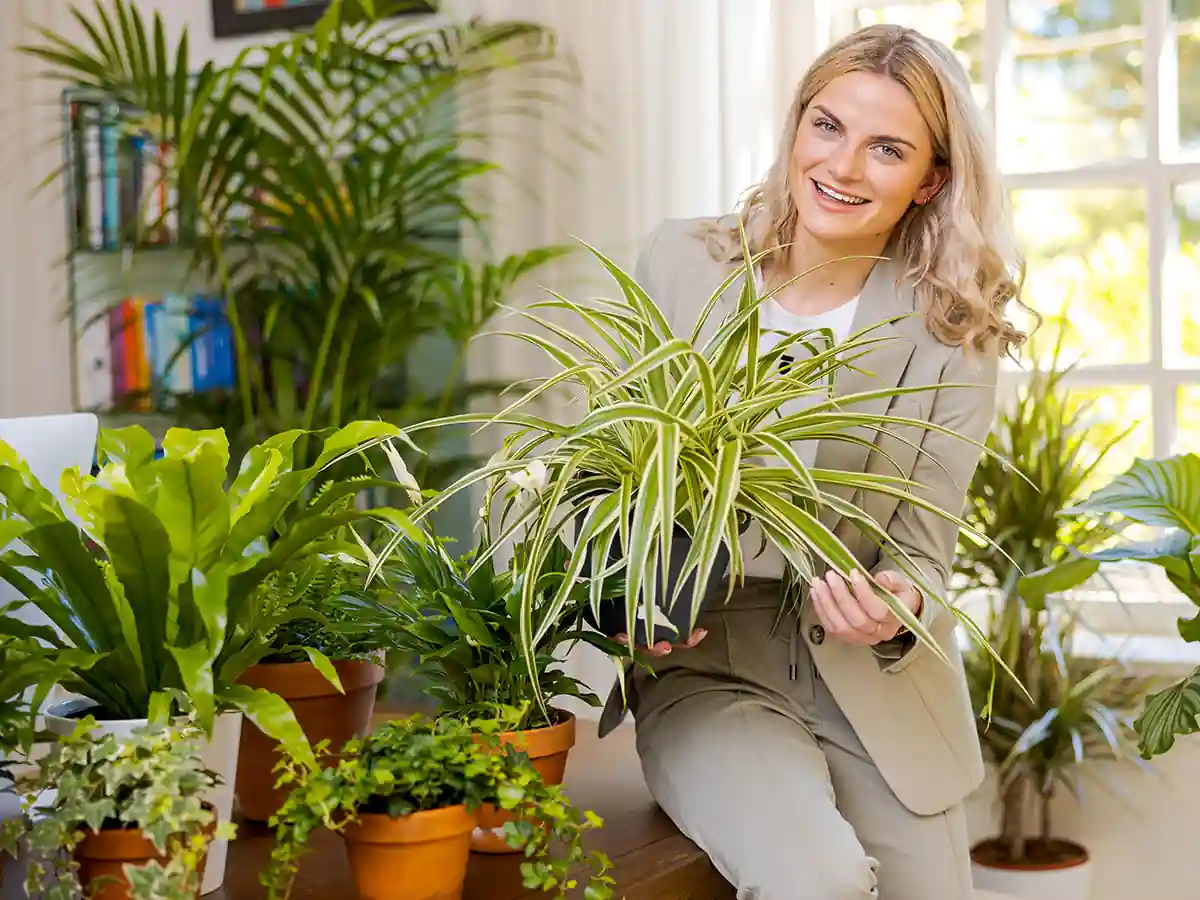
Known alternatively as spider plant or grass lily, Chlorophytum earns these common names thanks to its ribbon-like foliage and annual growth of lengthy tendrils adorned with tiny white blossoms. Post-blooming, miniature plantlets—affectionately called “pups”—sprout along these trailing stems.
These baby plants dangle downward like green-and-white streamers, instantly enhancing the plant’s fullness and vitality when displayed in a suspended arrangement. Hanging pots provide ample space for the tendrils to spread freely, solidifying the grass lily’s reputation as an elegant hanging plant.
A major advantage: Unlike certain trailing plant varieties, mature Chlorophytum remains lightweight and compact. It can be hung virtually anywhere without the concern of overburdening ceiling hooks. Additionally, it’s remarkably forgiving when it comes to sunlight, requiring only minimal exposure to thrive.
Beyond its aesthetic appeal, this hanging plant works quietly to purify the surrounding air. It even received recognition in NASA’s renowned Clean Air Study for its air-cleansing capabilities.
For those seeking low-maintenance greenery, Chlorophytum eliminates the need for high-upkeep “plant divas.” It’s no surprise that it has earned the title of an “Air So Pure” plant.
Fun Hack: Snip those pups to propagate—it’s like gifting baby plants to friends, spreading the jungle joy.
6. Silver Philodendron (Scindapsus pictus): The Shimmery Showstopper
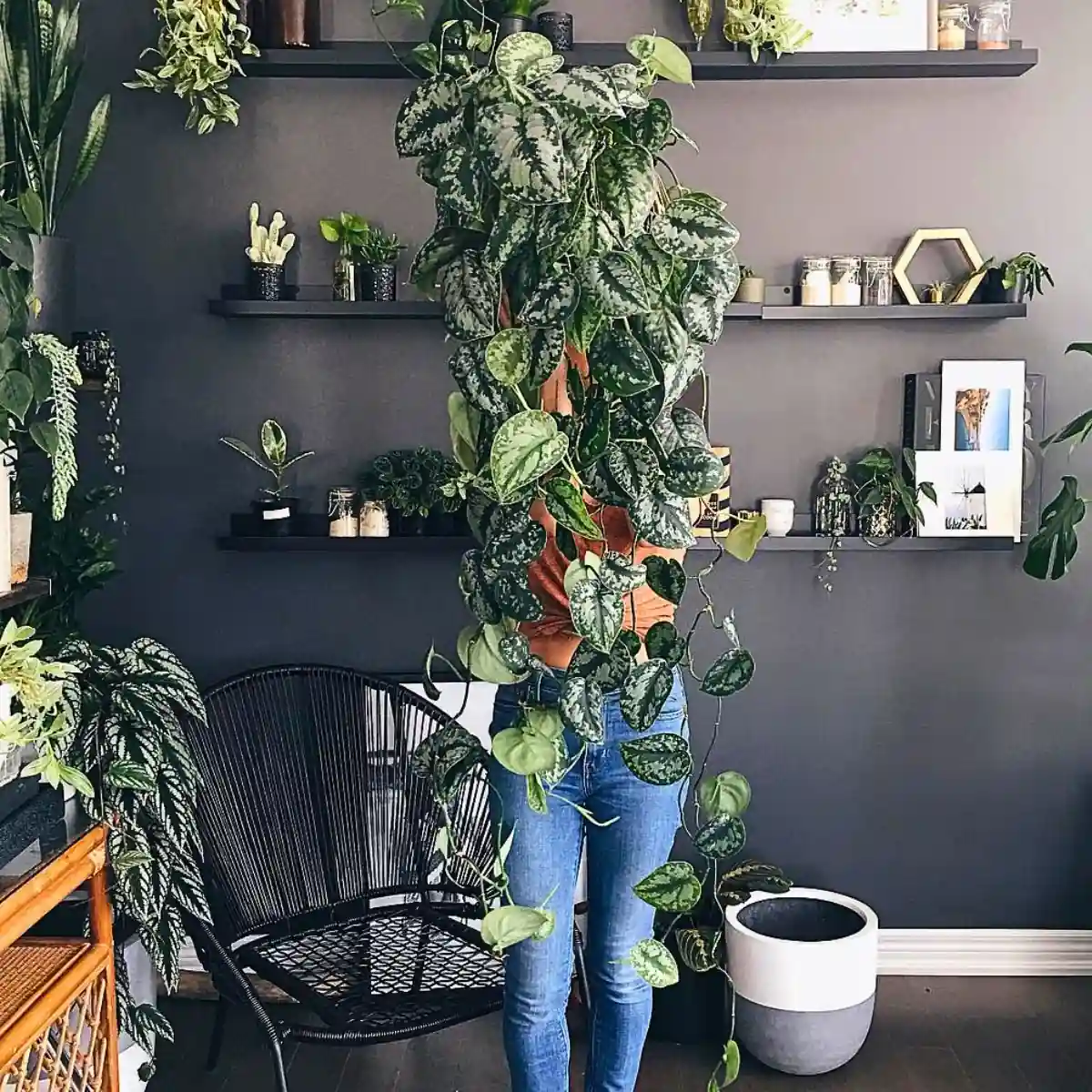
The silver philodendron stands out as another top-tier choice among indoor hanging plants. This trailing variety is undoubtedly worthy of a place in your home if you’re aiming to craft a breathtaking indoor jungle this year—its foliage matures into either a bicolor hybrid or a predominantly silver hue, and when housed in a hanging planter, it cascades downward with effortless grace.
Renowned for its lovely heart-shaped leaves boasting a striking silver-gray shade, this sought-after, eye-catching houseplant exudes an elegant, sculptural charm. It’s a true head-turner, making it an ideal focal point to elevate any indoor hanging garden display.
7. Lipstick Plant (Aeschynanthus): The Blooming Tropical Kiss
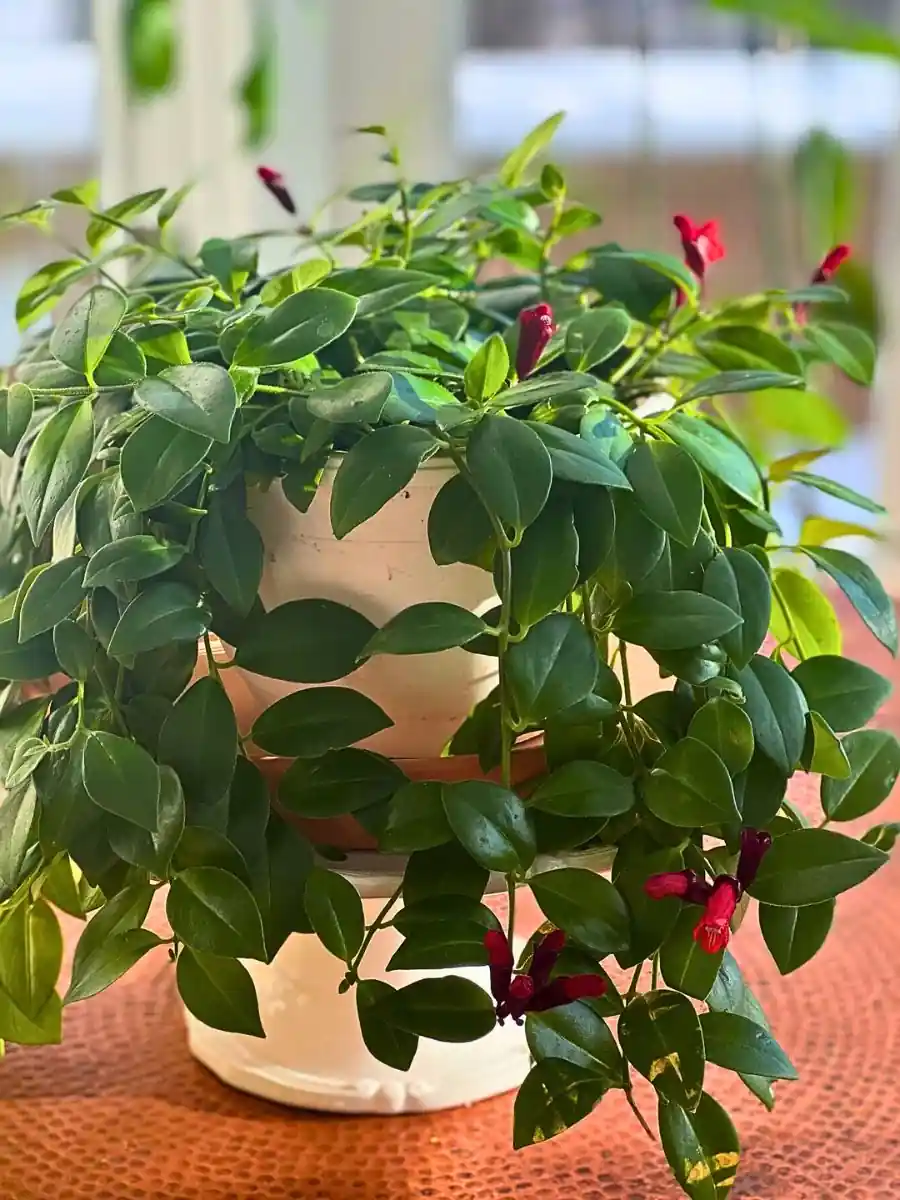
Looking for a top-tier indoor hanging plant to infuse your home with a dense, jungle-esque vibe? The Lipstick Plant is an outstanding pick! It gets its popular moniker from its breathtaking, vivid red tubular blooms that bear a striking resemblance to lipstick tubes. Complementing these eye-catching flowers are its trailing vines adorned with shiny, deep green foliage, which further amplifies the lush, tropical charm of the plant.
This plant thrives in hanging baskets and planters, thanks to its vining and cascading growth pattern. When placed at an elevated spot, its gracefully trailing vines create a dramatic visual impact. What’s more, the cascading growth allows the plant to spill over the edges of hanging containers, introducing a sense of depth and layering to your jungle-themed interior.
Pair it with other trailing and vining houseplants like Pothos, Philodendrons, and English Ivy, and you’ll take your home’s jungle ambiance to the next level. The Lipstick Plant’s one-of-a-kind blossoms and foliage bring a dash of tropical sophistication, perfectly complementing the lush, natural aesthetic you’re striving to create.
| Feature | Lipstick Plant | English Ivy |
|---|---|---|
| Light Needs | Bright indirect | Medium/low |
| Bloom Potential | High (red tubes) | None |
| Water Frequency | Weekly | Bi-weekly |
8. Marble Pothos (Epipremnum aureum): The Beginner’s Trail Mix
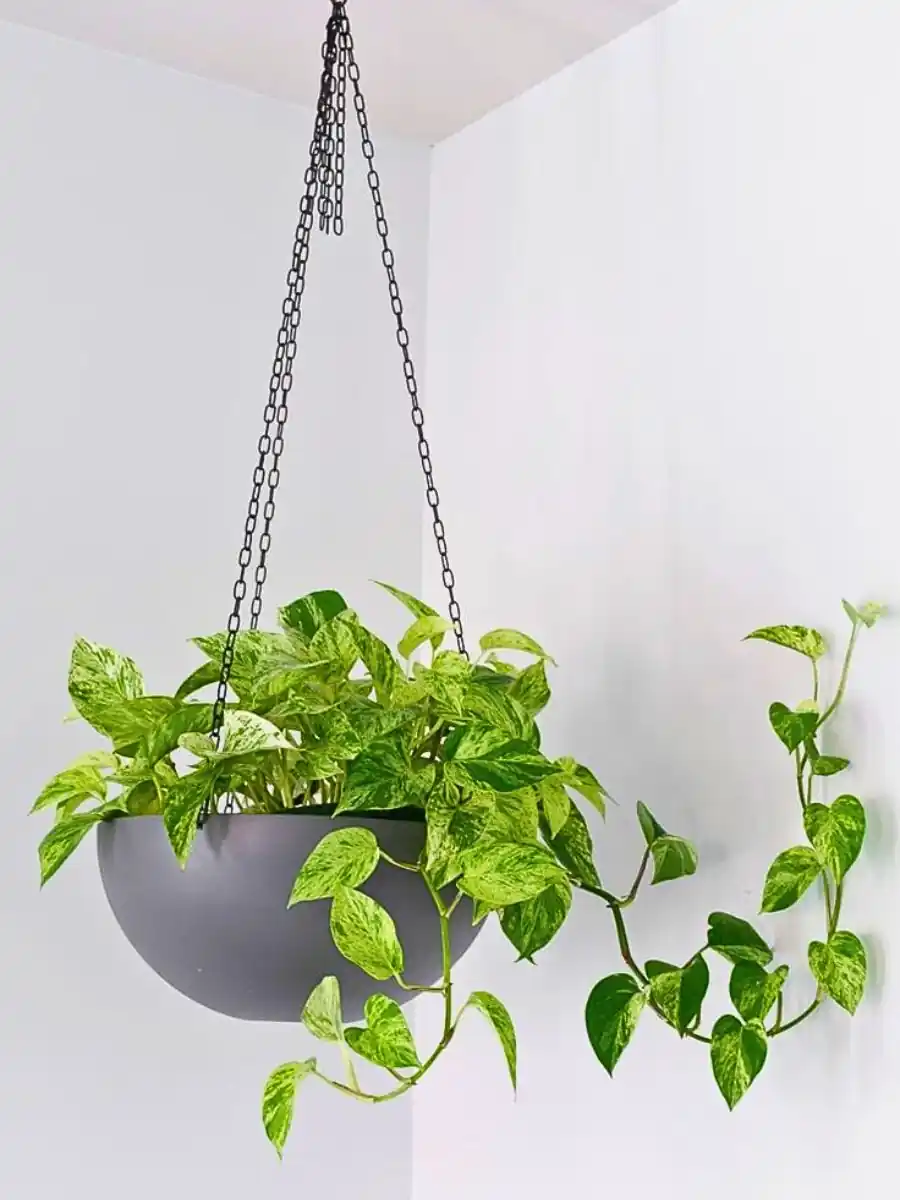
Renowned for their luxuriant trailing vines, Marble Pothos plants boast exceptional ease of care and are remarkably low-maintenance—undoubtedly earning them a spot as a timeless houseplant favorite!
This charming species thrives with minimal attention, effortlessly growing into lengthy, cascading tendrils that add vitality to any indoor space.
Ideal for novice plant parents, they’re a breeze to propagate through stem cuttings. Simply provide this lovely foliage with medium, indirect sunlight, and you’ll be delighted by how it enhances the aesthetic of your home plant collection.
9. String of Hearts (Ceropegia woodii): The Romantic Cascader
For those plant enthusiasts eager to dedicate extra time to their leafy companions, the String of Hearts stands out as an ideal choice—though it demands slightly more attention compared to other indoor trailing plants.
This charming specimen derives its name from its distinctive heart-shaped foliage, which dangles gracefully along lengthy, cascading vines. Typically boasting green upper surfaces paired with silvery-purple undersides, the leaves create a delightful visual contrast that enhances its appeal.
As it matures, the plant’s trailing vines can grow to several feet long, infusing your indoor green space with a whimsical, romantic ambiance. Thanks to its trailing growth pattern, it cascades exquisitely from hanging planters, introducing a sense of depth and dynamic movement to any room. Classified as a succulent, the String of Hearts features lush foliage reminiscent of a garland of tiny hearts.
However, it’s somewhat of a hybrid variety among succulents due to its specific water and soil requirements. A key care note: it needs more frequent watering than most succulents, yet it’s crucial to avoid letting its roots sit in standing water.
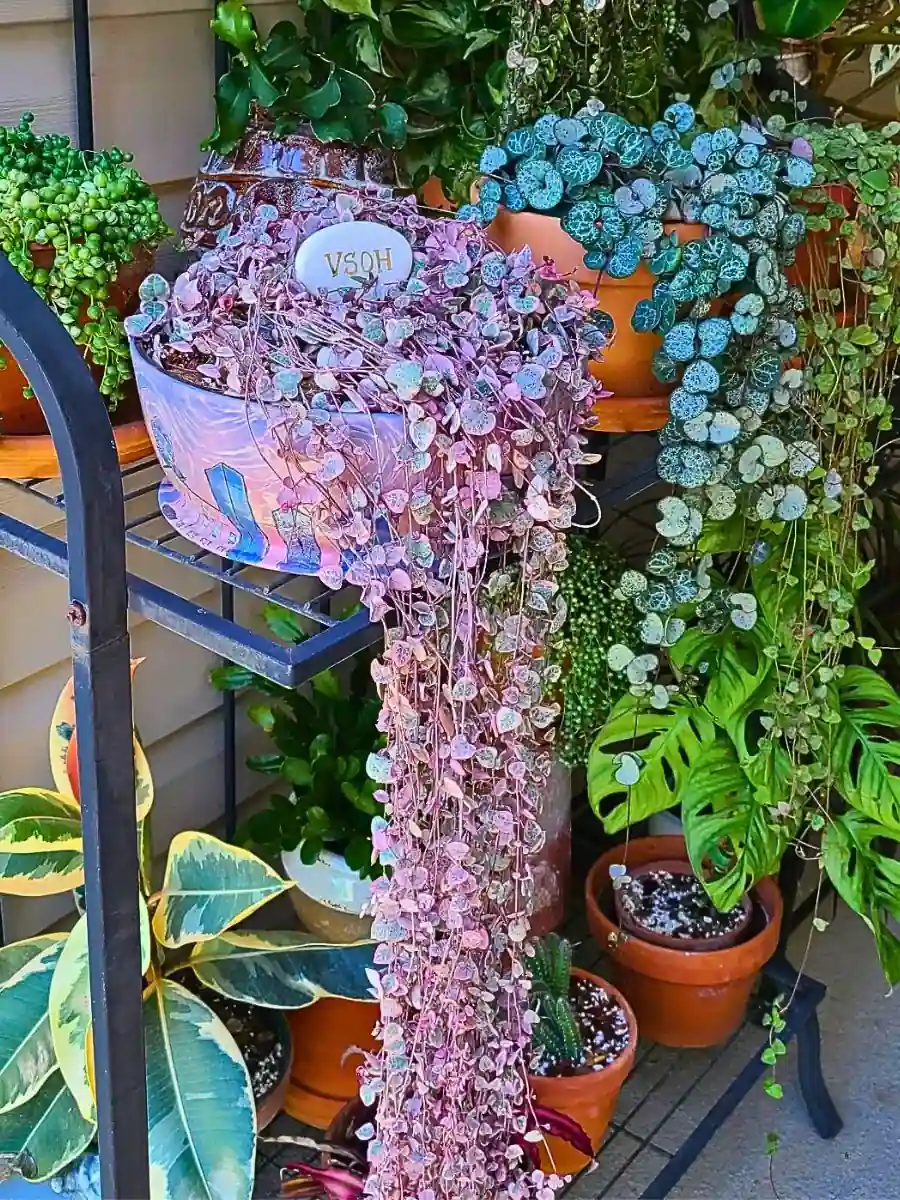
Photo by @amandaandtheplants
10. String of Pearls (Senecio rowleyanus): The Whimsical Bead Chain
This eye-catching and one-of-a-kind plant makes an exceptional addition to any indoor greenery collection. Dubbed the String of Pearls, it earns its name from its distinctive bead-shaped foliage that drapes in lengthy, cascading tendrils.
The leaves typically sport a delicate silvery-green hue, infusing your indoor area with a whimsical charm and rich textural appeal. As the plant matures, its trailing vines can grow to several feet long, producing a stunning, overflowing visual effect.
The String of Pearls’ unique bead-like leaves bring a striking, unparalleled touch to any indoor jungle setup. Thanks to its trailing growth habit, it cascades beautifully from hanging planters, introducing a sense of depth and dynamic movement to the space.
When paired with other lush, tropical plants, this distinctive succulent further enhances the lush, jungle-inspired ambiance of your home.
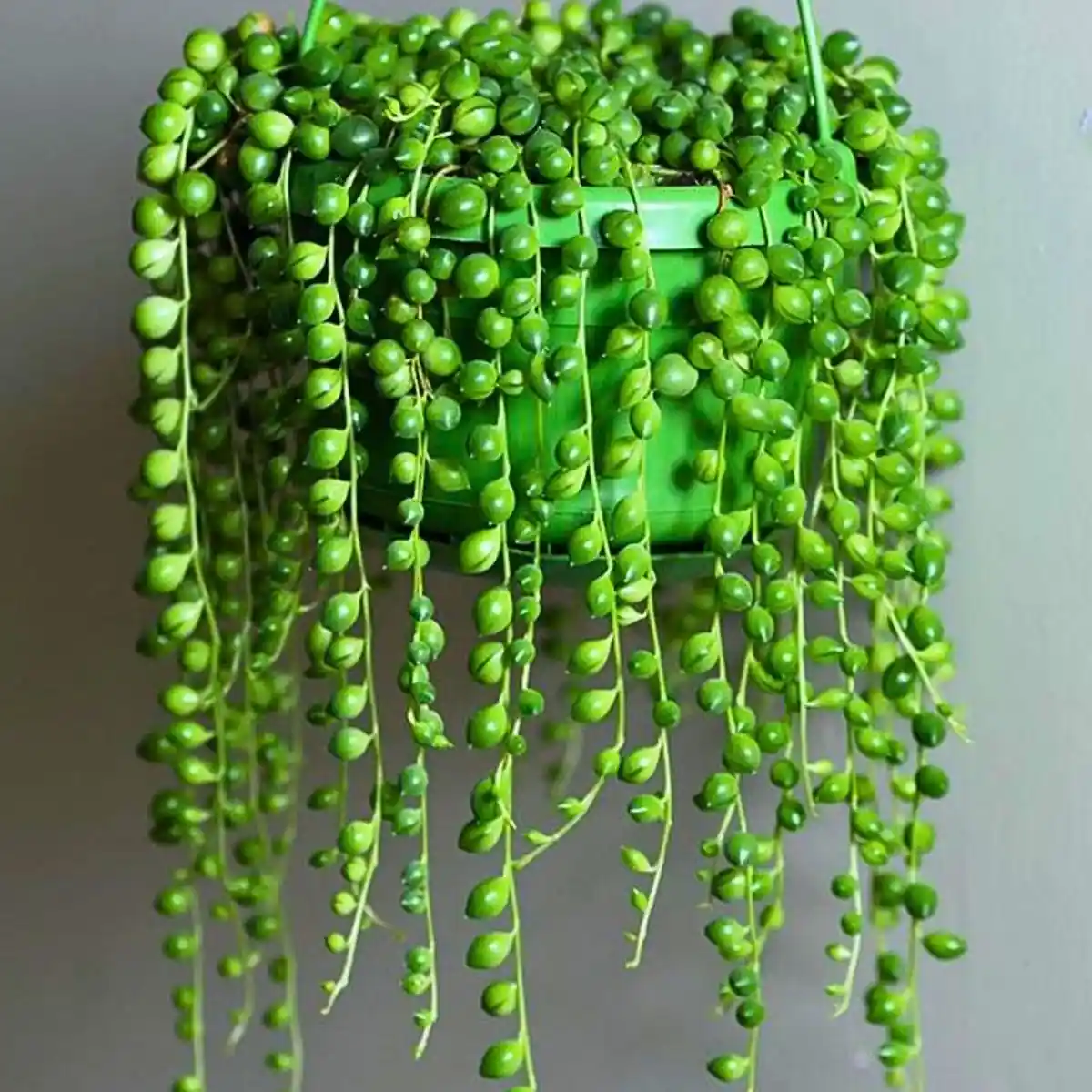
Photo by the Times & Sunday Times
11. Burro’s Tail (Sedum morganianum): The Drought-Tough Trail
Sedum morganianum, widely recognized by its common name burro’s tail, serves as a top-tier option for crafting a lush, jungle-inspired vibe indoors through the use of hanging planters.
Boasting trailing stems that can reach a length of up to 120 centimeters (equivalent to 4 feet), this plant is decorated with plump, blue-green foliage that tumbles gracefully down from its hanging vessel.
This succulent is fairly easy to care for and can tolerate occasional neglect. Thanks to its fleshy leaves, it exhibits strong drought resistance.
However, it’s crucial to shield it from excessive humidity and position it in an area with ample air circulation. Pest issues are scarce for this plant, though mealybug infestations may occasionally arise. Additionally, overwatering can lead to root rot, so proper watering practices are essential.
Empathy for Newbies: If leaves drop, it’s stress-signaling—dial back water and it’ll bounce back stronger.
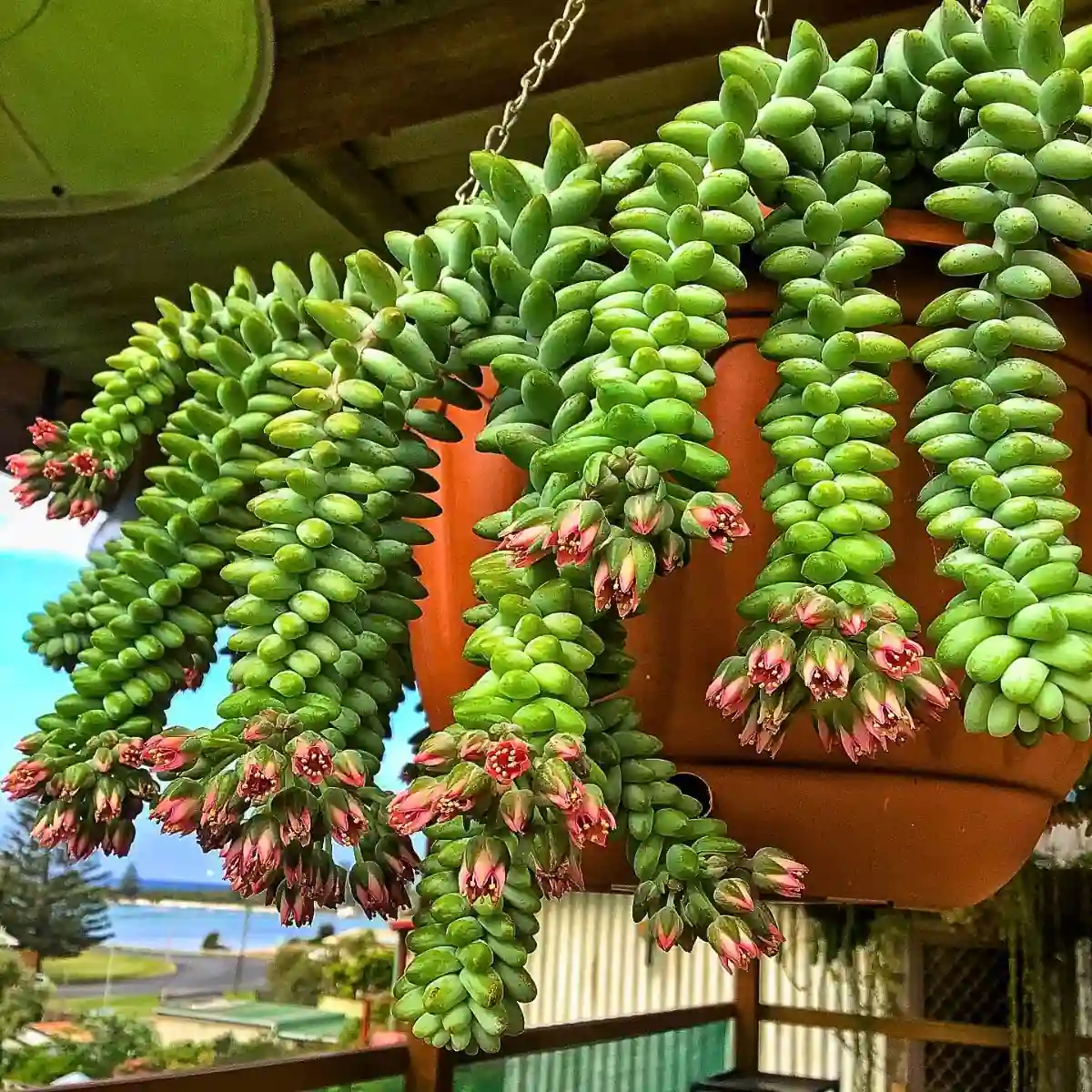
Photo by @the.suburban.servant
12. Hanging Fuchsia: The Colorful Bell Dancer
The hanging fuchsia makes a fantastic enhancement to any indoor jungle setup, as it flourishes beautifully in hanging planters. With its trailing growth habit and vibrant, bell-shaped blooms, it never fails to infuse the area with a pop of color and a playful charm.
Renowned for its cascading stems and delicate, pendant-like flowers, this plant showcases an array of striking two-tone color combinations—typically encompassing hues of pink, purple, red, and white. Complementing these lovely blossoms are its eye-catching, bright green, oval-shaped leaves.
Ideal for injecting much-needed vibrancy into your indoor plant display, the hanging fuchsia also helps craft a more dynamic, multi-layered aesthetic when paired with other houseplants.
For instance, when combined with varieties like the burro’s tail, it contributes to a cohesive and visually stunning indoor jungle, lending an elegant touch to the overall space.
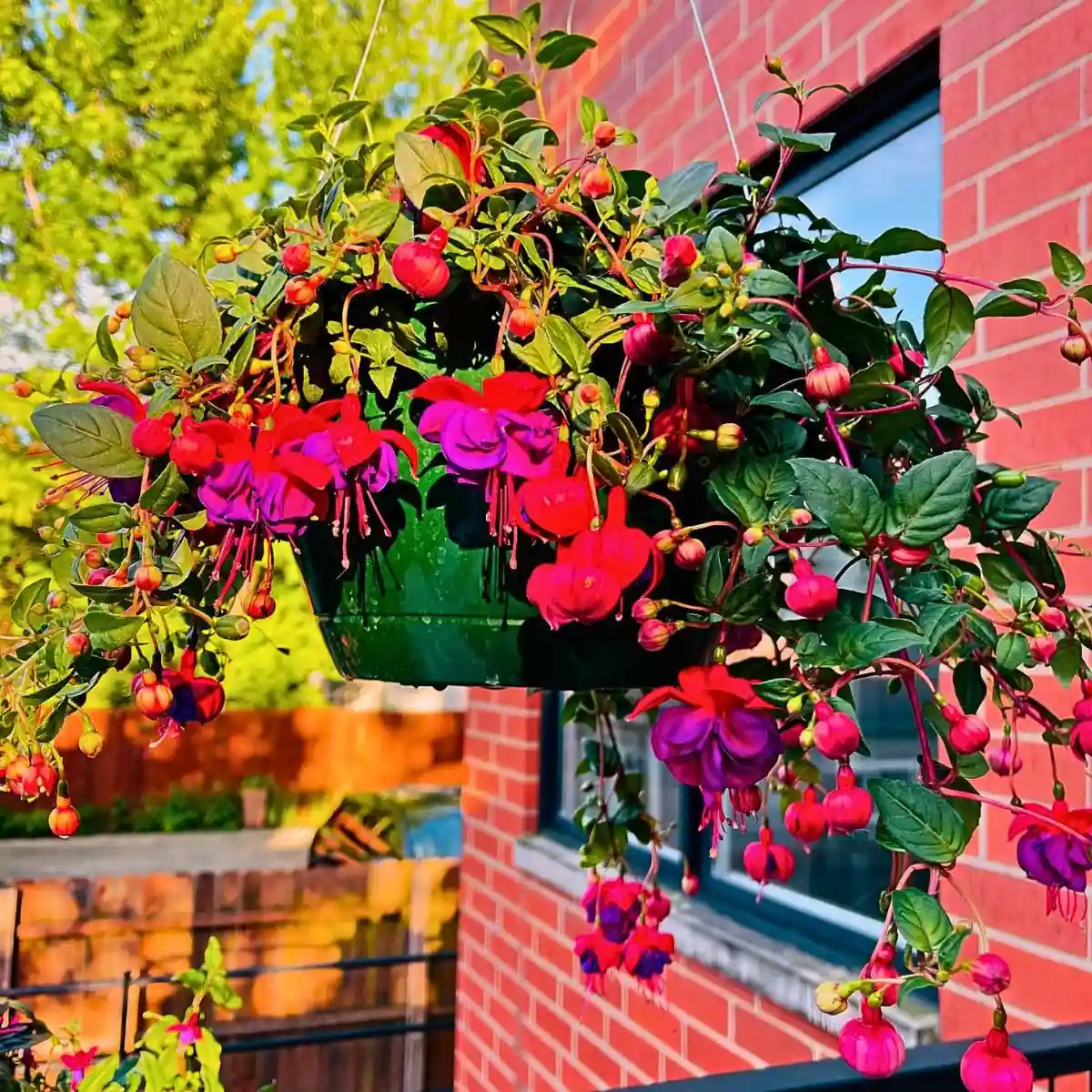
Photo by @jules.lover.of.color
Your Path to a Calmer, Greener 2026 Home
There you have it—12 indoor hanging plants that invite the jungle’s whisper into your world, each one a small act of self-care wrapped in leaves and vines.
From air-purifying powerhouses like Spider Plants to whimsical trailers like String of Pearls, these picks blend ease with impact, helping you build layers of green that soothe and inspire.
Start small: pick 2-3 that match your light and lifestyle, invest in sturdy hangers, and let them grow with you. Your home isn’t just a space—it’s your retreat, and these plants are here to make it feel alive.
FAQ
What are the best low-light indoor hanging plants for beginners in 2026?
English Ivy, Marble Pothos, and Silver Philodendron shine in low light with minimal care—just water when dry and enjoy their forgiving trails.
How do I care for air-purifying hanging plants like Spider Plant?
Keep soil lightly moist in medium light, mist occasionally, and propagate pups for more greenery—NASA-approved for toxin removal.
Are there pet-safe indoor hanging plants that create a jungle vibe?
Yes! Peperomia and Spider Plants are non-toxic, easy to hang, and add lush layers without worry for your furry companions.
How often should I water trailing succulents like String of Pearls?
Water every 2-3 weeks in bright indirect light, ensuring full drainage to avoid rot—their bead-like leaves store moisture well.
Can I mix different indoor hanging plants for a cohesive home jungle?
Absolutely—layer ferns high, vines mid-level, and bloomers low for depth. Match light needs to keep everyone thriving happily.