Philodendrons are widely regarded as easy indoor plants, yet many growers find that their plants survive rather than truly thrive. Slow growth, small leaves, long bare stems, or pale foliage are common issues—even when watering and light seem “good enough.” The reason is simple: producing large, well-formed leaves indoors requires more than basic care. It depends on how closely the indoor environment replicates the plant’s natural growth conditions, including light quality, root space, nutrition, and seasonal adjustment.
In this guide, we focus on how to support leaf size, structure, and long-term plant health, not just how to keep a philodendron alive. Whether you are growing a trailing heartleaf type or a climbing variety trained on a support, the principles below will help your plant channel its energy into stronger growth and larger, healthier leaves indoors.
Table of Contents

Philodendron Care Requirements (At a Glance)
| Care Requirements (At a Glance) | What works in real homes |
|---|---|
| Botanical name (verified) + common name | Philodendron hederaceum (heartleaf philodendron). Many indoor “philodendrons” share similar baseline care, but needs can vary by species/cultivar. |
| Light (with placement examples) | Bright, indirect light: 0.5–1.5 m (1–5 ft) from an east window; 1–2 m (3–7 ft) back from a bright south/west window behind a sheer. Medium light is tolerated, but growth slows and stems stretch. |
| Watering baseline (what to check before watering) | Water when the top 1–2 cm (½–1 in) is dry and the pot feels noticeably lighter. Never leave the pot standing in water. |
| Temperature range + cold sensitivity | Typical indoor temps are fine; keep above ~15°C/59°F. For heartleaf philodendron, temperatures below ~10°C/50°F are too cool. Avoid cold drafts and hot radiators. |
| Humidity (what is sufficient vs risky) | Average indoor humidity usually works. Higher humidity can improve leaf expansion, but consistently high humidity without airflow increases leaf-spot risk. |
| Soil/substrate (drainage/aeration) | Loose, free-draining mix that still holds a little moisture. Think “air pockets first”: orchid bark + quality potting mix + perlite/pumice (or a ready aroid mix). |
| Pot & drainage (must-have features) | Drainage holes are non-negotiable. Choose a pot only a few cm larger than the rootball; oversized pots stay wet longer and raise rot risk. |
| Fertilising (type + frequency guidance) | Balanced houseplant fertiliser during spring/summer growth, lightly. If you already repot annually into fresh mix, feed less. Pause or reduce in winter. |
| Toxicity/pet safety (or confirm statement) | Toxic (calcium oxalate crystals). Keep away from pets/children; sap can irritate mouth/skin. |
| Difficulty level (Beginner/Intermediate/Advanced) | Beginner for most common types; Intermediate for slow-growing, velvety, or highly variegated cultivars that need steadier conditions. |
Core care that applies to most philodendrons
- Identification cues (and common lookalikes). Philodendrons are aroids (Araceae) and often show aerial roots, climbing/trailing stems, and protective sheaths on new leaves (cataphylls) that dry and fall away. Heartleaf philodendron is frequently confused with pothos (Epipremnum aureum). A reliable home clue is that pothos petioles are typically grooved, while heartleaf philodendron petioles are not; philodendron new leaves also emerge with a sheath that pothos lacks.
- Native range and habitat (why your indoor setup matters). Many philodendrons come from tropical forests in Central and South America and grow as hemi-epiphytes—plants that climb and root onto trees while still accessing moisture from the ground. That background explains two indoor priorities: bright, filtered light (not harsh sun) and a root zone that gets oxygen between waterings.
- Light (placement examples that prevent legginess). Aim for bright, indirect light where you can comfortably read during the day. East windows are often ideal; for south/west exposure, use distance and a sheer to soften intensity. In lower light, philodendrons may “reach,” making longer internodes and smaller leaves; if that happens, move the plant closer to the window or add a grow light, then rotate weekly for even growth.
- Watering (checks before watering + seasonal logic). The goal is evenly moist—not wet. Let the top layer dry slightly, then water thoroughly so excess drains out. In brighter months, that may be weekly-ish; in winter or low light, it can stretch much longer. Adjust based on the plant’s dry-down speed, not the calendar: slower dry-down means you wait.
- Temperature and airflow. Keep philodendrons away from cold drafts (doorways, leaky windows) and from direct heat blasts (radiators, vents). Warmth supports active root function; chilly, damp conditions are where rot and leaf spots become more likely.
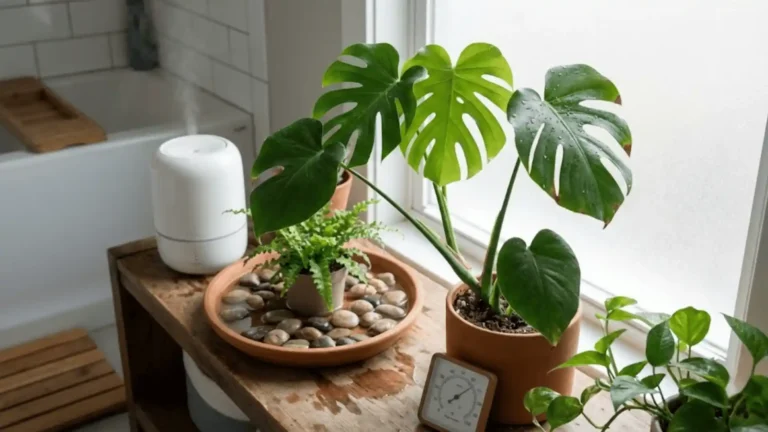
- Humidity (what works and what backfires). Many philodendrons tolerate typical household humidity, but steadier humidity can help leaves expand larger and unfurl cleanly. If you raise humidity, pair it with gentle airflow and avoid keeping foliage wet for long periods—stagnant, wet leaf surfaces are a common setup for spotting.
- Soil and pot choice (why “air” matters more than “rich”). Choose a mix that drains fast and holds structure. If your mix compacts, roots lose oxygen and watering becomes risky. A slightly snug pot is safer than an oversized one because it dries more predictably. Always empty the saucer after watering.
- Fertilising (what to use and when). Feed lightly during active growth. Overfeeding commonly shows up as browned, curling tips and salt crust on the soil surface. If you’re unsure, underfeed and rely on fresh mix during repotting rather than pushing fertiliser.
- Toxicity/handling. Philodendrons contain calcium oxalate crystals; chewing can cause painful mouth irritation for pets and children. Sap can also bother sensitive skin—wash hands after pruning and avoid touching eyes.
Where should you place a philodendron for the best growth?
A dim corner keeps it alive, but it often grows long and sparse.
Put your philodendron in bright, indirect light and rotate it regularly to keep growth compact and leaves larger.
Use the plant’s growth as feedback. If new leaves are smaller than older ones, internodes (the gaps between leaves) lengthen, or the vine “runs” toward the window, light is likely the limiting factor. Move it closer in small steps (20–30 cm / 8–12 in at a time) and observe for two weeks.
Placement examples that work in many homes:
- East window: on a table or plant stand, with leaves not pressed against cold glass in winter.
- South/west window: 1–2 m (3–7 ft) back, or behind a sheer curtain to avoid scorched patches.
- North window / low light apartment: add a grow light above the plant for consistent, directional light; rotate weekly to prevent one-sided growth.
Also consider structure: climbing philodendrons usually produce bigger leaves with support. A moss pole, plank, or trellis gives aerial roots something to grip and often reduces that “dangly” look. For trailing baskets, pinch tips occasionally to encourage branching, but don’t expect large leaves if the plant is always hanging and never climbing.
How do you water a philodendron without causing root rot?
Most philodendron problems start in the pot, not on the leaves.
Water only when the top layer has dried slightly and the pot feels lighter, then drain fully—no standing water.
Dive deeper (a repeatable watering routine).
A good routine is more about checks than schedules:
- Finger test: feel the top 1–2 cm (½–1 in). If it’s still cool and damp, wait.
- Lift test: learn the “light pot” feel. If it’s still heavy, the root zone is still holding water.
- Water thoroughly: water until liquid runs out the drainage holes. This flushes salts and ensures even moisture.
- Drain completely: empty the saucer after 10–15 minutes. Standing water keeps lower roots oxygen-starved.
Warning signs you’re watering too often: persistent yellowing leaves, limp growth that doesn’t perk up after watering, sour soil smell, or stems that feel soft at the base. If you suspect rot, stop watering, increase airflow, and consider unpotting to inspect roots (healthy roots are firm; rotting roots are brown/black and mushy). Re-rooting a healthy cutting is sometimes faster than trying to “save” a collapsing root system.
Season matters because dry-down changes: brighter, warmer months speed drying; winter slows it dramatically. If your plant sits farther from windows in winter, assume it needs less frequent watering.
What soil and pot setup helps philodendrons thrive indoors?
Even perfect watering fails if the mix stays dense and wet for too long.
Use a loose, fast-draining mix in a pot with drainage holes, sized only slightly larger than the rootball.
Dive deeper (mix recipes and pot rules).
Philodendrons like a root zone that alternates between moisture and oxygen. Indoors, compacted peat-heavy mixes can stay wet too long, especially in cool seasons. Build structure into the mix so it doesn’t collapse:
A practical “aroid-style” mix:
- 40–50% quality potting mix
- 25–35% orchid bark (chunky)
- 15–25% perlite/pumice (for air and drainage)
If you prefer a more specific approach, one recommended option is a loose, free-draining compost that is slightly acidic; an example mix is orchid compost combined with an ericaceous compost component.
Pot selection matters as much as the mix:
- Drainage holes: essential.
- Pot size: go only a few cm larger than the rootball. Oversized pots hold excess wet mix around roots.
- Material: terracotta can help the mix dry faster; plastic holds moisture longer. Choose based on your light and watering habits.
A simple repot rule: if roots are circling tightly, water runs through immediately, or growth stalls despite good light, it’s time. When you repot, keep the crown at the same height and avoid burying stems deeper than before—buried nodes can stay wet and invite rot.
How do you prune and propagate a philodendron successfully?
A single wrong cut can leave you with a leaf that never roots.
For most philodendrons, propagate from stem sections that include nodes, using clean tools and a warm, bright (indirect) setup.
Dive deeper (step-by-step propagation that’s actually reliable).
Philodendrons root from nodes—the points where leaves and aerial roots emerge. A leaf without a node won’t become a new plant.
Materials
- Clean scissors/pruners (disinfected)
- Small jar (for water rooting) or small pot
- Fresh, airy medium (perlite, or well-draining potting mix)
- Optional: rooting hormone (can speed rooting)
- Clear bag/dome (optional for steadier humidity)
- Labels (date + cultivar name)
Method (water or media)
- Choose a healthy vine and cut a section with at least two nodes. Sections with visible aerial roots often root faster.
- Remove any leaf that would sit below the waterline or be buried in media.
- Root in clean water (change regularly) or in a moist, airy medium like perlite or a light potting mix.
- Keep in bright, indirect light and warm temperatures. Cold rooms dramatically slow rooting.
- Pot up once roots are established and the cutting resists a gentle tug. Keep the first pot small and airy.
Common failure points (and how to avoid them)
- Rotting cut end: caused by cold, low light, and stagnant wetness. Use airy media, warmth, and don’t submerge too much stem.
- No node: confirm a node is present before you root.
- Slow rooting: improve light, warmth, and consider a rooting hormone; don’t over-handle the cutting.
- Leggy mother plant: prune above a node to encourage branching; provide brighter light afterward so regrowth stays compact.
Troubleshooting
| Symptom | Most likely cause | What to do now | Prevention |
|---|---|---|---|
| Yellowing older leaves + wet soil | Overwatering / slow dry-down | Let the mix dry more; check drainage; consider repotting into a chunkier mix | Use an airy mix, smaller pot, and water only after top dries |
| Limp plant that doesn’t perk up after watering | Root stress (possible rot) | Inspect roots; remove mushy roots; repot; take healthy cuttings as backup | Avoid cold + wet combo; never leave in standing water |
| Long gaps between leaves (leggy growth) | Light too low | Move closer to bright window or add grow light; rotate weekly | Bright, indirect light; support for climbers |
| Brown, crispy leaf edges | Dry air, inconsistent watering, or salt buildup | Improve watering consistency; flush soil; reduce fertiliser | Light feeding; periodic thorough watering to flush salts |
| Leaves with pale patches/scorch | Too much direct sun | Move back from window or use a sheer curtain | Filter intense sun; acclimate gradually |
| Small new leaves on a climbing type | Not enough light or no support | Increase light; provide a pole/trellis; keep watering steady | Give vertical support and consistent bright light |
| Sticky residue / cottony clusters | Mealybugs / scale | Isolate; wipe off; treat repeatedly with appropriate control | Inspect new plants; keep leaves clean |
| Fine webbing + stippling | Spider mites (often in dry indoor air) | Rinse plant; increase humidity with airflow; treat repeatedly | Regular checks, occasional rinsing, avoid very dry hotspots |
| Brown/black spots spreading | Leaf-spot issues + wet foliage/poor airflow | Improve airflow; avoid wetting leaves; remove worst leaves | Water the soil, not the foliage; don’t crowd plants |
Seasonal care: what to change in summer vs winter
Spring/Summer (active growth)
- Light: gradual increases are usually fine; watch for hot sun scorch near glass.
- Water: dry-down speeds up—check more often, but still water only when the top dries.
- Feed: light, regular feeding during active growth can support larger leaves.
- Pest checks: increase frequency; warm, bright conditions can accelerate pest cycles.
- Training: best time to add a pole, pin, or trellis because growth responds quickly.
Autumn/Winter (slow growth)
- Light: move closer to the brightest safe window; rotate to avoid lean.
- Water: expect longer intervals. Watering “like summer” is a common cause of winter rot.
- Feed: reduce or pause if growth slows significantly.
- Humidity: indoor heating dries air; balance humidity with gentle airflow to reduce spotting risk.
When to repot (clear signs)
- Roots circling the pot or pushing up the plant
- Water running straight through with little absorption
- Mix that has compacted into a dense mass
- Growth stalling despite adequate light and reasonable watering
When you repot, increase pot size modestly and refresh the mix to restore air spaces.
Propagation: the safest method for most philodendrons
Best method (verified): stem cuttings with nodes. Many philodendrons (especially vining types) propagate readily from stem cuttings; non-trailing types may also propagate from offsets where present.
Materials list
- Clean pruners
- Small container + drainage (for media rooting) or a clean jar (for water rooting)
- Airy rooting medium (perlite or a light, well-draining mix)
- Optional rooting hormone
- Label + date
Step-by-step
- Select a healthy stem and identify nodes (look for leaf attachment points and aerial roots).
- Cut a section with at least two nodes.
- Remove lower leaves so no foliage sits in water or gets buried.
- Root in water or in a moist, airy medium; keep warm with bright, indirect light.
- Once rooted, pot into a small container with a chunky mix; keep slightly moist as it transitions.
Failure points to watch
- Cold, dim rooting location → slow rooting and higher rot risk
- Burying too much stem → oxygen-starved nodes
- Potting up too large too soon → mix stays wet, roots stall
FAQ
How often should I water a philodendron?
Instead of watering on a fixed schedule, water based on dry-down. For many indoor setups, a good baseline is to water when the top 1–2 cm (½–1 in) of the mix feels dry and the pot is noticeably lighter. Then water thoroughly and let it drain completely—no standing water in the saucer. In brighter, warmer months the mix dries faster; in winter or low light it can stay damp much longer. If you see repeated yellowing with consistently damp soil, extend the interval and consider switching to a chunkier mix.
Can philodendrons handle low light?
Many philodendrons tolerate medium to lower light better than they thrive in it. In low light, they commonly become leggy (long gaps between leaves) and produce smaller leaves. If your plant is “reaching” toward the window, move it closer to brighter indirect light or add a grow light, then rotate weekly. Expect slower water use in low light, too—overwatering is more likely when light is limited because the pot dries down slowly.
What’s the best soil for a philodendron?
The best soil is less about “richness” and more about oxygen. Use a loose, free-draining mix that holds structure—chunky bark and perlite/pumice help keep air spaces open so roots can breathe. Dense mixes that stay wet for days increase root-rot risk, especially in cool seasons. Keep the pot only slightly larger than the rootball; oversized pots hold extra wet mix around roots. If your mix compacts or forms a hard crust, it’s usually time to refresh it.
Is philodendron toxic to pets?
Yes. Philodendrons contain calcium oxalate crystals that can cause painful oral irritation, drooling, and vomiting if chewed or ingested by pets (and can irritate people as well). The safest approach is to keep the plant out of reach (high shelf, closed room, or secured hanging position) and avoid leaving fallen leaves where pets can access them. If ingestion is suspected and symptoms appear, contact a veterinarian promptly.
Should I mist my philodendron?
Misting can temporarily raise surface moisture, but it doesn’t reliably increase room humidity for long. If you mist, do it lightly and ensure good airflow so leaves don’t stay wet—stagnant wet foliage can encourage spotting. For steadier results, focus on whole-room humidity (a humidifier) and practical steps like grouping plants, while still keeping air moving. If your philodendron unfurls new leaves with tearing or sticking, steadier humidity plus bright indirect light often helps more than occasional misting.
References
- Heartleaf Philodendron – Planting and Care (UF/IFAS Gardening Solutions) https://gardeningsolutions.ifas.ufl.edu/plants/houseplants/heartleaf-philodendron/
- How to Grow Philodendrons (Royal Horticultural Society) https://www.rhs.org.uk/plants/philodendron/growing-guide
- Philodendron hederaceum – Plant Finder Details (Missouri Botanical Garden) https://www.missouribotanicalgarden.org/PlantFinder/PlantFinderDetails.aspx?kempercode=b611
- Philodendron hederaceum (Jacq.) Schott – Distribution and Habitat (Plants of the World Online, Kew) https://powo.science.kew.org/taxon/urn:lsid:ipni.org:names:87797-1
- Growing Philodendrons at Home – Propagation and Toxicity (Iowa State University Extension and Outreach) https://yardandgarden.extension.iastate.edu/how-to/growing-philodendrons-home
- Philodendron, Pothos, Monstera – Identification and Culture Notes (Clemson University Home & Garden Information Center) https://hgic.clemson.edu/factsheet/philodendron-pothos-monstera/
Conclusion: Bright indirect light, an airy mix, and “water after a short dry-down” solve most philodendron problems—then support and gentle feeding help the leaves size up.