Have you ever struggled to grow plants from seed or cuttings, only to wonder why one method fails and the other succeeds? Let’s fix that confusion.
Asexual and sexual propagation are two core ways plants create new life. Asexual propagation uses parts of a single plant to make identical offspring, while sexual propagation uses seeds formed by pollen and egg union, making genetically unique plants.
I used to mix these up when I started gardening. I bought seeds thinking they’d all sprout fast. They didn’t. That’s when I learned propagation matters. Now I pay attention to which method suits a plant and my goals. This guide breaks down what each method means, why it matters, and when to use each.
Table of Contents
What Is Asexual Propagation?
Have you ever rooted a leaf or stem and watched a new plant grow? That’s asexual propagation.
Asexual propagation uses parts of one parent plant — like stems, roots, or leaves — to grow new plants that are genetically identical to the parent.
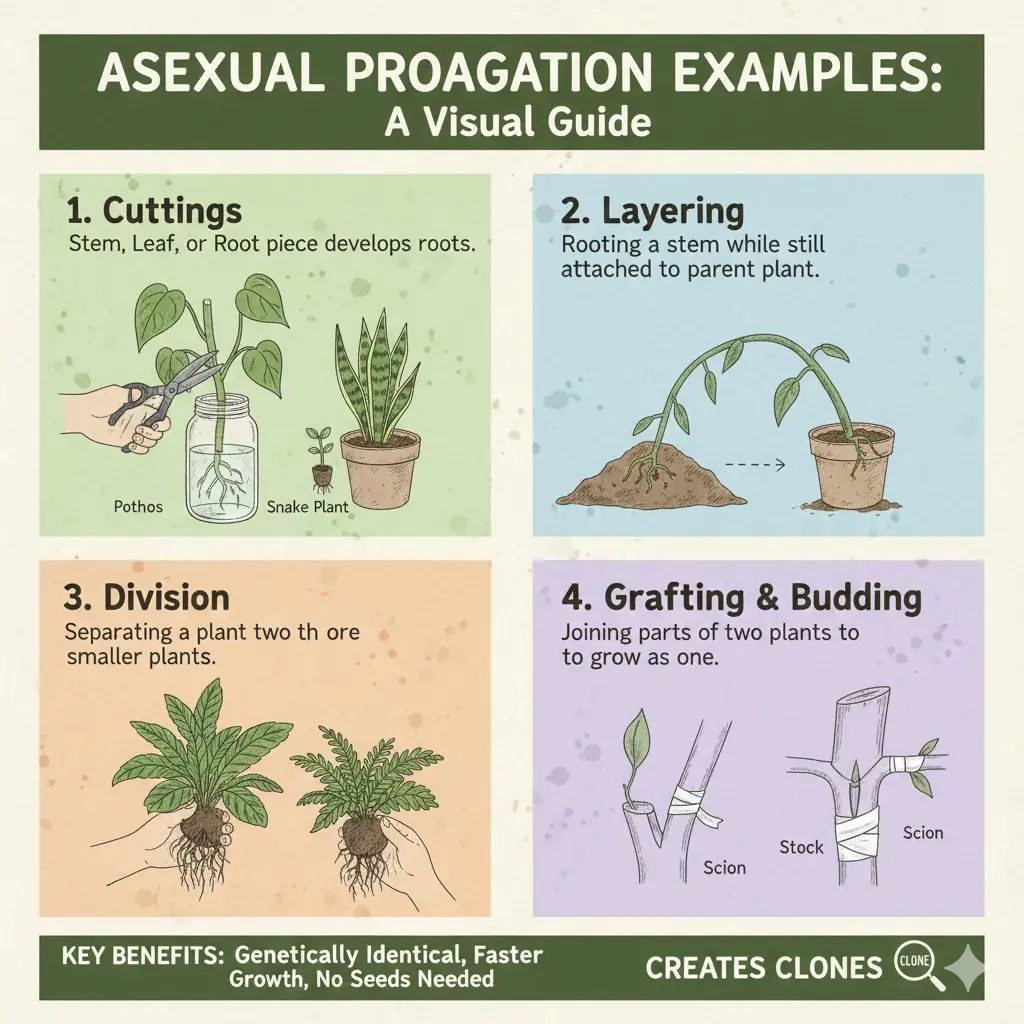
Asexual propagation is often called vegetative propagation. It does not involve seeds or flowers. Instead, it uses vegetative parts. When these parts develop roots and shoots, a new plant forms. This means the offspring shares the exact same DNA as the parent plant. Horticulturists use this when they want uniform crops. Common techniques include cuttings, grafting, layering, and division.
Tertiary Breakdown of Asexual Methods
Here’s how asexual propagation works in more detail:
| Method | How It Works | Examples |
|---|---|---|
| Cuttings | You cut a piece of stem or leaf and plant it to grow roots | Roses, succulents |
| Layering | A live stem is bent to soil to root before cutting | Blackberries, vines |
| Grafting | A piece of plant is joined to another plant’s rootstock | Fruit trees |
| Division | Splitting plant clumps into several pieces | Hostas, bulbs |
These techniques let you keep the exact traits you love — like flower color or fruit quality — without waiting for seeds. They also often produce mature, fruit-bearing plants faster than seeds. citation from :Plant Cell Technology
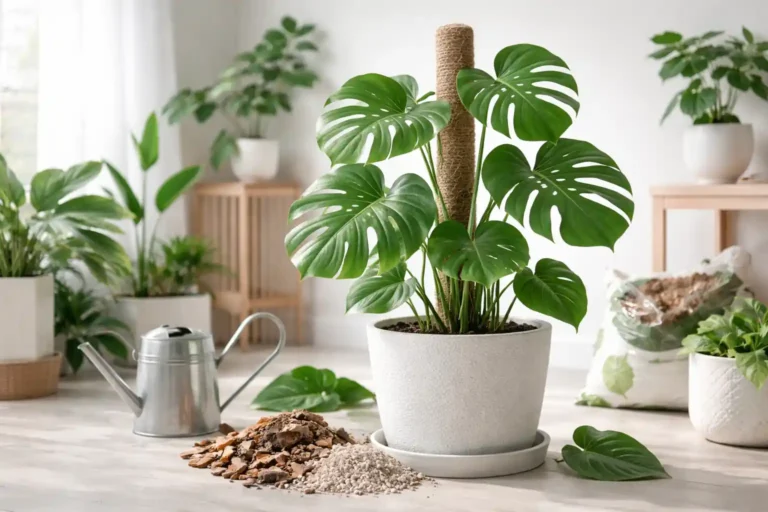
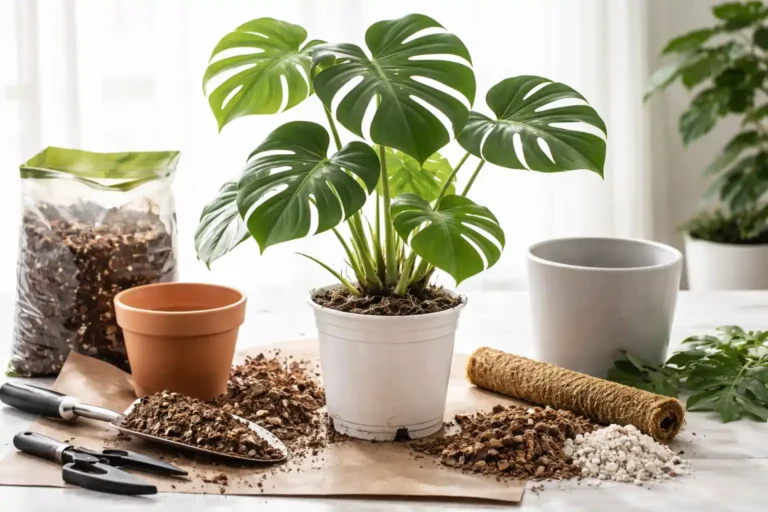
Monstera is a good example of how asexual propagation works in real life, since most growers rely on cuttings rather than seeds, which I explain fully in my Monstera propagation guide.
What Is Sexual Propagation?
What about growing plants from seeds? That’s sexual propagation.
Sexual propagation involves seeds created when pollen fertilizes an egg cell, combining genetic material from two parents.
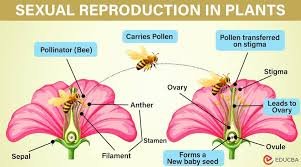
In sexual propagation, plants go through pollination and fertilization. Seeds carry new combinations of genes. That means each seedling is unique. Gardeners often use seeds when they want genetic diversity, new varieties, or breeds adapted to local conditions. Seeds also often cost less and are easy to sow in large numbers. citation from: Agriculture Institute
Here’s a simple breakdown:
| Feature | Sexual Propagation |
|---|---|
| Genetic Diversity | High |
| Uniformity | Low |
| Time to Maturity | Longer |
| Cost | Often lower |
| Hybrid Varieties | Yes |
While it takes longer for seedlings to grow and produce flowers or fruit, this method creates variation. That variation lets plants adapt to changing environments. It’s also how breeders develop new varieties with specific traits.
Key Differences: Asexual vs Sexual Propagation
Still unsure which method is which? Here’s a clear comparison.
Asexual propagation gives genetically identical clones. Each plant is a copy of the parent plant. This is perfect when uniformity matters. Sexual propagation mixes genes from two parents, making unique offspring with varied traits.
| Aspect | Asexual | Sexual |
|---|---|---|
| Source | Vegetative parts (stems, leaves) | Seeds |
| Genetics | Identical to parent | Mixed from two parents |
| Speed | Faster establishment | Slower growth |
| Uniformity | High | Low |
| Adaptability | Limited | High |
| Use Case | Clone desirable plants | Create new varieties |
For example, if I want more of a specific rose variety that produces lots of flowers, I choose cuttings (asexual). But if I want tomatoes that resist heat and drought, I explore seed varieties (sexual).
Pros and Cons: When to Use Which Method?
Let’s break it down so you can decide based on your goals.
Asexual Pros
- Produces copies of a prized plant
- Usually faster than seeds
- Bypasses seed dormancy
- Plants often fruit sooner
Asexual Cons
- Limits genetic diversity
- Vulnerable to disease (all clones may be susceptible)
Sexual Pros
- Creates genetic diversity
- Essential for breeding new varieties
- Often cheaper and easier for many crops
Sexual Cons
- Takes longer to reach maturity
- Less uniform results
An easy rule I use: Clones when I need uniform quality. Seeds when I want diversity and resilience.
Can Plants Use Both Methods?
Yes. Many plants are flexible. Some species naturally reproduce asexually and sexually. For example, strawberry plants spread through runners (asexual) but also produce flowers that make seeds (sexual). This lets them colonize areas quickly and adapt to new conditions when needed.
Take Begonia Propagation as an example here:
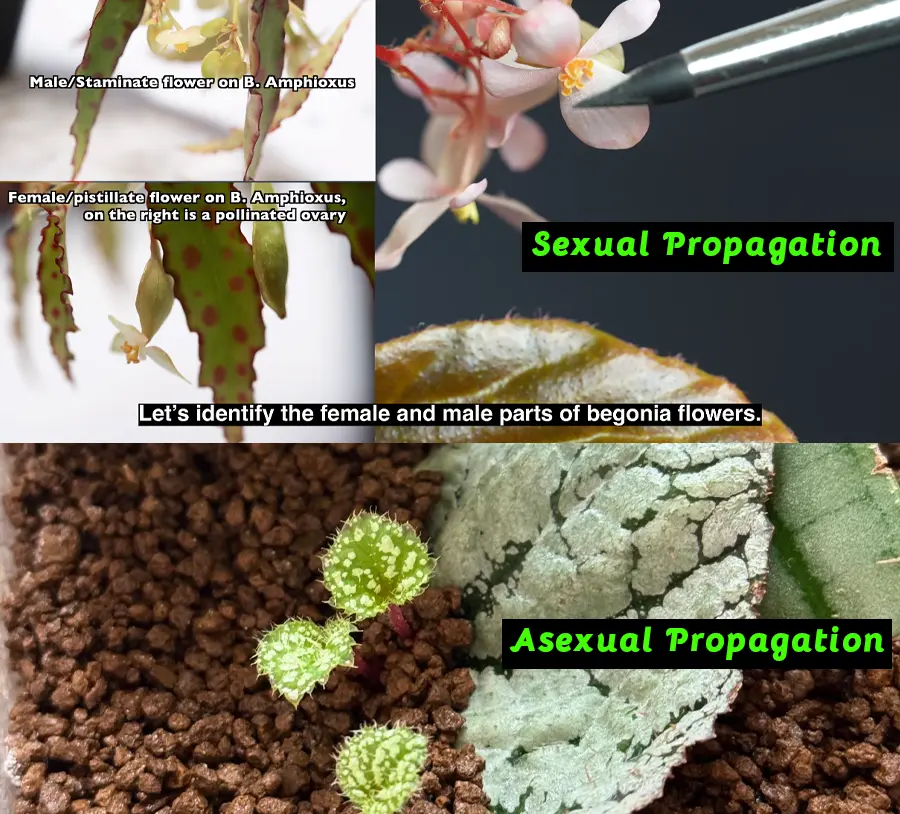
Understanding both gives you more tools. You can choose which fits your space, timeline, and goals.
Conclusion
Asexual propagation clones plants and keeps traits stable, while sexual propagation creates diverse, seed-grown plants with new traits. Choose based on your goals and environment.