Staghorn ferns are some of the most dramatic, eye-catching plants you can grow — but they’re also among the most misunderstood when it comes to light. Get it wrong and you’ll end up with yellowing fronds, a leggy silhouette, or a plant that simply refuses to grow. Get it right, and your staghorn rewards you with bold, sculptural fronds that look incredible whether they’re mounted on a wall or hanging from a tree branch.
This guide covers everything: raw lux numbers, photoperiod recommendations, grow light comparisons, and a full species-by-species light reference table. Whether you’re a first-time staghorn owner or an experienced collector fine-tuning your grow room, there’s something here for you.
Table of Contents
Why Light Is the Most Important Variable
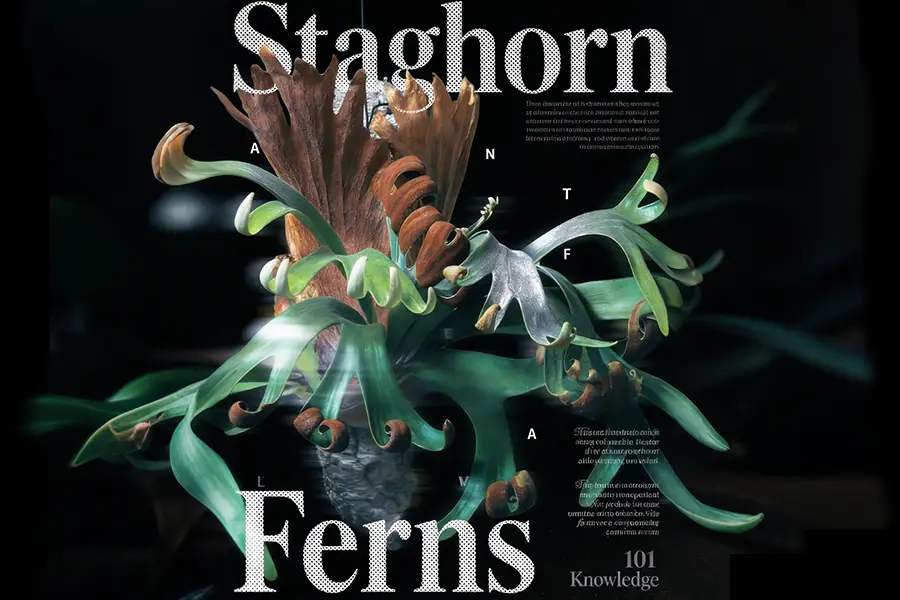
Staghorn ferns (Platycerium spp.) are epiphytes — in the wild, they attach to tree trunks and branches in tropical forests, absorbing dappled to bright filtered light as the sun moves across the canopy. That natural habitat tells you exactly what they’ve adapted to: light that is bright but rarely brutal, and often shifting throughout the day.
Light drives three things in a staghorn fern:
- Photosynthesis — the fundamental process that fuels all growth
- Frond shape — intense light produces shorter, wider, more compact fronds; lower light produces longer, more open, elegant fronds
- Overall form — the balance between the shield (basal) fronds and the fertile (antler) fronds depends heavily on how consistent and well-distributed the light is
Understanding these relationships puts you in control of how your plant looks and grows — rather than just hoping for the best.
The rule of thumb: The whiter and fuzzier the fronds, the more light a species can tolerate. Those silvery hairs (called trichomes) reflect excess light and protect the leaf tissue underneath. Greener, smoother species are less protected and will show stress much faster.
Light Intensity: The Numbers That Actually Matter
Most staghorn fern species grow comfortably in the 5,000–20,000 lux range — a surprisingly wide window that gives you real flexibility indoors or outdoors.
Here’s how to think about each zone:
| Lux Range | What It Means |
|---|---|
| 5,000–8,000 lux | Low-to-moderate. Good for shade-tolerant species. Fronds grow longer and more open. |
| 10,000–15,000 lux | The sweet spot for most species. Promotes compact, well-defined growth. |
| 15,000–20,000 lux | High-light territory. Best for silver-leaved, white-furred varieties that can handle the intensity. |
A key signal to watch for: if your staghorn’s fronds start turning yellow, that is the plant telling you the light is too intense for its variety. Pull it back or raise your light source and monitor over two weeks before making further adjustments.
On the flip side, if growth is very slow and the fronds look thin, elongated, or floppy, the plant is likely not getting enough light. Move it closer to the source or add a supplemental grow light.
How Many Hours of Light Per Day?
Duration matters just as much as intensity, and this is where many indoor growers unknowingly shortchange their plants.
The baseline recommendation is 12 hours of light per day, mirroring a natural tropical day length. For growers trying to push faster development — particularly during the “face-pushing” phase when the plant is actively growing new nutrient leaves — extending to 14–16 hours per day can meaningfully accelerate growth.
What About 24-Hour Light?
Don’t do it. Staghorn ferns, like most plants, need a dark rest period. There’s strong evidence from experienced collectors that continuous light can actually slow development, because the plant doesn’t complete certain metabolic cycles — including CAM carbon fixation in the nutrient leaves — without a period of darkness.
Use a timer outlet. It costs very little, removes the guesswork entirely, and ensures your plants get a consistent photoperiod every single day.
Growth phase tip: During the active face-pushing period, try extending your photoperiod to 16 hours and bumping intensity to 20,000–30,000 lux. Pair this with increased watering frequency, since the nutrient leaves are actively storing water during this stage. Keep temperatures on the cooler side (18–22°C) to further encourage new growth.
For a full breakdown of the staghorn growth cycle, visit our complete staghorn fern care guide.
Strip Lights vs. Spotlights: Which Is Better?
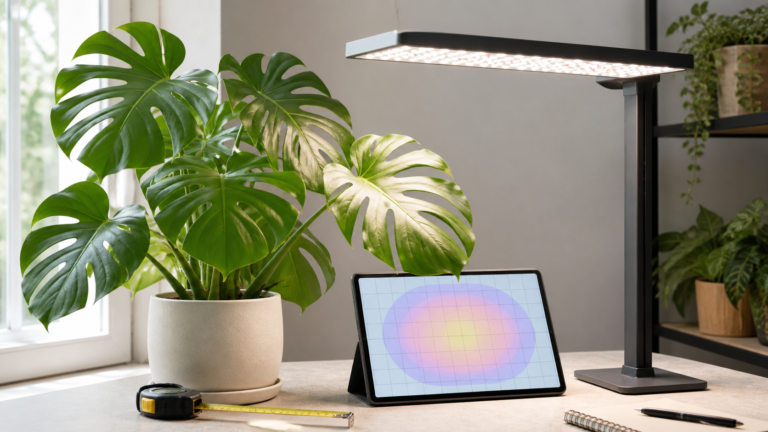
If you’re growing staghorns indoors without access to a bright, south-facing window, you’ll need supplemental lighting. The two most popular options each have real trade-offs.
LED Strip / Bar Lights (Overhead)
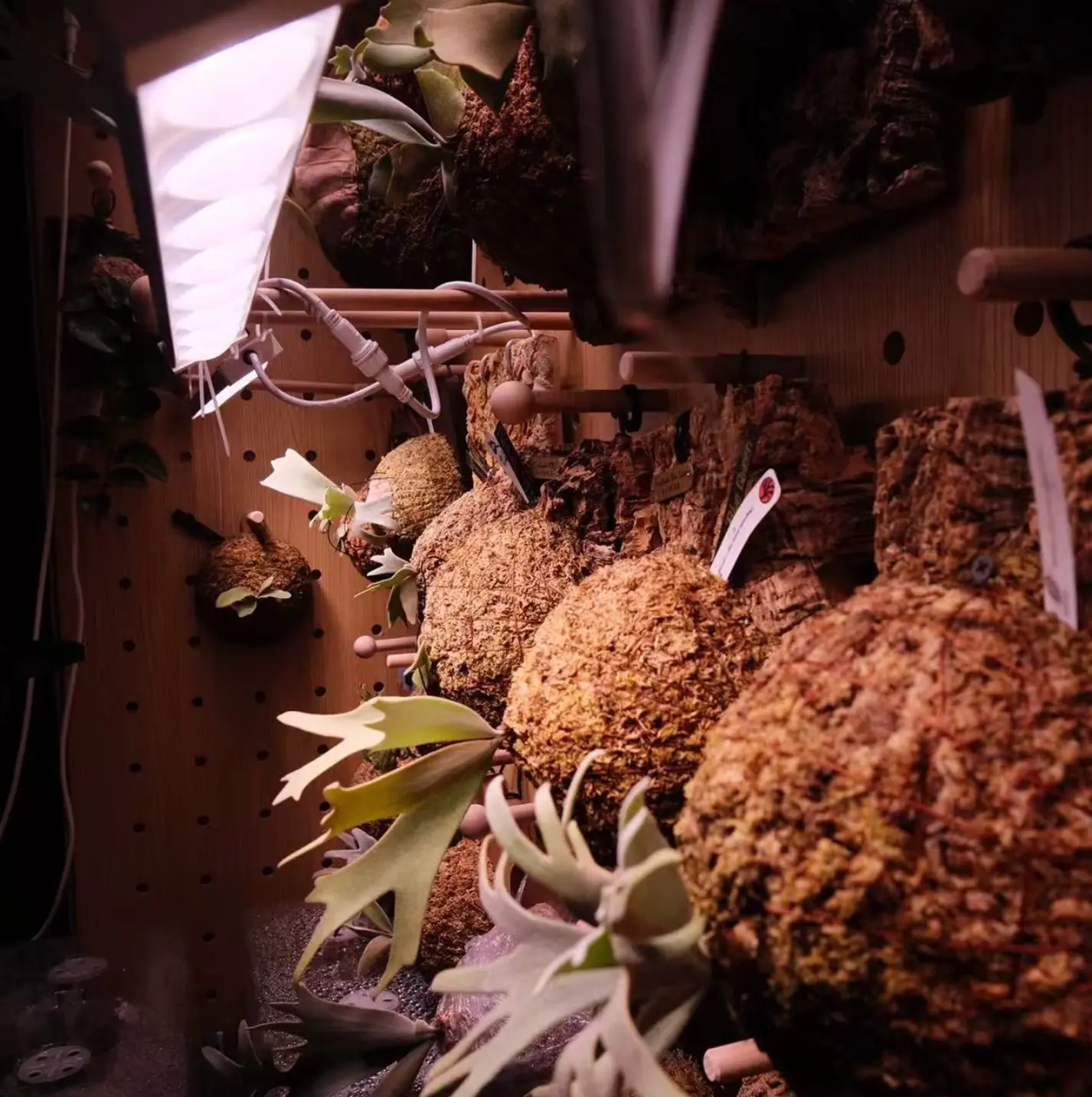
Strip lights mounted directly above distribute light evenly across the crown and fronds. Because the light source is overhead, the plant grows naturally without reaching or tilting toward a point source — fronds hang symmetrically and the plant develops a more balanced, photogenic silhouette.
The downside is practical: strip lights require ceiling clearance and look utilitarian. If your staghorn is a decorative feature in a living room or bedroom, a bank of bar lights overhead isn’t ideal.
Best for: Dedicated grow rooms, shelving setups, or collectors running multiple plants.
Track Spotlights (Directional)
Spotlights are far more space-efficient and look significantly better in a home environment, making them the go-to choice for display-focused setups. The trade-off is that fronds and bud tips will grow toward the light source, meaning you may need to rotate the plant occasionally or use soft wire to guide frond direction.
Best for: Living wall displays, home interiors, single-specimen showpieces.
The Optimal Setup
Serious collectors often combine both: overhead strip lights for the crown (shield fronds) and spotlights directed at the fronds (fertile fronds). This way, both parts of the plant receive light and develop properly. Seedlings and cup-stage plants can be placed where intensity is around 6,000 lux to regulate their growth rate.
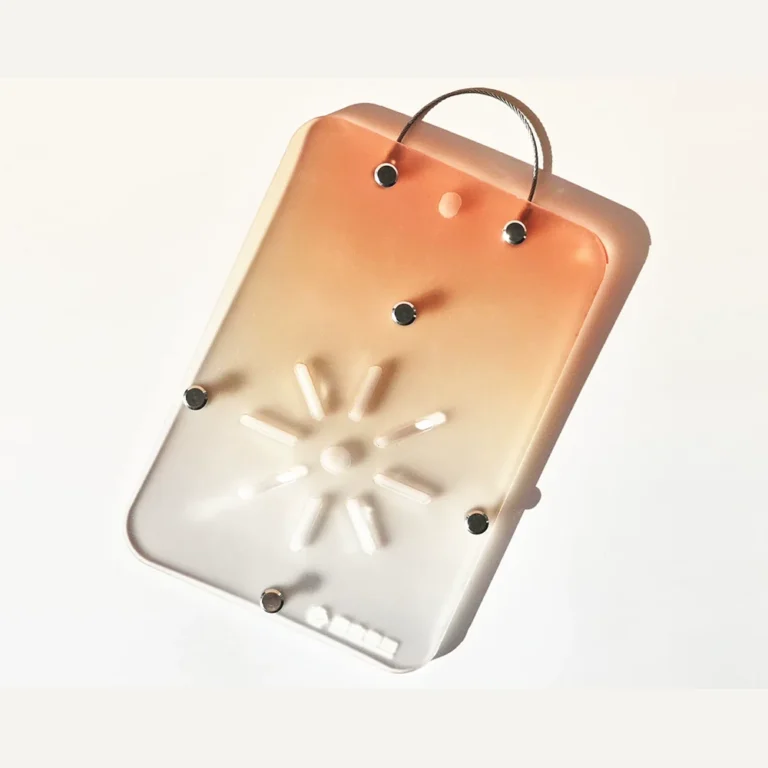
Looking to build a stunning wall display? Our wall-mounted staghorn boards are designed specifically for this kind of setup — pre-drilled, weather-resistant, and built to support even large, mature specimens.

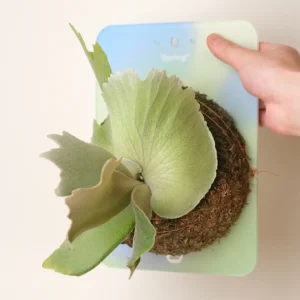
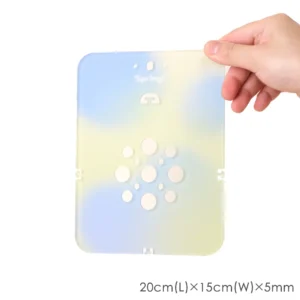
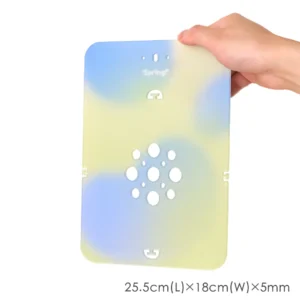
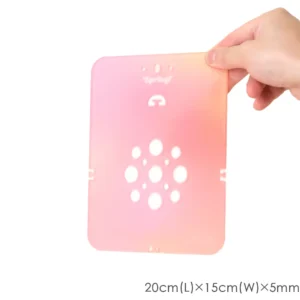
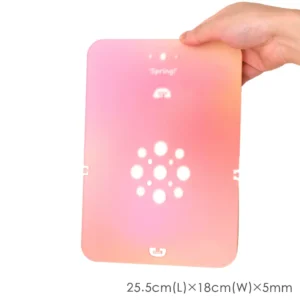

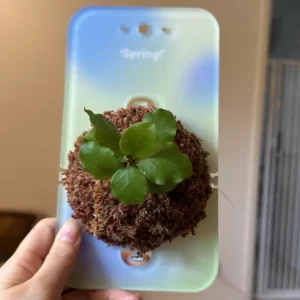

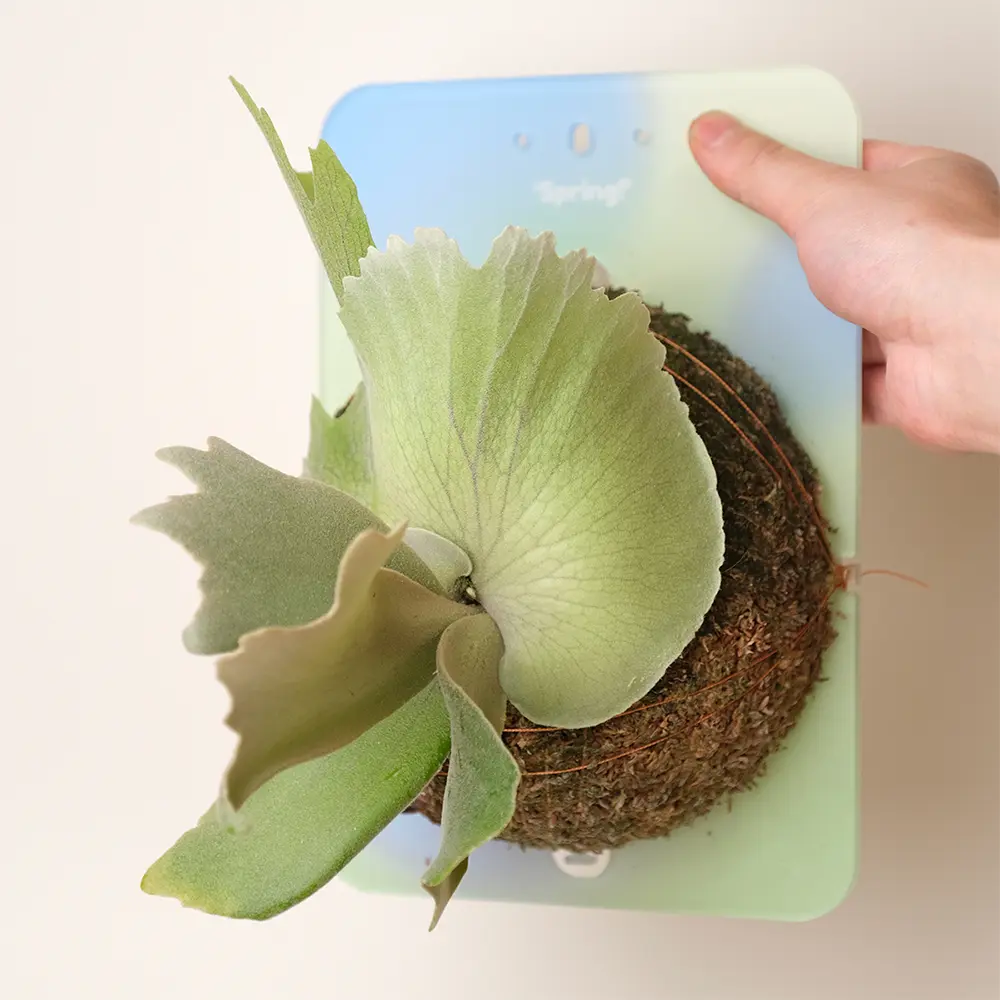
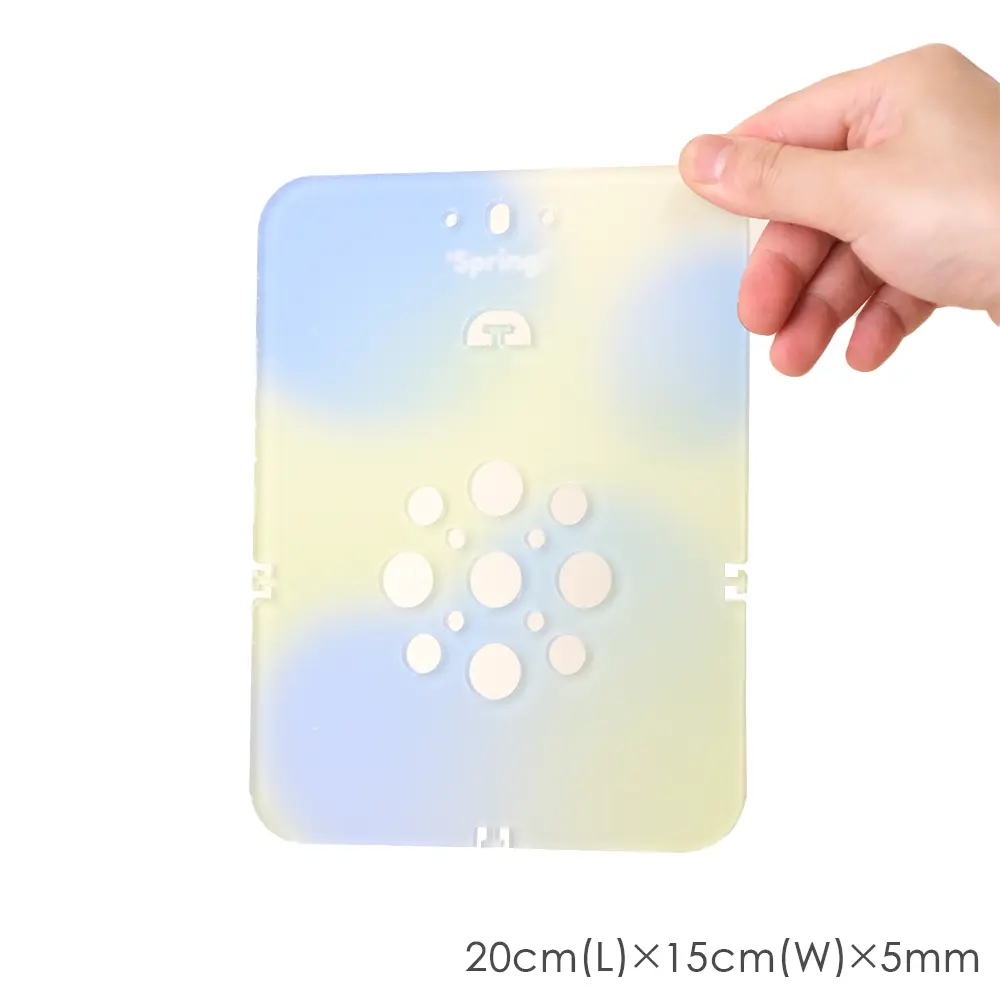
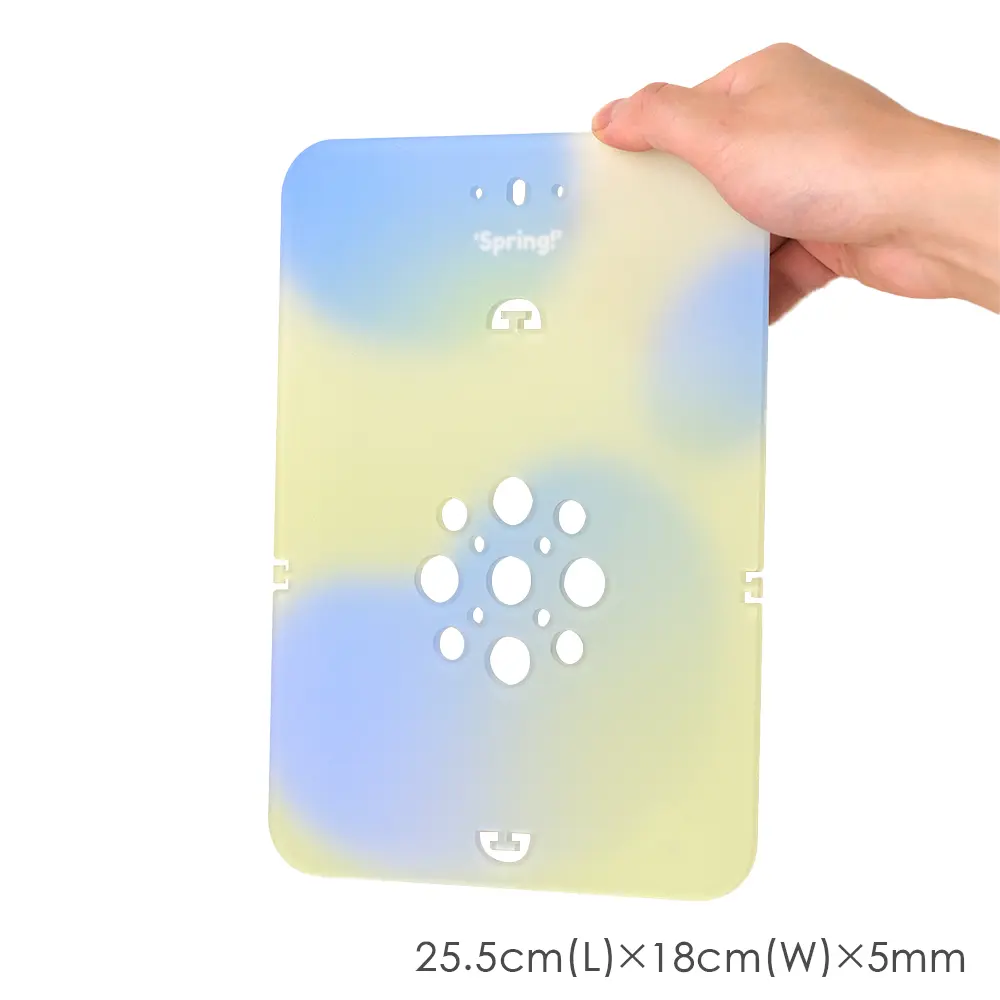
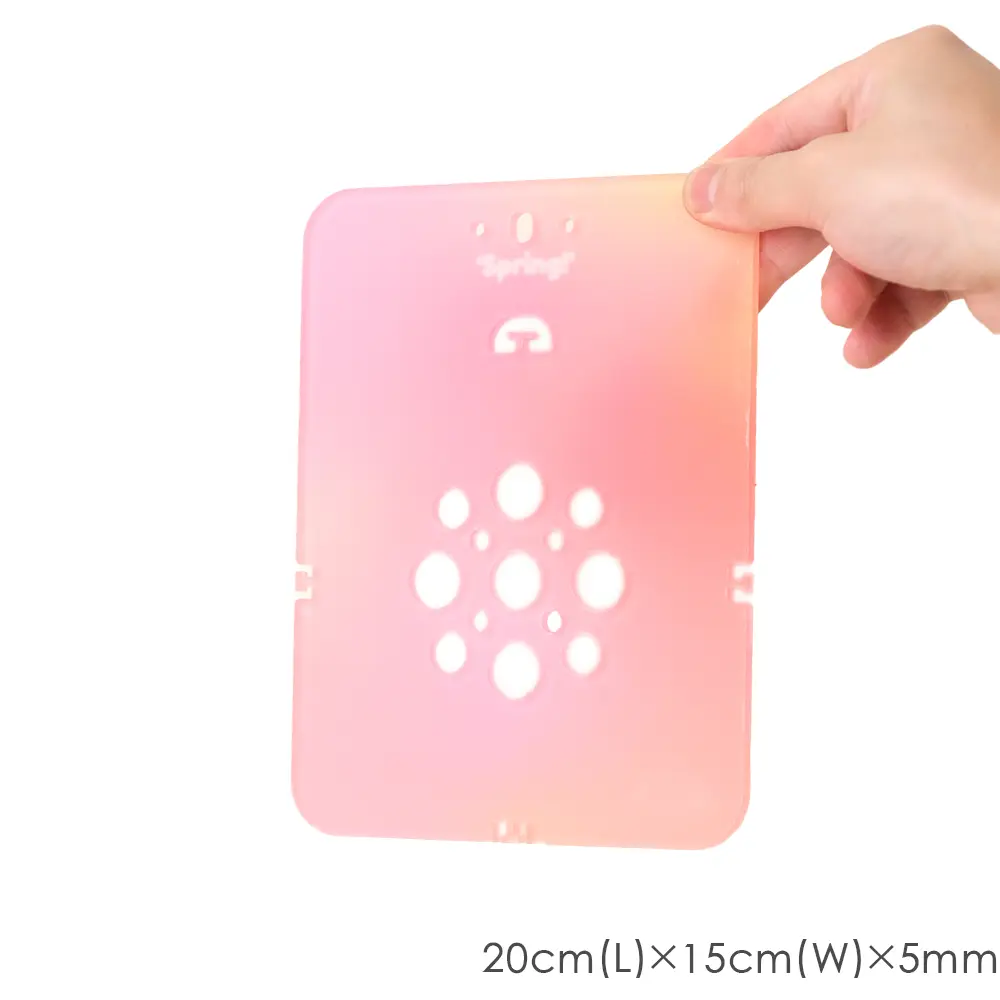
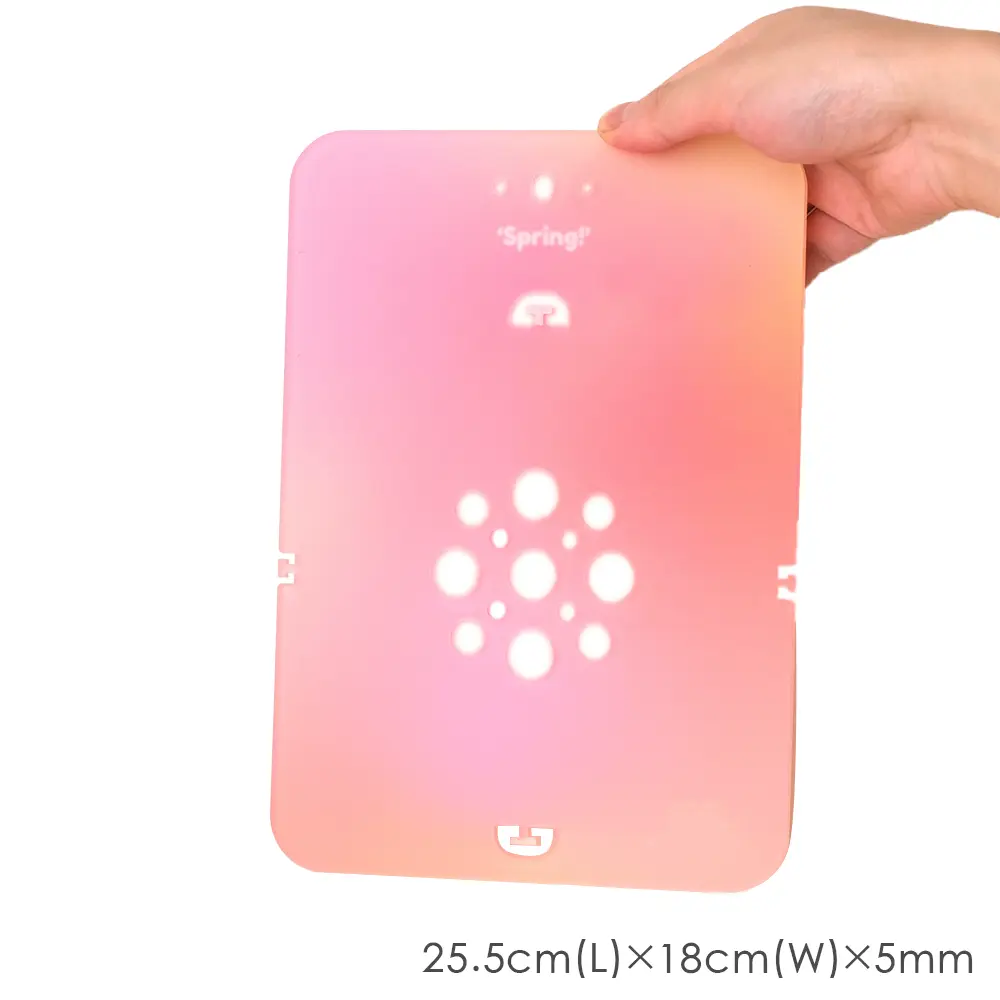

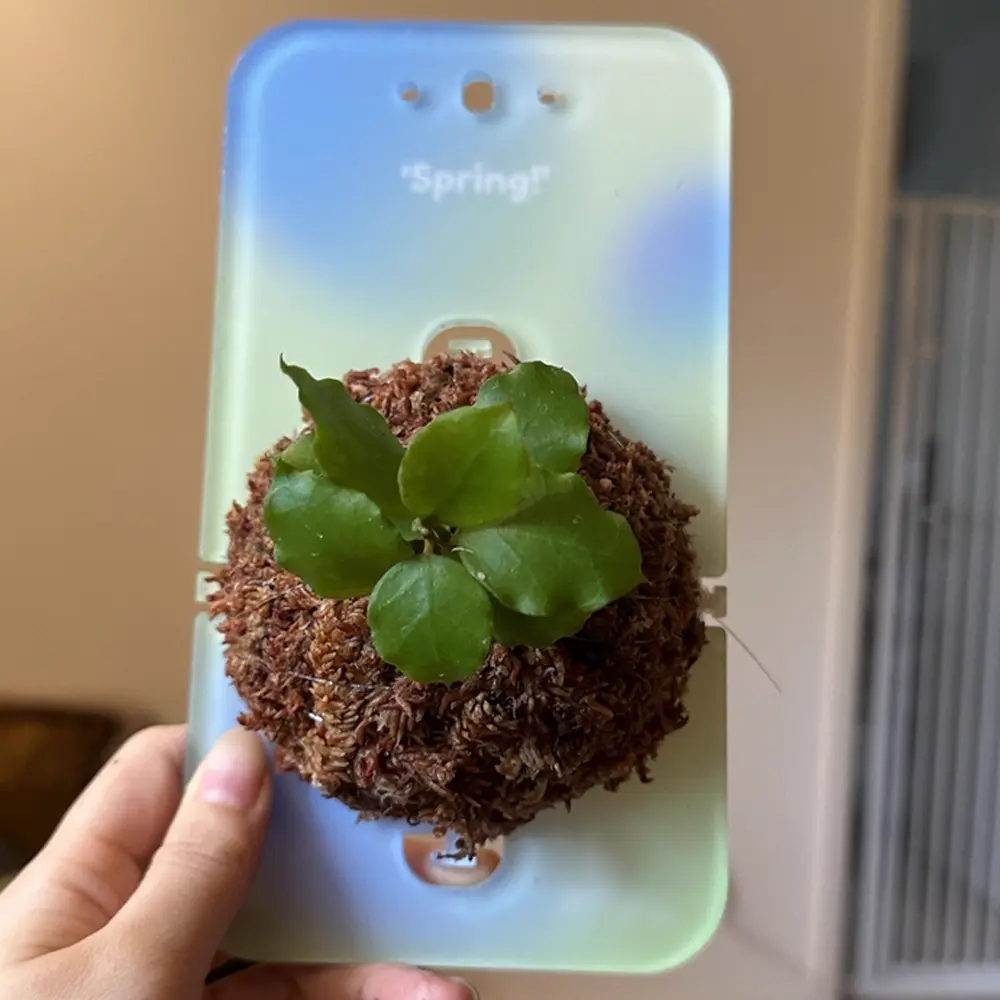
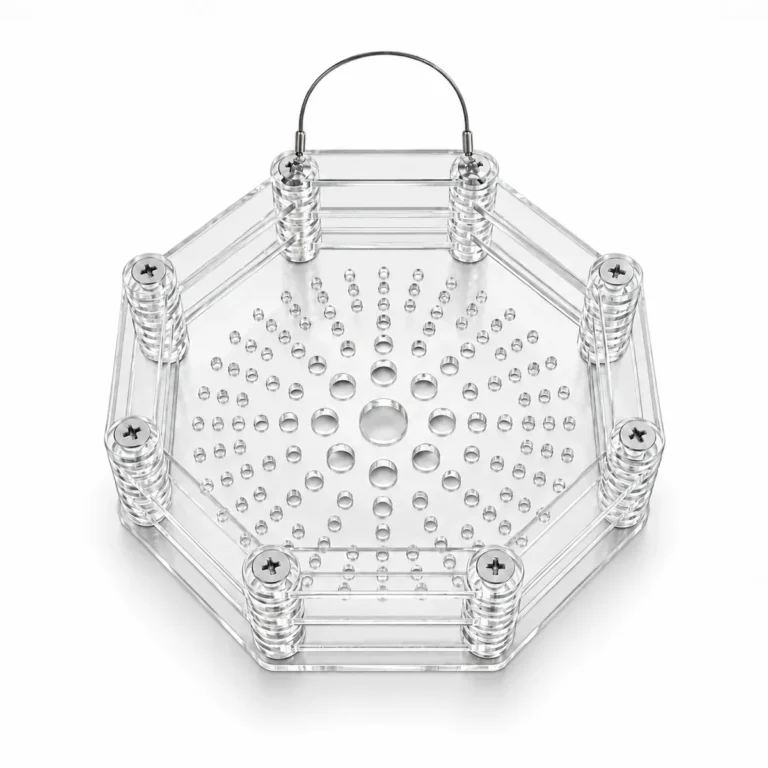
Transparent Acrylic Wall Mount Board for Staghorn Fern
Display your staghorn ferns in style with our Transparent Acrylic Wall Mount Board — a modern and durable solution for vertical plant décor. Designed with ventilation holes and a sturdy hanging system, it’s perfect for creating natural wall art using moss or fern mounts. The clear acrylic material blends seamlessly with any interior while ensuring your plants stay healthy and well-aerated.
- Ideal for mounting staghorn ferns and epiphytic plants
- Transparent acrylic board with smooth, high-hardness surface
- Breathable hole design prevents root rot
- Durable and waterproof for long-term use
- Simple hanging setup — lightweight and easy to install
Does Light Color Temperature Matter?
This is one of the most debated topics among staghorn growers. Grow lights come in a huge range of spectrum configurations — purple/blurple LEDs, red-dominant bars, and full-spectrum white lights. So which is best?
The practical verdict from experienced collectors: if you’re getting sufficient hours of quality light, color temperature matters less than you might expect.
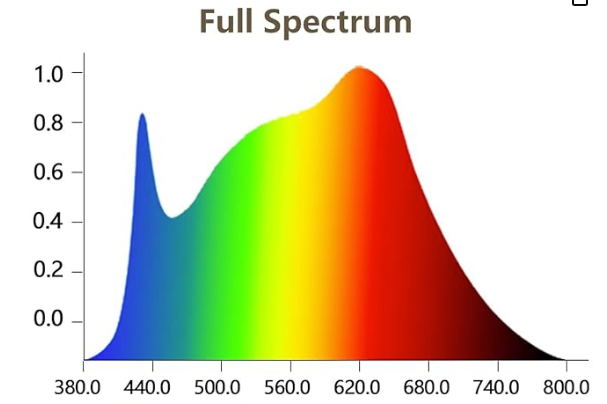
- Full-spectrum white LEDs are the community consensus for home growers. They render the plant’s true colors accurately, look attractive in a living space, and grow staghorns just as effectively as specialist grow lights.
- Purple/red-heavy LEDs may offer marginal benefits when light hours are limited, since they concentrate the wavelengths plants use most efficiently for photosynthesis.
- Warm vs. cool white makes little practical difference for staghorns when photoperiod is dialed in.
For most home growers, the recommendation is simple: buy quality full-spectrum white LEDs, set a 12-hour timer, and let consistency do the work.
A Quick Note on Measuring Light
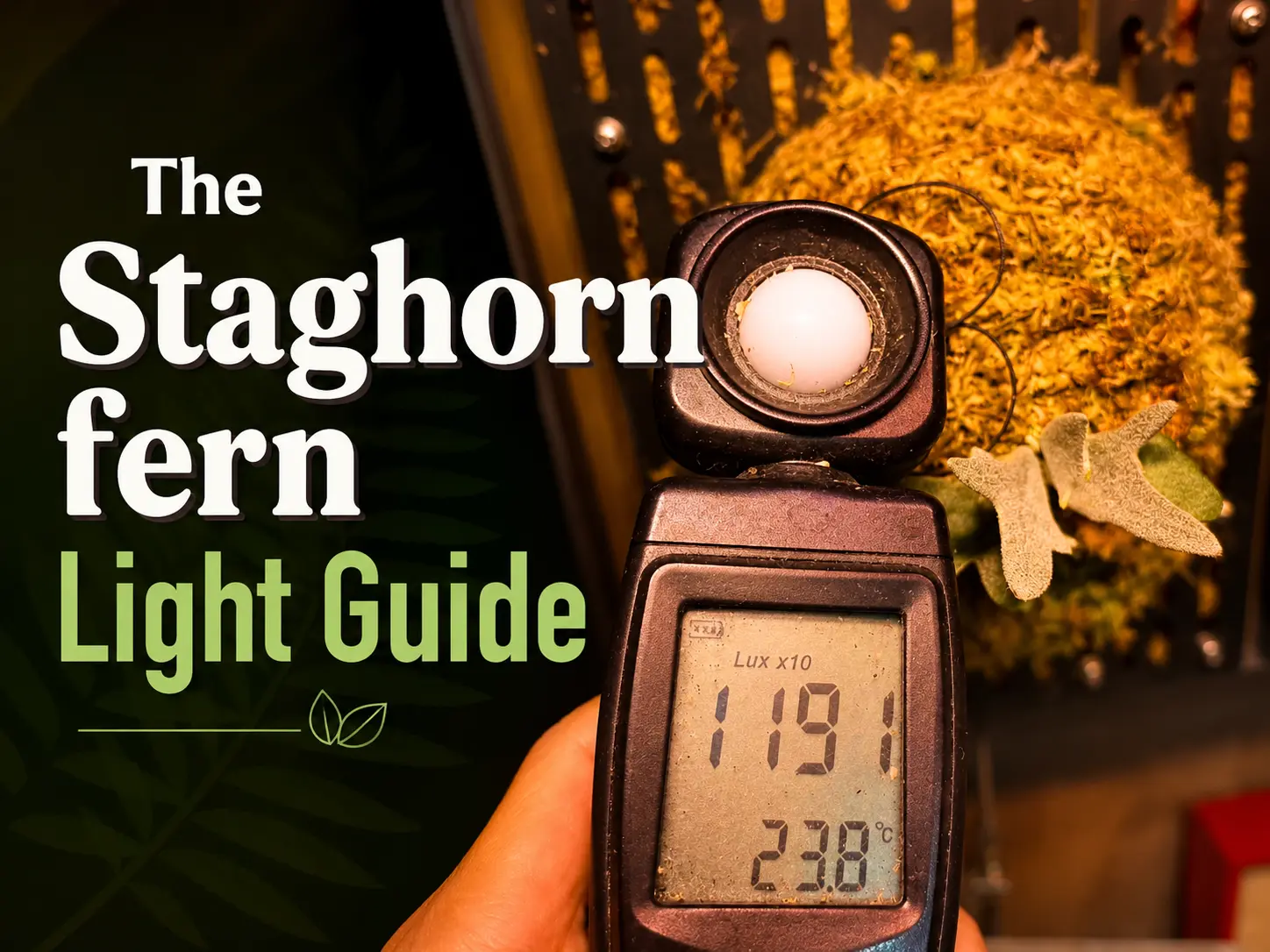
If you’re serious about optimizing your setup, a basic lux meter is one of the best investments you can make — most cost under $20 and transform guesswork into precision.
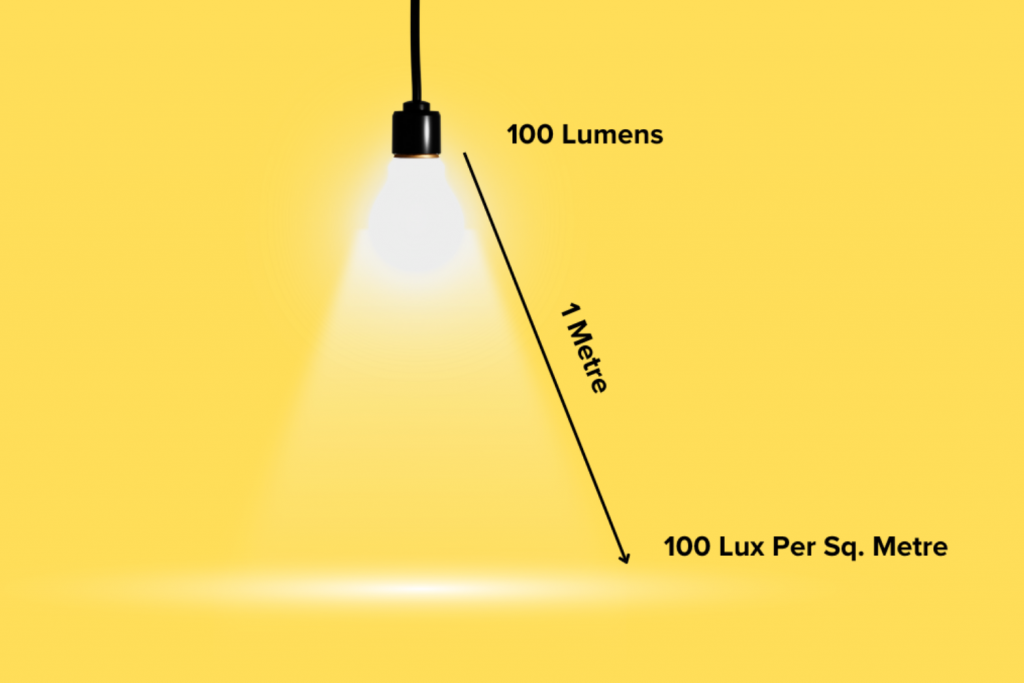
Light drops off dramatically with distance. What reads as 20,000 lux six inches from a spotlight might only be 4,000 lux at 24 inches. Without measuring, it’s nearly impossible to know whether your plant is getting what it needs.
Outdoor Growing: Placement Tips
In warmer climates (USDA zones 9–12), staghorn ferns thrive outdoors for much of the year. The key is avoiding harsh midday direct sun, which can scorch fronds rapidly — especially on green-leafed, lower-trichome species.
The ideal outdoor placement is:
- Bright open shade — under a pergola, shade cloth, or large tree canopy
- Morning sun with afternoon shade — east-facing walls or fences work well
- Mounted on a large tree — exactly as they grow in the wild, with natural dappled light shifting through the day
If you’re using a wall-mounted board outdoors, position it where it receives bright indirect light or morning sun only. Avoid walls that face west and receive intense afternoon sun in summer.
 In the wild and in warm-climate gardens, staghorns grow epiphytically on trees — bright, filtered light all day.
For detailed advice on outdoor installations, visit our guide on mounting staghorn ferns outdoors.
Staghorn Fern Species Light Requirements Reference Table
Use this table to quickly find the recommended light range for your specific variety. Light intensity is expressed as a percentage of full sun (20,000 lux = 100%). Humidity and minimum temperature are included as context, since these factors interact directly with light tolerance.
| Species (Common Name) | Latin Name | Light Range (lux) | % of Full Sun | Ideal Humidity | Min Temp (°C) | Difficulty |
|---|---|---|---|---|---|---|
| Veitchii (Silver Staghorn) | P. veitchii | 8,000–16,000 | 40–80% | 20% | 0°C | ★★☆☆☆ |
| Bifurcatum (Common Staghorn) | P. bifurcatum | 4,000–16,000 | 20–80% | 10% | 0°C | ★☆☆☆☆ |
| Stemaria (Triangle Staghorn) | P. stemaria | 8,000–16,000 | 40–80% | 30% | 5°C | ★★☆☆☆ |
| Superbum (Greater Staghorn) | P. superbum | 8,000–16,000 | 40–80% | 50% | 15°C | ★★★☆☆ |
| Hillii (Hill’s Staghorn) | P. hillii | 8,000–12,000 | 40–60% | 50% | 18°C | ★★★☆☆ |
| Wandae (Queen Staghorn) | P. wandae | 8,000–16,000 | 40–80% | 50% | 10°C | ★★★★☆ |
| Willinckii (Java Staghorn) | P. willinckii | 4,000–12,000 | 20–60% | 60% | 5°C | ★★☆☆☆ |
| Elephantotis (Elephant Ear) | P. elephantotis | 12,000–16,000 | 60–80% | 60% | 15°C | ★★★★☆ |
| Vassei (Vasse’s Staghorn) | P. vassei | 8,000–12,000 | 40–60% | 80% | 15°C | ★★★★☆ |
| Ridleyi (Ridley’s Staghorn) | P. ridleyi | 4,000–12,000 | 20–60% | 50% | 5°C | ★★★☆☆ |
| Triangulare (Triangle Staghorn) | P. triangulare | 8,000–12,000 | 40–60% | 60% | 18°C | ★★★★☆ |
| Andinum (Andean Staghorn) | P. andinum | 8,000–10,000 | 40–50% | 95% | 18°C | ★★★★★ |
| Andinum Hybrid | P. andinum hybrid | 8,000–10,000 | 40–50% | 95% | 15°C | ★★★★★ |
| Coronarium (Crown Staghorn) | P. coronarium | 8,000–12,000 | 40–60% | 30% | 15°C | ★★★☆☆ |
| Quadridichotomum (Madagascar) | P. quadridichotomum | 8,000–12,000 | 40–60% | 85% | 18°C | ★★★★★ |
Table notes: Data is based on experienced grower observations and should be treated as a guide rather than exact science — your specific microenvironment will vary. Full sun reference = 20,000 lux. Minimum temperature = absolute cold tolerance, not a recommended long-term target. Most species do best maintained at 15°C or above.
Related Readings:
Key Takeaways
Getting light right for staghorn ferns doesn’t require expensive equipment or expert knowledge — it just requires understanding a few core principles:
- Match light intensity to your species. White/silver, fuzzy-fronded varieties tolerate and prefer more light. Smooth, green-fronded species need gentler conditions.
- Yellow fronds signal too much light. This is the plant’s most reliable distress signal. Act early.
- Aim for at least 12 hours of light per day. Use a timer outlet so consistency is automatic.
- Combine overhead and directional lighting for wall displays. Top lights for the crown; spotlights for the fronds.
- Full-spectrum white LEDs are the practical choice for home growers — effective, attractive, and widely available.
- Measure instead of guessing. A basic lux meter costs very little and makes a genuine difference.
Once you’ve dialed in your lighting, staghorn ferns are extraordinarily rewarding plants to live with. Their sculptural growth, unique form, and wall-mounted presence make them unlike anything else in the plant world.
If you’re ready to build a proper display, explore our staghorn fern mount collection — designed for both indoor grow-light setups and outdoor garden installations. And for more in-depth care topics including watering, substrate, and fertilizing, visit our full plant care blog.
References & Further Reading
- Wikipedia: Platycerium (Staghorn Fern Genus) — Overview of species, natural habitat, and taxonomy
- Wikipedia: Epiphyte — Understanding the epiphytic lifestyle and its care implications
- Wikipedia: Grow Lights — Types of artificial lighting, spectrum science, and plant biology
- Wikipedia: Crassulacean Acid Metabolism (CAM) — How CAM cycling in nutrient leaves explains the need for dark periods
- Wikipedia: Lux — Understanding the unit of illuminance and how to interpret lux readings
- Wikipedia: Trichome — The biological role of surface hairs in plant light protection and water absorption