If you have spent any time in the houseplant community, you have probably seen growers wrapping delicate cuttings in fluffy, fibrous moss or topping their orchid pots with it. This material — sphagnum moss — is widely praised for its incredible ability to retain moisture, support root development, and create the kind of humid microclimate that tropical plants absolutely love. But as with any popular gardening trend, it is natural to ask: is sphagnum moss actually safe for all plants?
The short answer is yes — sphagnum moss is safe and genuinely beneficial for a wide range of houseplants, especially tropicals, aroids, and orchids. But it is not a perfect, one-size-fits-all solution. When used incorrectly, it can lead to root rot, acidic soil imbalances, and compacted root zones that slowly suffocate your plants. In this guide, we break down exactly what sphagnum moss is, explore its real pros and cons, address the mistakes most growers make, and show you how to use it effectively so your indoor jungle can thrive.
What Exactly Is Sphagnum Moss?
Sphagnum moss is a genus of approximately 380 species of mosses that naturally grow in wet, boggy environments across the world [1]. Unlike peat moss, which is the heavily decomposed, compacted material extracted from deep within a bog and takes centuries to form, sphagnum moss is the living (or dried) plant material harvested from the surface layer. Because it regenerates within a few years, it is considered a significantly more sustainable and renewable resource [2].
The most important thing to understand about sphagnum moss is its physical structure. Each strand is made up of cells that are designed to hold water — a lot of it. Dry sphagnum moss can absorb up to 18 times its own weight in water [2]. But unlike a dense, muddy soil that becomes waterlogged, fresh long-fiber sphagnum maintains an airy, springy structure. That structure creates tiny pockets of oxygen between the strands, which is exactly what plant roots need to stay healthy and grow.
It is also worth noting that sphagnum moss comes in a few different forms, and each behaves slightly differently. Long-fiber sphagnum is the most popular for houseplant use. It is stringy, fluffy, and maintains its structure well. Finely milled or chopped sphagnum compacts more easily and holds even more water, but it also reduces airflow more quickly. Knowing which form you have will help you predict how it will behave in your pots.
The Pros: Why Plants Love Sphagnum Moss
There is a reason why nurseries, rare plant collectors, and orchid growers rely so heavily on sphagnum moss. When used properly, it offers several unique advantages that traditional potting soils simply cannot match.
1. Exceptional Moisture Retention
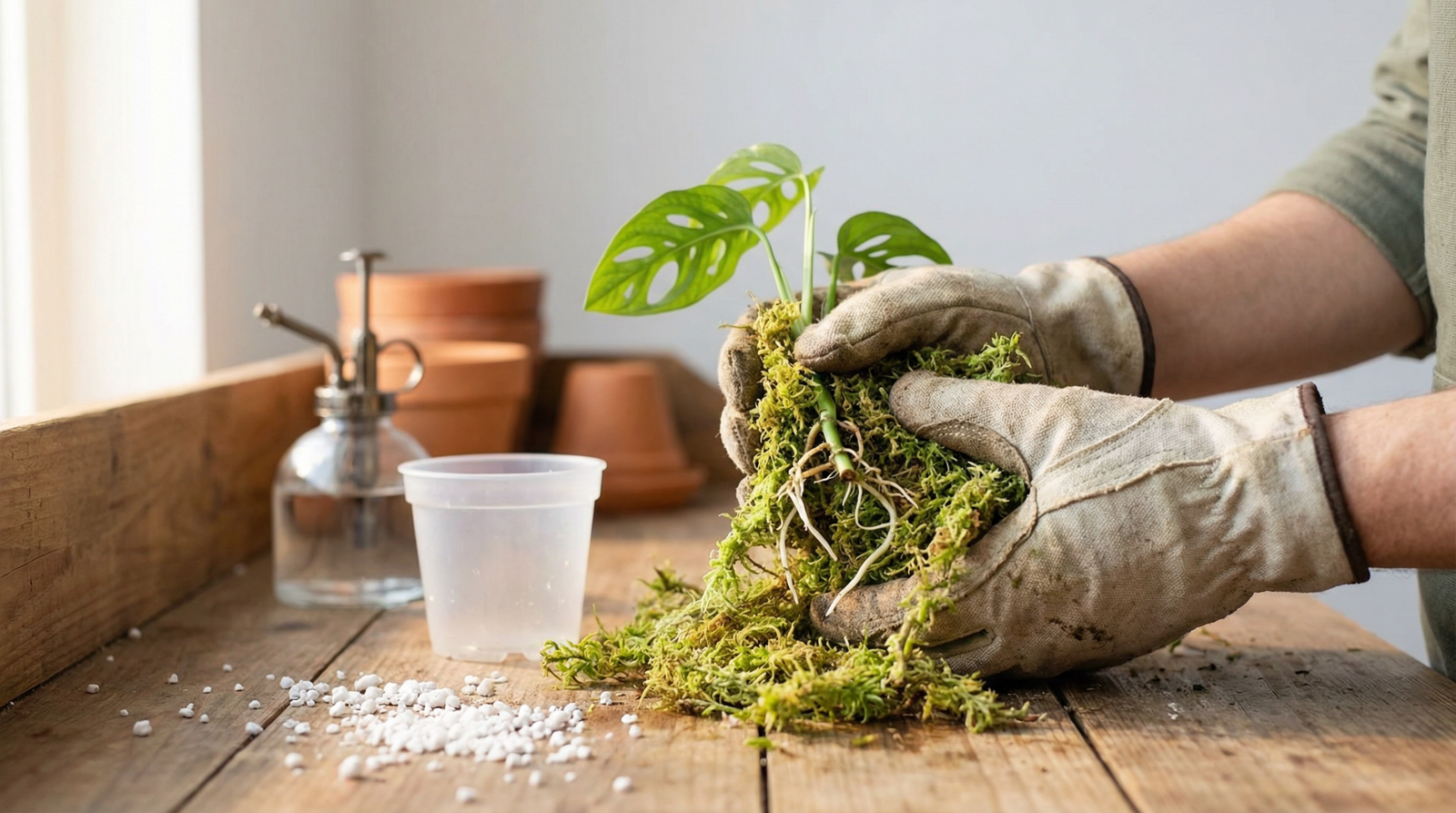
Sphagnum moss is essentially nature’s sponge. Its ability to hold up to 18 times its dry weight in water makes it invaluable for plants that require consistent moisture without sitting in heavy, waterlogged soil [2]. This is particularly useful for propagating cuttings, which have no established root system to draw from. When you are propagating Monstera indoors, wrapping the aerial root node in damp sphagnum moss ensures the cutting stays hydrated enough to develop secondary roots without drowning.
2. Excellent Airflow and Root-Zone Structure
Unlike dense soils that collapse into mud when wet, high-quality long-fiber sphagnum maintains its shape and creates tiny air pockets between strands. Roots need oxygen just as much as they need water, and this airy structure helps prevent the suffocating, anaerobic conditions that lead to root rot [3]. This is why sphagnum moss is so popular for epiphytic plants — plants that naturally grow attached to trees and have roots that are accustomed to airflow.
3. Natural Antimicrobial Properties
One of the most fascinating and underappreciated aspects of sphagnum moss is its natural chemistry. Research published in scientific literature confirms that sphagnum mosses contain compounds with genuine antimicrobial and antibacterial properties [4]. This is especially helpful when rooting vulnerable cuttings or rehabilitating plants with damaged root systems, as the moss actively helps suppress the growth of harmful pathogens in the root zone.
4. Ideal for Epiphytes and Mounted Plants
Plants that naturally grow on trees rather than in the ground — such as orchids, staghorn ferns, and many aroids — thrive in sphagnum moss. If you are looking into mounting a staghorn fern on a board, sphagnum moss is the ideal material to pack behind the shield fronds. It provides a steady, gentle moisture source that mimics the humid, bark-based microclimate these plants evolved in. The same principle applies to air layering, where you wrap a prepared stem wound in damp moss to encourage roots to form before the cutting is separated from the mother plant.
5. Versatility as a Soil Amendment
Sphagnum moss does not have to be used as a standalone medium. A handful of chopped sphagnum mixed into a chunky bark-based potting mix can improve moisture retention without sacrificing drainage. This is particularly useful for plants like Calatheas, Anthuriums, and moisture-loving ferns that tend to dry out too quickly in a purely bark-based mix.
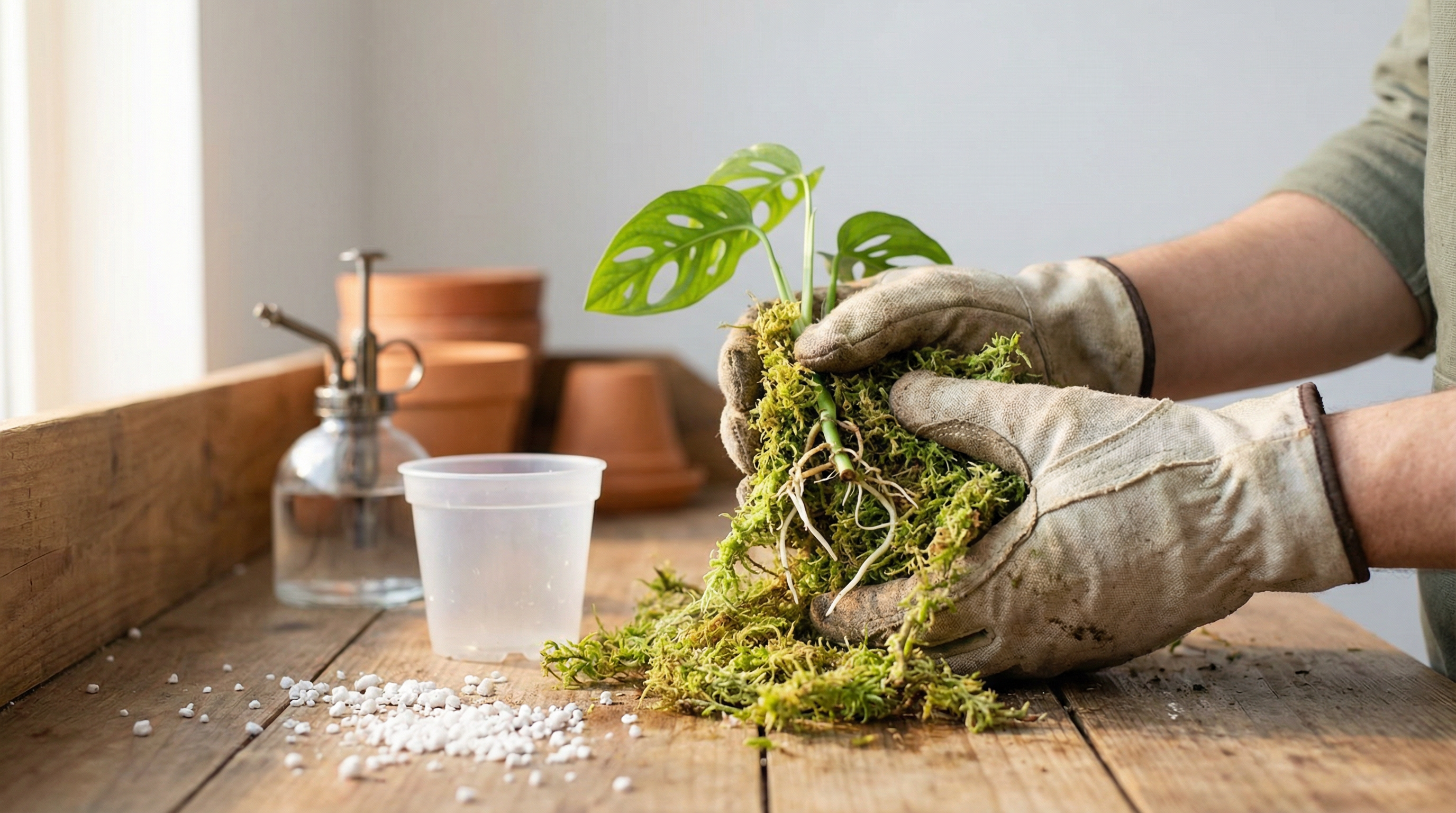
Wrapping a Monstera cutting in damp, fluffy sphagnum moss is one of the most effective propagation methods for tropical aroids. The moss provides moisture and oxygen simultaneously. (Image Source:TropicalPlantKit)
The Cons: When Sphagnum Moss Causes Problems
While it is a fantastic tool, pure sphagnum moss has real limitations. Understanding these drawbacks is the difference between a thriving plant and a rotting one.
1. It Becomes Increasingly Acidic Over Time
Sphagnum moss is naturally acidic, typically sitting around a pH of 4.2 [2]. While many tropical plants enjoy a slightly acidic environment, pure moss can become progressively more acidic as it breaks down over months. This can lock out essential nutrients like calcium and magnesium, and cause nutrient toxicity or deficiency in plants that prefer a more neutral pH. Plants like Alocasias, Paphiopedilum orchids, and certain Philodendrons can show signs of stress — yellowing leaves, stalled growth, or weak stems — when the root zone becomes too acidic [2].
2. Compaction and Degradation
When fresh, long-fiber sphagnum moss is fluffy and airy. But if kept consistently wet over an extended period — typically 8 to 16 months — the moss begins to decay and compost [2]. As it breaks down, it loses its structure, compacts tightly, and chokes out the oxygen in the root zone. This creates an anaerobic environment where the moss essentially begins to ferment, dramatically dropping the pH and creating conditions that kill plant roots. This is often what growers misidentify as “overwatering” when the real culprit is aged, compacted moss.
3. Deceptive Surface Dryness
Because sphagnum moss is fibrous, the outer strands dry out first while the interior can remain wet for much longer. This means you might touch the top of the pot, feel that it seems dry, and water again — only to be adding moisture to an already saturated root zone. This is a particularly common problem in smaller pots where the moss-to-root ratio is high.
4. Root Entanglement During Repotting
Fine plant roots love to weave themselves intricately through the fibrous strands of sphagnum moss. When it comes time to repot your Monstera or transition a plant into a fresh soil mix, removing the old moss without snapping delicate feeder roots can be a tedious, frustrating process — especially on root-bound plants like Alocasias or Begonias.
Common Mistakes and How to Avoid Them
Most problems with sphagnum moss come down to a handful of avoidable errors. Here is a quick reference guide:
| Common Mistake | The Effect on Your Plant | The Solution |
|---|---|---|
| Packing it too tightly | Collapses air pockets, suffocating roots and causing rot | Fluff the moss before use; pack it loosely around roots |
| Keeping it soaking wet | Accelerates decay and creates an anaerobic, acidic environment | Squeeze out excess water so the moss is damp like a wrung-out sponge |
| Never repotting | The moss breaks down into acidic sludge after 12–18 months | Repot plants grown in pure moss annually with fresh material |
| Using it for the wrong plants | Causes rot in succulents, cacti, and fast-draining plants | Reserve sphagnum moss for tropicals, aroids, orchids, and moisture-loving ferns |
| Letting it dry out completely | Becomes hydrophobic and repels water | Soak the pot in water for 10–15 minutes to fully rehydrate |
Practical Ways to Use Sphagnum Moss at Home
If you are ready to incorporate sphagnum moss into your plant care routine, here are the most effective and safe ways to use it.
Setting Up a Propagation Station
Sphagnum moss is arguably the best medium for rooting cuttings. Place a node in a cup of loosely packed, damp moss inside a propagation box with a humidity dome, and you create a miniature greenhouse. The moss provides the perfect balance of hydration and oxygen to encourage rapid, healthy root development. Check out our guide on how to create a propagation station at home for a complete setup walkthrough.
Building and Maintaining Moss Poles
Climbing plants like Monsteras and Philodendrons produce larger, more mature leaves when given something to climb. A modular moss pole filled with damp sphagnum moss allows the plant’s aerial roots to anchor into the pole and absorb moisture directly, mimicking the humid tree trunks they climb in the wild. Misting the pole regularly keeps the moss moist and encourages the plant to send roots into it.
As a Soil Amendment in Tropical Mixes
You do not have to use pure moss. Cutting your sphagnum moss 50/50 with large-chunk perlite or orchid bark adds vital structure and prevents the moss from compacting too quickly [2]. This is a particularly effective approach for plants that need moisture retention but also demand good drainage — think Anthuriums, Philodendrons, and Hoyas.

A close-up view of living Sphagnum palustre, showcasing the star-like capitulum structure that allows it to hold remarkable quantities of water. (Photo by Bernd Haynold, CC BY-SA 3.0, via Wikimedia Commons)
Which Plants Should and Shouldn’t Use Sphagnum Moss?
Not every plant is a good candidate for sphagnum moss. Here is a straightforward breakdown:
Plants that thrive in sphagnum moss:
Phalaenopsis orchids, Cattleya orchids, Monstera deliciosa, Monstera adansonii, Philodendrons, Anthuriums, Staghorn ferns (Platycerium), Elkhorn ferns, Calatheas, Pitcher plants (Nepenthes), and most tropical aroids.
Plants that should avoid pure sphagnum moss:
Succulents, cacti, snake plants (Sansevieria), ZZ plants, Alocasias that prefer a more neutral pH, and any plant that requires fast-draining, mineral-rich soil.
The underlying logic is simple. If a plant evolved in a humid, tropical environment with naturally moisture-retentive substrates, sphagnum moss will likely benefit it. If a plant evolved in arid, well-draining conditions, the moisture-retaining properties of sphagnum moss will work against it.

In the wild, sphagnum moss grows in dense, moisture-rich colonies in boggy forests. Replicating this environment carefully is the key to indoor plant success. (Photo by Bernd Haynold, CC BY-SA 3.0, via Wikimedia Commons)
Quick Tips Checklist: Using Sphagnum Moss Safely
- Always fluff the moss before using it. Never pack it tightly into a pot.
- Squeeze out excess water before placing cuttings or roots into it. The moss should feel like a damp sponge, not a soaking wet cloth.
- Check moisture levels deeper than the surface. The top layer dries first; the interior may still be wet.
- Replace pure sphagnum moss every 12 to 18 months before it breaks down and becomes acidic sludge.
- Mix with perlite (50/50) for longer-lasting structure and better airflow in permanent potting situations.
- Soak the pot for 10–15 minutes if the moss has dried out completely and become hydrophobic.
- Monitor plant health for signs of pH stress: yellowing between leaf veins, stalled growth, or weak new growth can indicate the root zone has become too acidic.
Conclusion
So, is sphagnum moss safe for plants? Absolutely — and it is one of the most versatile tools in any indoor gardener’s toolkit. It is a powerhouse material that can dramatically improve your success rate with propagations, epiphytes, and climbing aroids. The key to using it safely is understanding its nature: it is a moisture manager and root-zone buffer, not a permanent soil replacement.
By keeping the moss fluffy, ensuring it stays damp rather than soggy, and replacing it before it breaks down into an acidic sludge, you can harness all of its incredible benefits without putting your plants at risk. Whether you are rooting a rare Monstera cutting, mounting a staghorn fern, or building a moss pole for your climbing Philodendron, sphagnum moss is a tool every indoor gardener should have in their kit.
References
[1] Wikipedia Contributors. (2024). Sphagnum. Wikipedia, The Free Encyclopedia. https://en.wikipedia.org/wiki/Sphagnum
[2] Here But Not. (2021, July 9). Pure Sphagnum Moss for Plants: Why it’s Not the Perfect Option. https://herebutnot.com/pure-sphagnum-moss-for-plants-why-its-not-the-perfect-option/
[3] Provision Gardens. (2025, December 26). Sphagnum Moss for Plants: Benefits, Uses, and Common Mistakes to Avoid. https://provisiongardens.com/blogs/grower-guides/sphagnum-moss-for-plants-benefits-uses-and-common-mistakes-to-avoid
[4] Klavina, L., Springe, G., Bankova, V., Ignatjeva, J., Sherbaka, R., Abolins, A., & Popova, M. (2015). Chemical Composition Analysis, Antimicrobial Activity and Cytotoxicity of Extracts of Mosses. National Center for Biotechnology Information. https://pmc.ncbi.nlm.nih.gov/articles/PMC6331942/
[5] Lee, S. Y., et al. (2021). Effect on Chemical and Physical Properties of Soil Each Peat Moss. PMC, National Center for Biotechnology Information. https://pmc.ncbi.nlm.nih.gov/articles/PMC8469801/
[6] Highland Moss. (2024, August 7). Sphagnum Moss: Uses, Benefits, and Characteristics. https://highlandmoss.com/sphagnum-moss-uses-benefits-and-characteristics/