A staghorn fern can look spectacular, until the mount stays soggy, the crown rots, or the whole display becomes too heavy to handle.
Choose a mount board or planter that keeps the root zone airy, drains fast, and matches how you’ll water: boards/bark slabs for wall display and “soak-and-drain” care; wire/slatted baskets for easier watering and faster drying—both are valid when drainage and airflow are excellent.
Table of Contents
Staghorn Fern Care Requirements (At a Glance)
| Requirement | Practical baseline |
|---|---|
| Botanical name (verified) + common name | Platycerium bifurcatum (common staghorn fern / elkhorn fern) |
| Light (with placement examples) | Bright, indirect light. Indoors: near an east window; or a few feet back from a south/west window behind a sheer curtain. Outdoors: bright shade. |
| Watering baseline (what to check before watering) | Check the moss/medium inside the shield area: water when it’s mostly dry and light in weight, not when it’s still cool and damp. Soak the root area, then drain thoroughly. |
| Temperature range + cold sensitivity | Warm household temps preferred; protect from cold drafts. Move indoors before chilly nights; cold stress rises as temps drop. |
| Humidity (what is sufficient vs risky) | Moderate household humidity can work with correct watering and airflow; very high humidity without airflow increases rot risk. |
| Soil/substrate (drainage/aeration) | Epiphytic approach: no “soil.” Use a small pad of long-fiber sphagnum/peat-based material plus chunky airy components when potted; keep it very well-drained. |
| Pot & drainage (must-have features) | If potted: slotted orchid pot, wire basket, or airy container with many openings. Avoid sealed cachepots. |
| Fertilising (type + frequency guidance) | In active growth, light feeding is safer than heavy feeding: diluted balanced fertiliser periodically. Reduce in low light/cool seasons. |
| Toxicity/pet safety (or confirm statement) | ASPCA lists common staghorn fern (P. bifurcatum) as non-toxic to cats and dogs (still prevent chewing for choking/GI irritation). |
| Difficulty level (Beginner/Intermediate/Advanced) | Intermediate (mounting choices, watering method, and airflow make or break success). |
Check this Staghorn fern basis for more knowledge:
Core care basics that affect your mount choice
How to recognise a staghorn fern (and what not to “fix”)
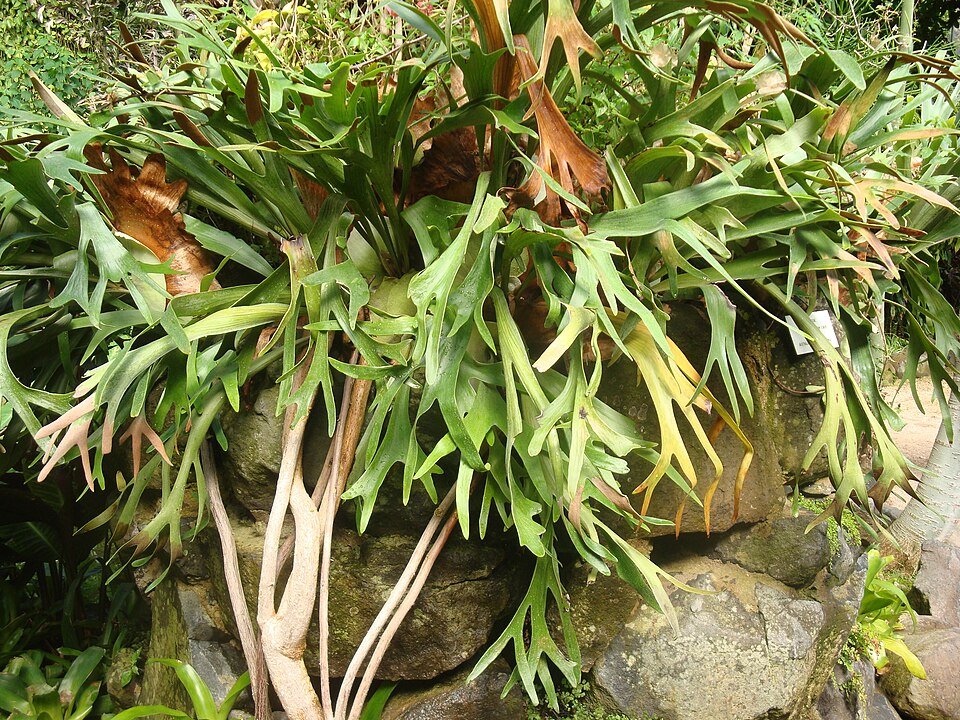
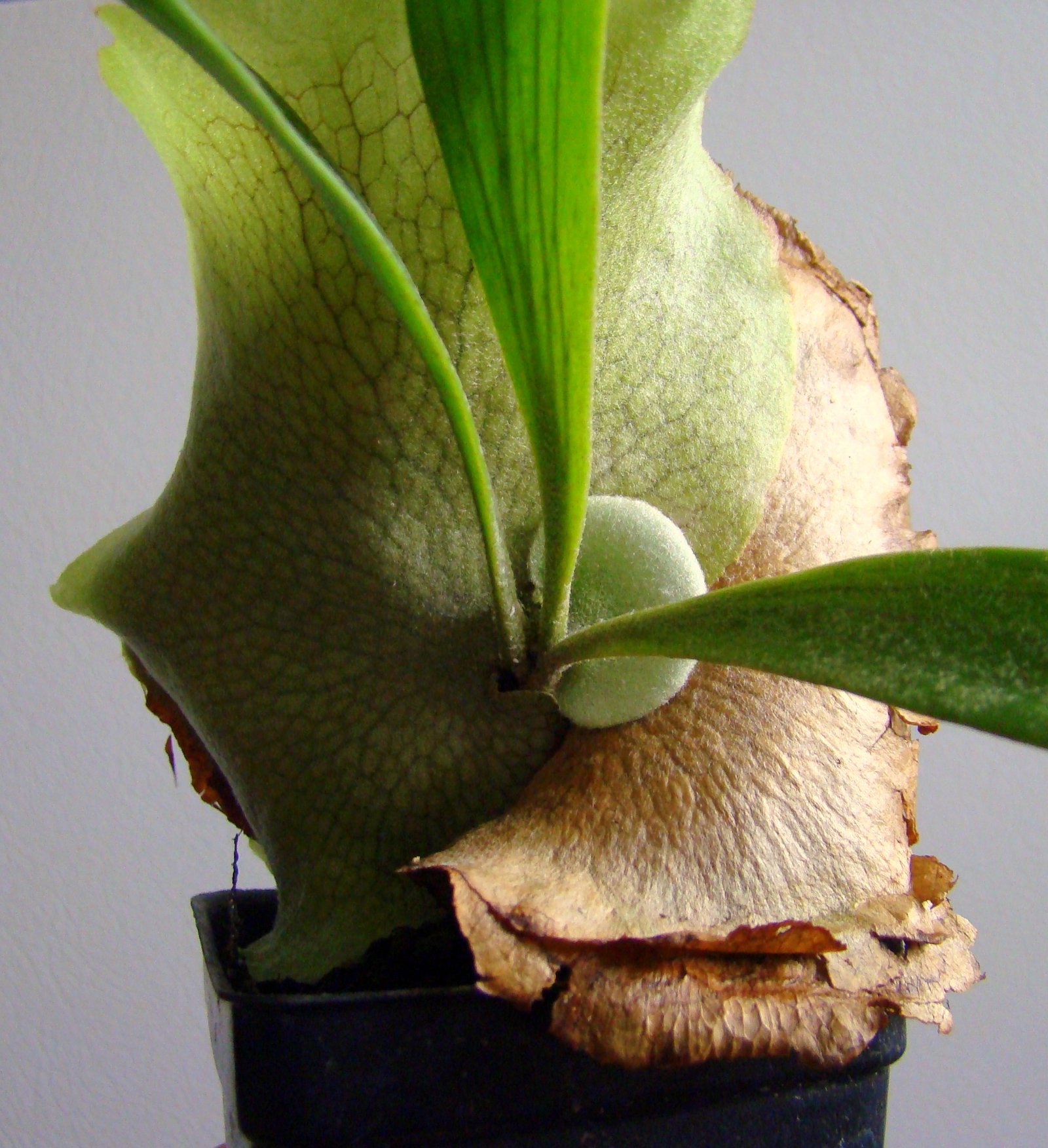
Common staghorn fern produces two frond types:
- Shield (basal) fronds: round/heart-like plates that sit tight to the mount, protect roots, and trap moisture and debris. They often turn tan/brown with age—this is normal and helps the plant.
- Antler (fertile) fronds: the showy, forked “horns” that arch outward. Brown patches on the underside can be reproductive structures (sporangia) rather than disease.
A common mistake is removing brown shield fronds or “cleaning” the silvery fuzz on fronds. Both can stress the plant and reduce its ability to manage water loss.
Why the natural habitat matters indoors
Platycerium bifurcatum is an epiphytic fern: in nature it anchors on tree trunks/branches rather than growing in soil. That’s why it performs best when the roots sit in a small, airy pad of moisture-holding material and then dry partially—excellent drainage and airflow are not optional.
Light, temperature, humidity—quick logic
- Light drives drying speed and growth. Lower light means slower drying, so mounts must be even more breathable.
- Temperature affects water use: warm + bright = more frequent watering; cool + dim = much less.
- Humidity helps fronds stay hydrated, but if humidity is high while the root pad stays wet and air is stagnant, rot risk rises. Airflow is the safety valve.
Watering method is the “hidden” decision
Before choosing board vs basket, decide how you’ll water most weeks:
- If you prefer soak-and-drain (sink/bucket soak, then drip dry): boards and plaques work well.
- If you prefer quick pour-through with fast dry-down: open baskets and slatted planters are easier.
Mount or pot a staghorn fern: which display method fits your home?
Wall mounts look clean—until you realise you hate lifting them to water.
Best default: mount small-to-medium plants; use baskets/slatted planters for heavier specimens or anyone who needs faster drying and easier watering control.
Potting a staghorn fern is definitely convenient — you can treat it like a “normal” houseplant in a container, which makes placement and basic care feel straightforward.
That said, the trade-offs show up pretty quickly in both looks and day-to-day watering. Compared with a mounted staghorn, a pot-grown plant often reads as less decorative: the silhouette isn’t as clean or “sculpted,” and the overall form can look a bit less rounded and intentional.
There’s also a practical issue once the fern starts producing larger shield fronds (the flat, round “face” fronds). These shields tend to wrap over the surface of the potting mix, which can make it harder to see where the medium is actually moist and harder to water evenly without splashing or trapping water in awkward spots.
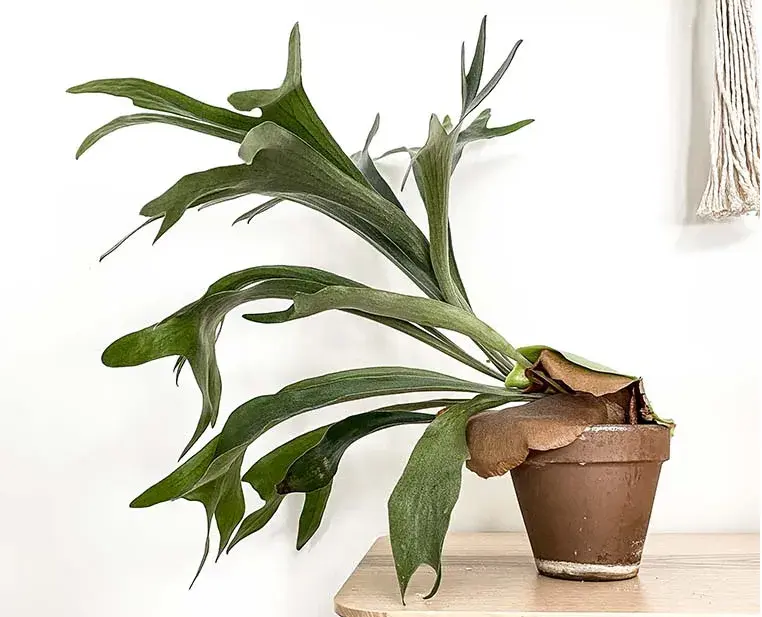
Finally, for longer-frond varieties, pot culture can create a spacing problem: the hanging fronds may droop low enough to touch the floor. Once leaves are constantly brushing against the ground, it’s common to see bending, creasing, or misshapen growth over time — not because the plant is unhealthy, but simply because the fronds don’t have enough clearance to develop naturally.
When a mount board is the better choice
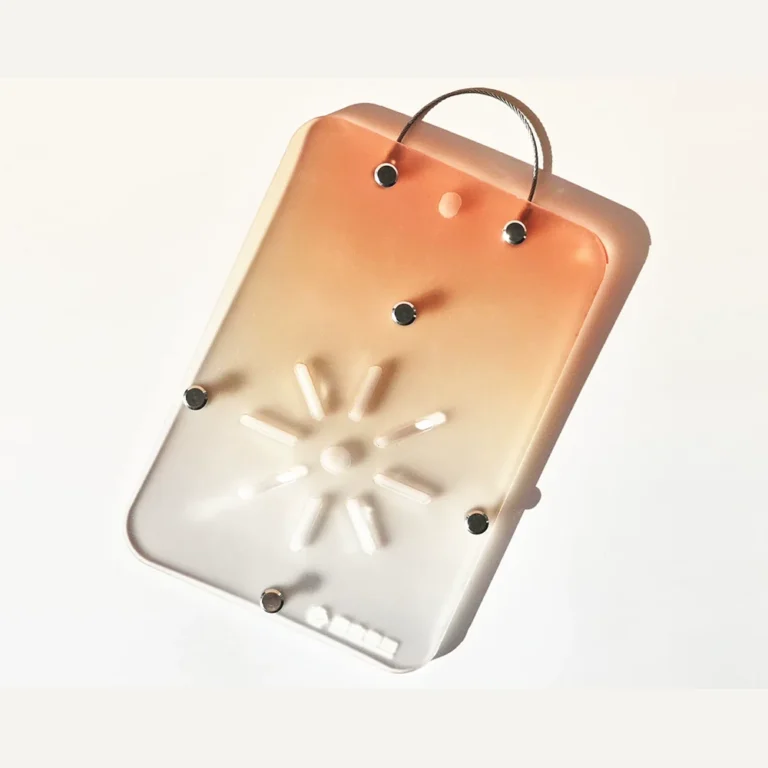
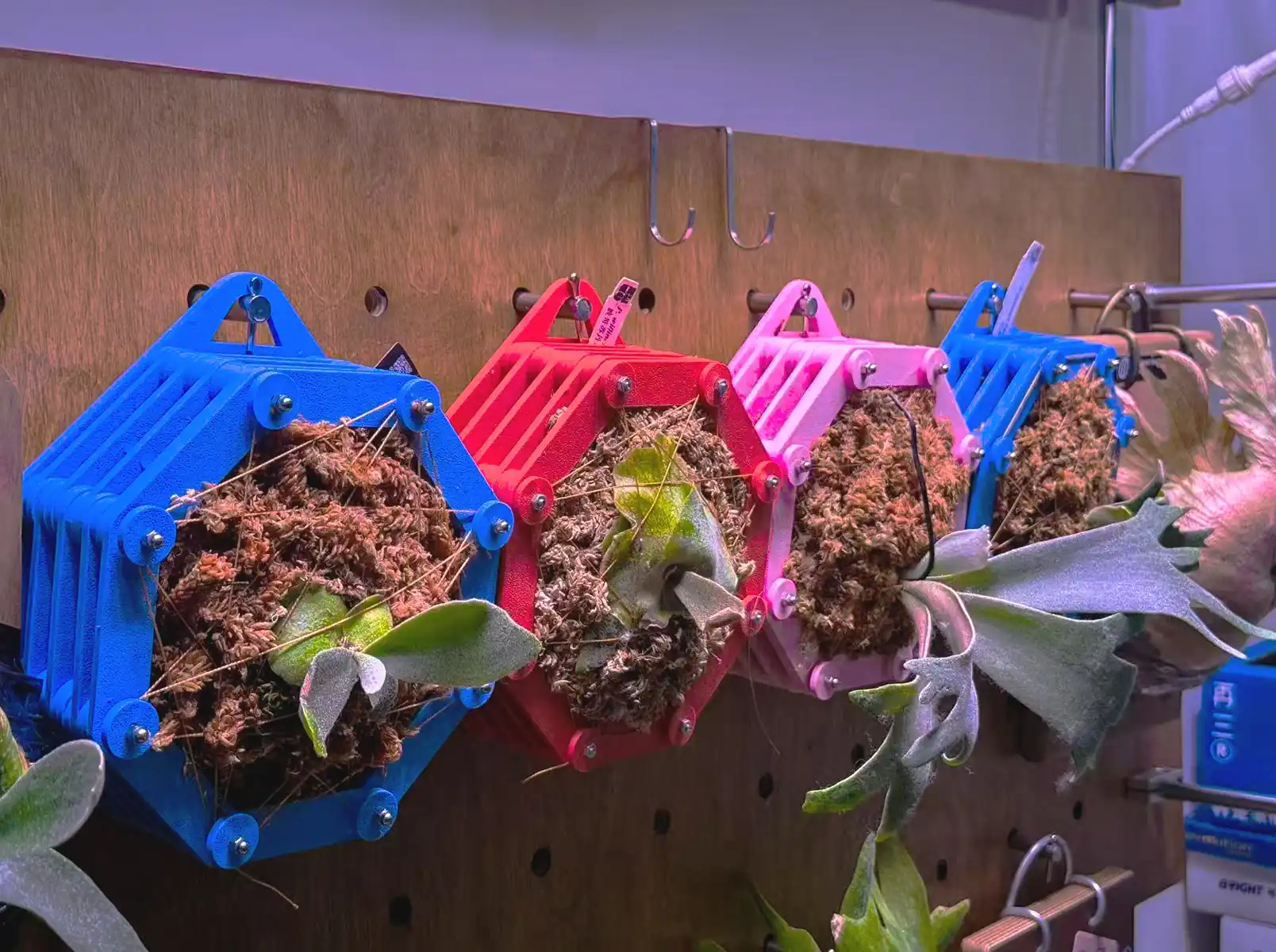
A board/plaque is ideal if you want a flat wall display, you can take it down to soak, and your home has moderate airflow. Mounted plants also show the shield fronds clearly and mimic the epiphytic habit well.
Choose a board mount when:
- You can soak/drain it without making a mess.
- You can hang it where it gets bright, indirect light.
- You can keep it out of cold drafts (winter windows, HVAC vents).
- You want the display to stay relatively compact and vertical.
Avoid a flat board mount when:
- The plant is already very large and heavy.
- Hanging it from a weak nail, small hook, or questionable anchor. A mounted staghorn gets significantly heavier after soaking, and failure is common if the hardware isn’t rated for the load.
- Placing the back of the mount flush against a non-waterproof wall for the long term. Even careful growers get occasional runoff; repeated damp contact can damage paint, drywall, and encourage mould. Use spacers or a waterproof backing if it must hang against a wall.
When a planter or basket is the better choice
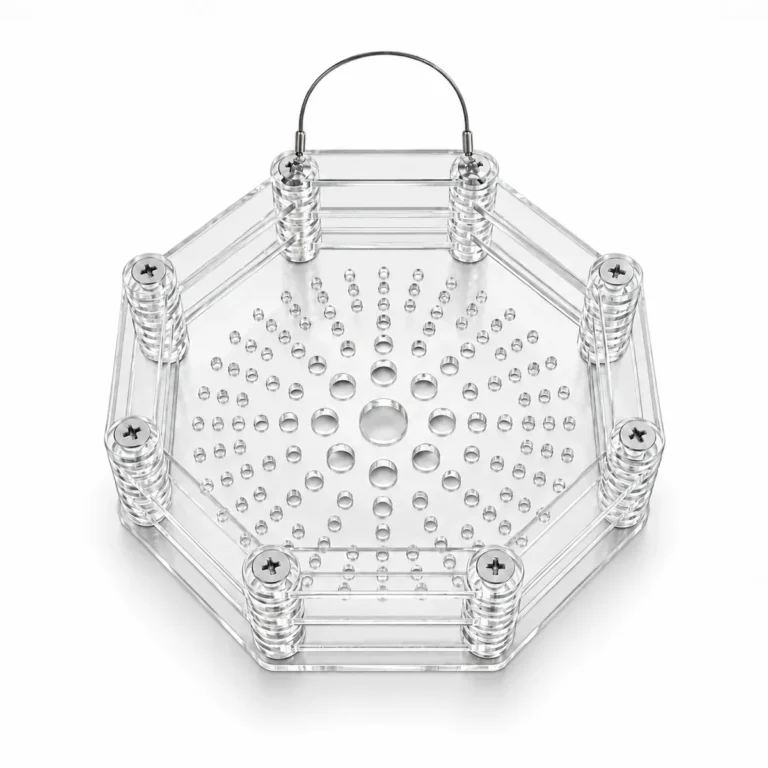
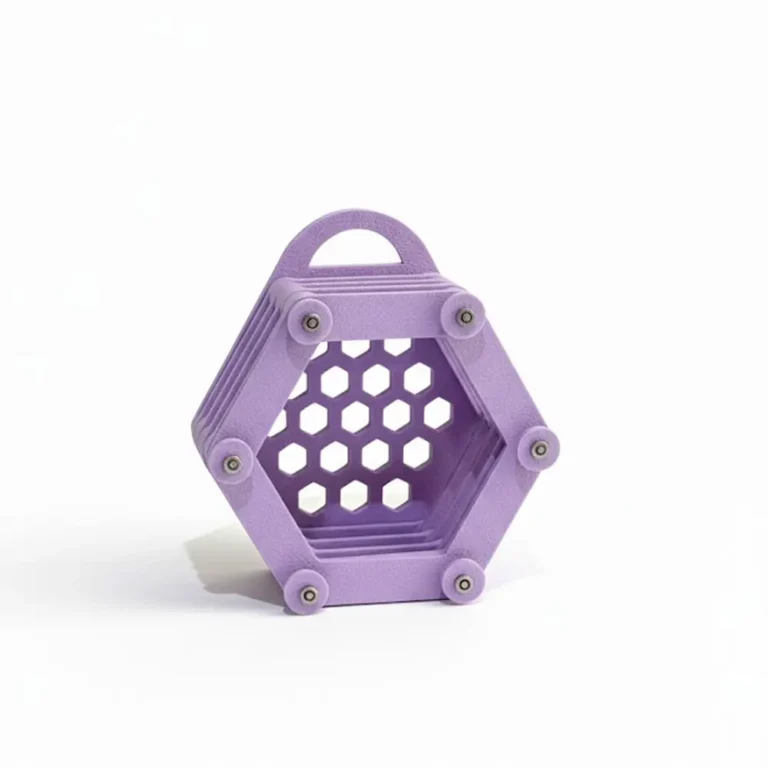
Wire baskets and slatted planters shine when you want fast drainage, easy watering, and room for the plant to expand.
Choose a basket/airy planter when:
- You water more often and want the root pad to dry faster.
- You live in a cooler/low-light home where wetness lingers.
- The plant is large and needs a sturdier structure.
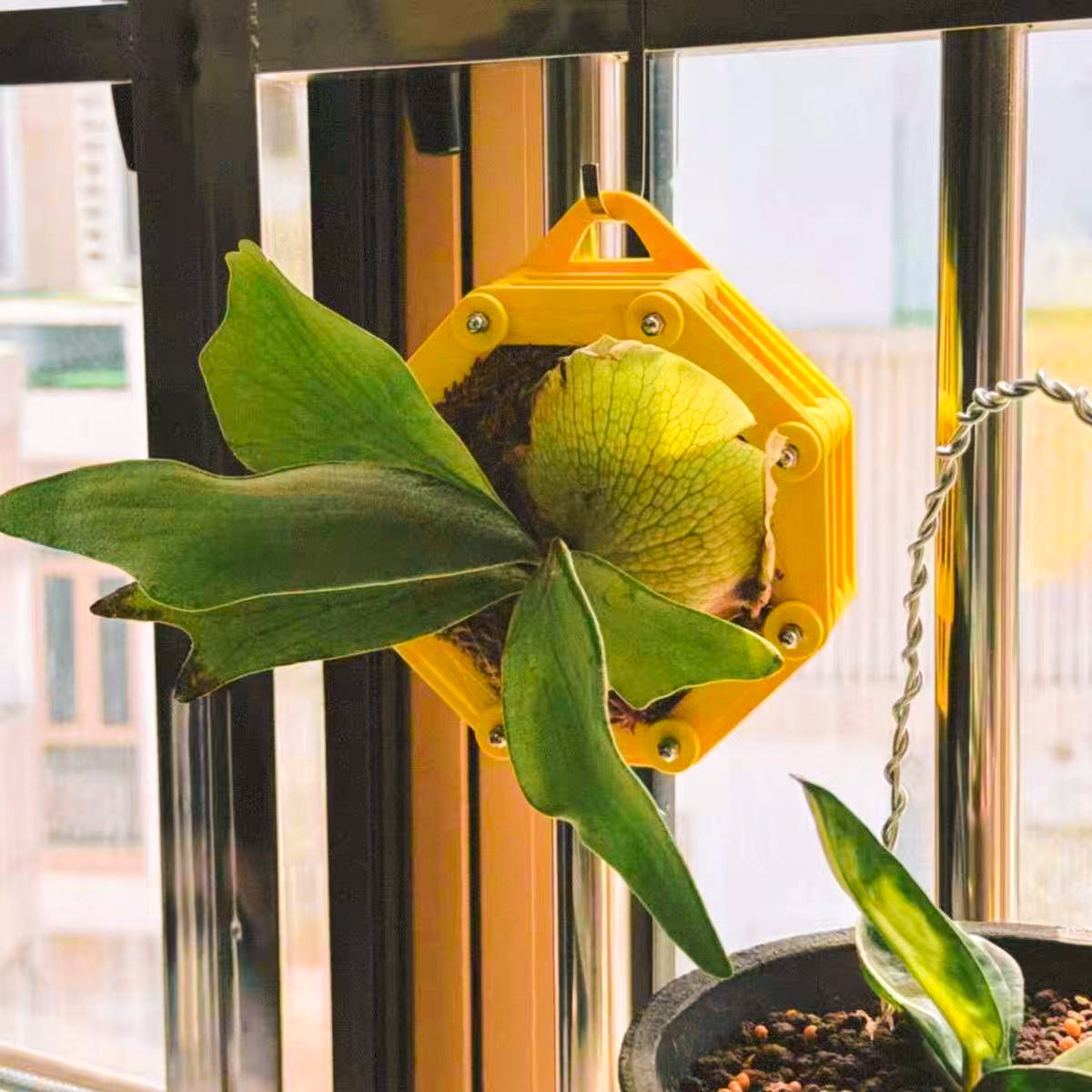
- You want a hanging display without a heavy plaque.
Avoid closed pots and decorative cachepots with no drainage. Staghorns can be grown in containers, but only if the mix is very well-drained and the pot breathes.
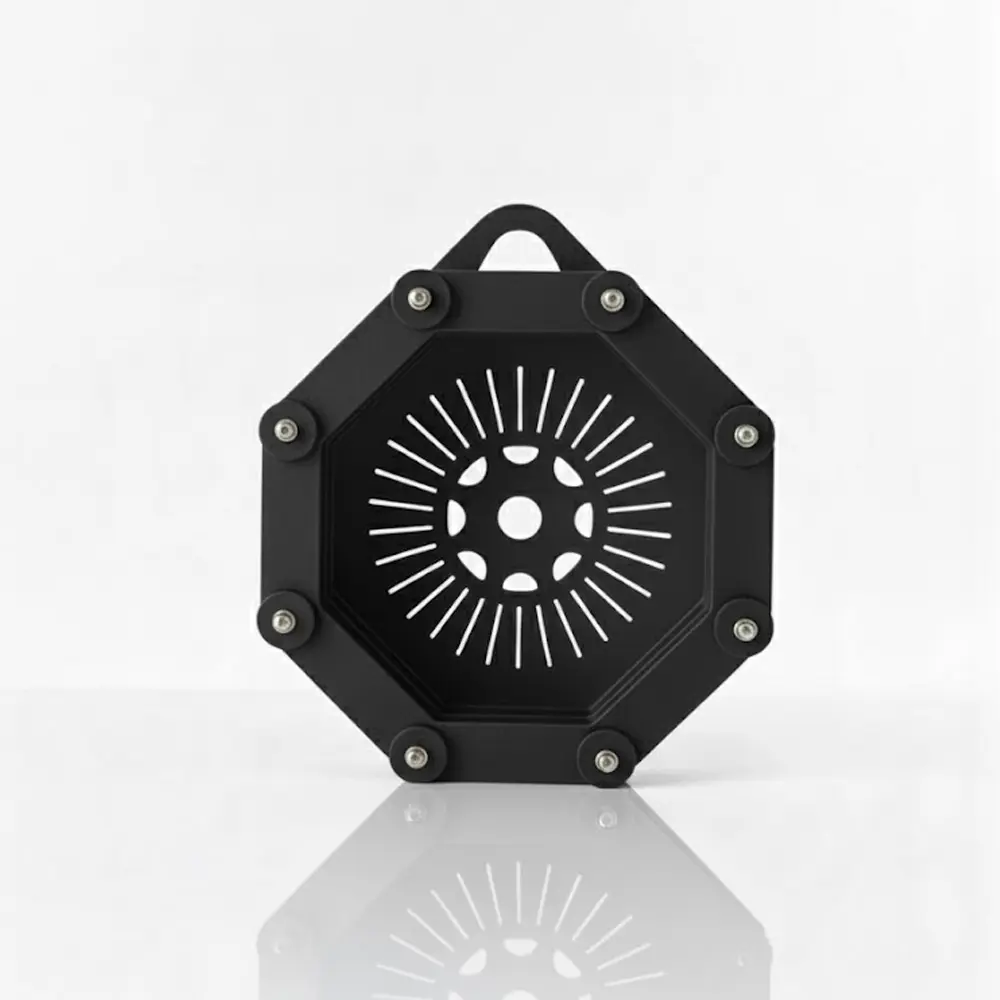
What’s the best mount board material for staghorn ferns?
Mount failure is usually about rot, weight, or weak hanging hardware—not about looks.
Prioritise rot resistance and structure: use a sturdy, rot-resistant board (or bark slab) that can hold hardware securely, with enough surface area for the plant to “grow into” over time.
Board material checklist (what to look for)
1) Rot resistance and rigidity
Staghorns are watered by soaking the root area and then draining. That repeated wet/dry cycle breaks down soft woods quickly. Choose a board that stays flat and strong when repeatedly damp.
2) Size now vs size later
A common staghorn fern can expand dramatically. If the plant’s shield mass is already close to the board edges, plan to size up soon. A too-small mount forces you into frequent remounting (stress + risk of damage).
3) Hanging hardware you can trust
Use corrosion-resistant hardware. The board must safely hold the plant’s “wet weight” after watering. A mount that feels fine dry can become dangerously heavy after soaking.
4) Root pad depth and drainage path
You want a modest pad of sphagnum/medium under the plant and a way for water to drain and air to enter. Flat boards work best when you don’t over-pack moss and you hang the mount so it can drip freely.
Bark slabs and plaques
Many growers use bark slabs or cork-type mounts to mimic a tree surface and keep airflow high. If you choose bark, inspect it for stability and avoid slabs that crumble or shed excessively.Most importantly, a waterproof coating needs to be applied to prevent the wood from corroding and softening, which could lead to cracking.
Fasteners that won’t strangle the plant
University extension guidance notes that plants are often secured with monofilament, wire, mesh, or similar materials—wrapped over old shield fronds, not over soft green fronds. Another approach uses pantyhose/stockings so the tie material eventually degrades rather than cutting into tissues as the fern grows.
Practical rule: if you can’t slide a finger under a tie after a few weeks of growth, it’s too tight.
Which planter or basket actually works for staghorn ferns?
If you choose a “planter,” think like an orchid grower: openings, airflow, and rapid drainage come first.
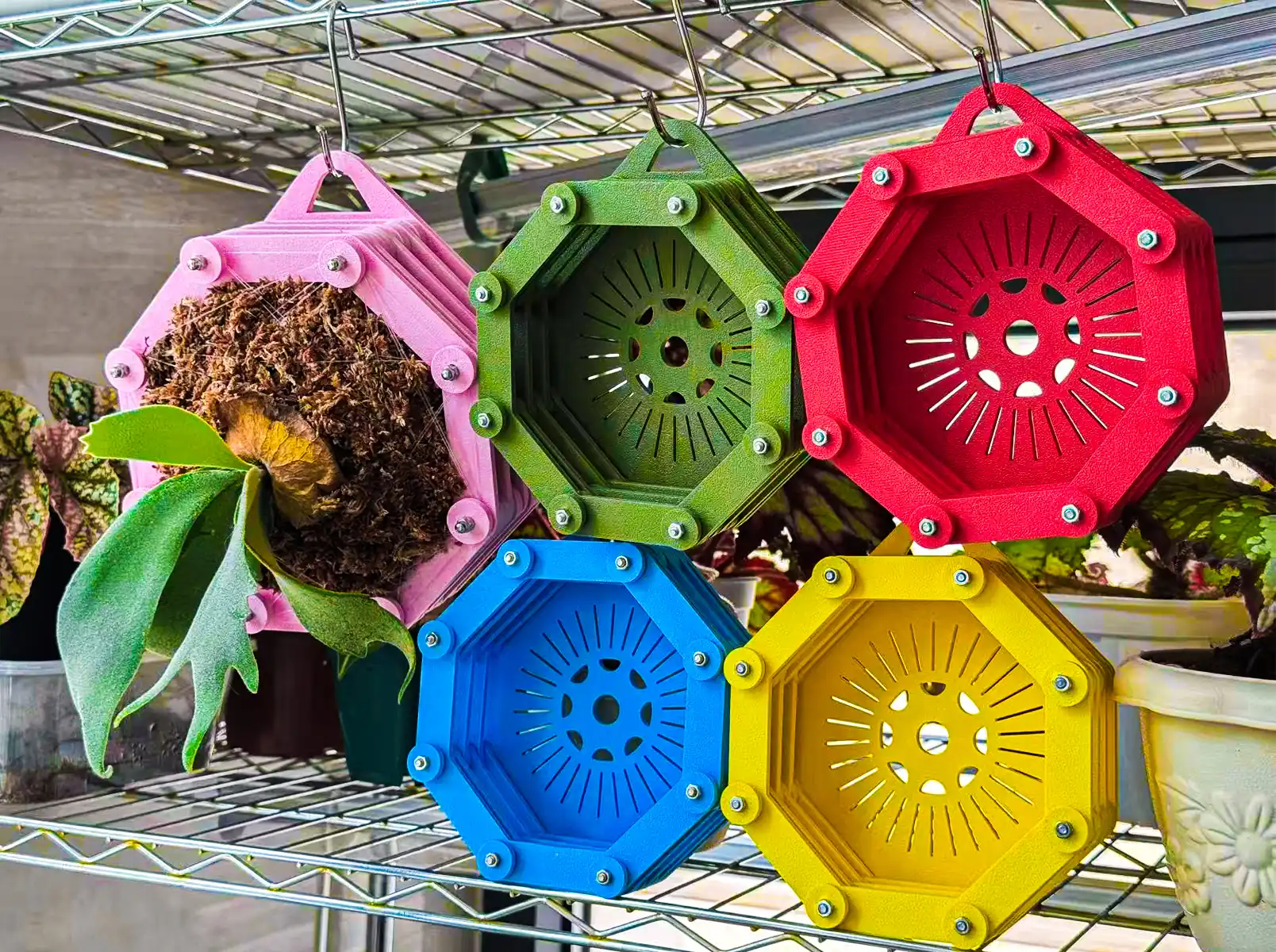
What makes a good staghorn planter (and what doesn’t)
Good planter features
- Lots of side openings (air exchange)
- Fast drainage (water exits immediately)
- A way to anchor the plant firmly
- Enough volume for a small pad of sphagnum + chunky mix (not dense potting soil)
Risky planter features
- Solid ceramic with one small drainage hole
- Self-watering pots or “water reserve” designs
- Tight liners that stay wet (some coco liners can work, but only if you don’t let them stay constantly saturated)
Media choice for planters: keep it airy
Authoritative plant references note staghorns can be grown in pots with an epiphytic-style mix, but the medium must be rich yet very well-drained. In practice, that means:
- A small amount of moisture-holding material (often sphagnum/peat-based),
- Plus chunky, breathable components so water doesn’t sit at the crown.
A simple way to sanity-check your mix: when you water, it should drain quickly and feel lighter within a reasonable drying window for your home (faster in summer/bright light, slower in winter/low light).
How do you mount a staghorn fern securely without damaging fronds?
Most mounting damage happens when people tie over green tissue or bury the crown too deeply.
Secure the root mass against a small moss pad, tie over old shield tissue (not green fronds), and keep the crown slightly proud so it can dry between waterings.
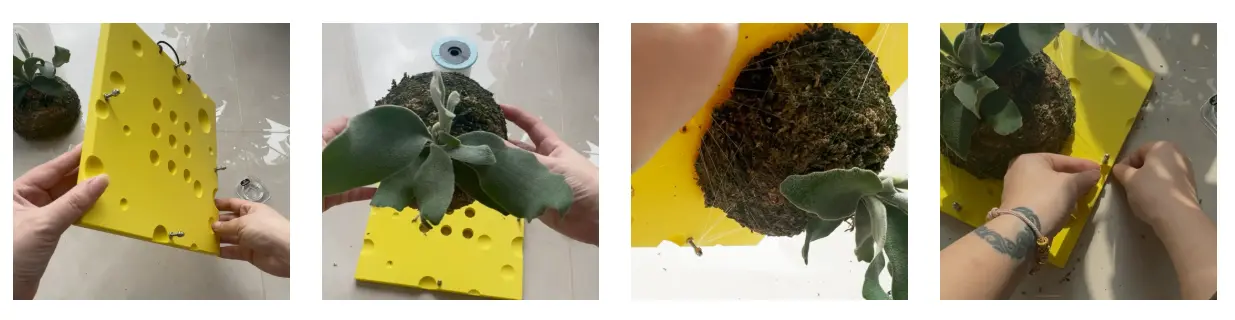
Step-by-step: board mount (reliable for small-to-medium plants)
Materials
- Rot-resistant board or Wall Planter
- Long-fiber sphagnum moss (soaked, then squeezed damp)
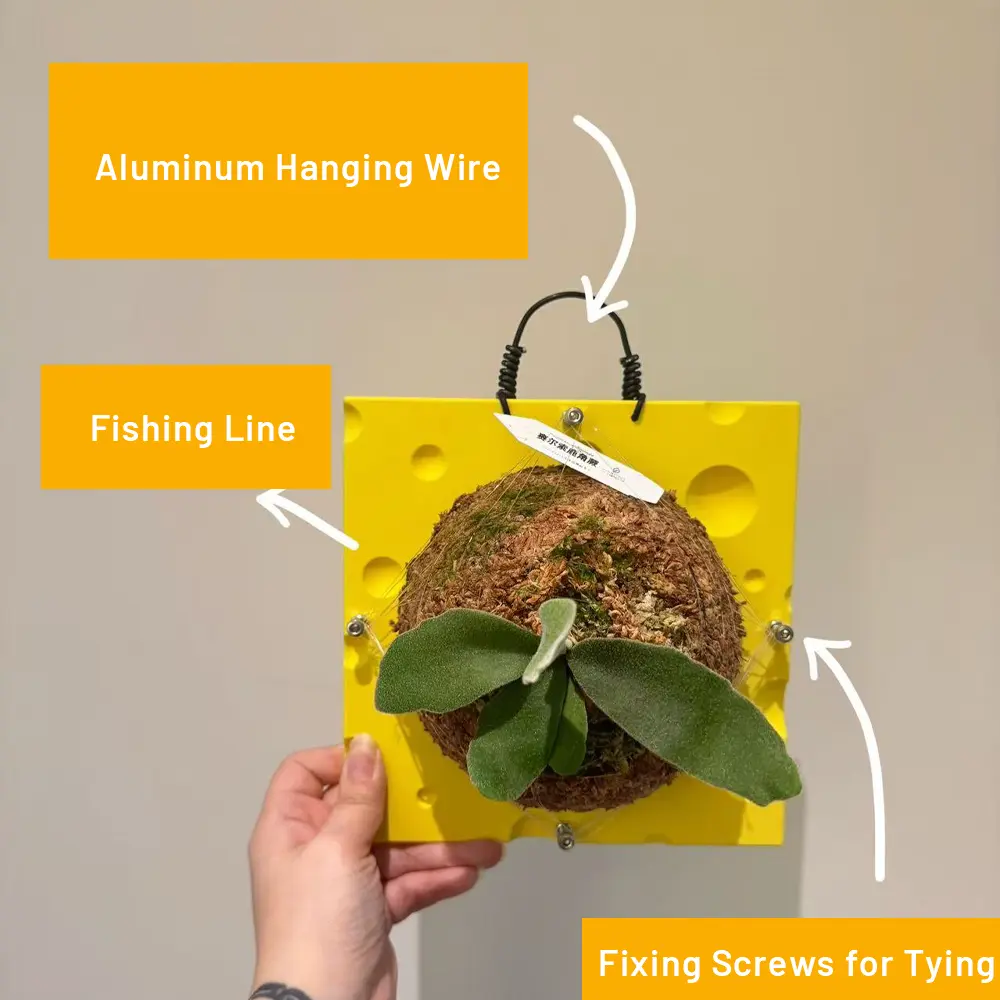
- Soft tying material (e.g., stockings/pantyhose) or a wide, gentle strap; avoid thin wire directly on living tissue. Fishing Line is also a good choice.
- Corrosion-resistant screws/eye bolts + hanging wire rated for wet weight
Steps
- Soak moss, then squeeze until it’s damp—not dripping.
- Position the plant so the crown sits slightly above the moss pad, not buried.
- Build a modest moss nest behind/under the root mass (avoid a thick “wet sponge”).
- Tie over the old shield area (tan/brown plates) so the plant is snug, but not compressed.
- Hang with clearance so it can drip and air can circulate behind the board.
- First month care: water slightly more cautiously while the plant settles; the goal is “evenly moist, then partial dry,” not constant wetness.
Step-by-step: wire basket method (great for faster drying)
- Line the basket lightly (do not create a sealed cup).
- Add sphagnum so the plant can sit near the top edge.
- Bring fronds gently through openings so the plant’s natural upright habit is maintained.
- Top-dress with a small amount of sphagnum around the root zone and anchor securely.
Common failure points (and how to avoid them)
- Ties cut into tissue: choose wide/soft ties; re-check monthly.
- Crown stays wet: reduce moss volume; increase airflow; water less often.
- Mount gets too heavy: size hardware for wet weight and consider switching to a basket for large plants.
Troubleshooting table
| Symptom | Most likely cause | What to do now | Prevention |
|---|---|---|---|
| Black/mushy area at crown or behind shield | Rot from constant wetness + low airflow | Unmount if needed, remove saturated material, dry the root pad, improve airflow; reassess watering frequency | Use thinner moss pad; ensure full drain; avoid stagnant, humid corners |
| Antler fronds droop and feel limp | Underwatering or overly fast dry-down | Soak root pad thoroughly, then drain; repeat when medium is mostly dry | Match mount type to your routine; baskets dry faster than boards |
| Yellowing or bleached fronds | Too much direct sun or heat stress | Move to bright indirect light; increase hydration carefully | Filter harsh sun; acclimate when moving outdoors |
| Brown shield fronds | Normal ageing (often mistaken as “dead”) | Leave them unless they detach naturally | Don’t peel shields; mount ties should go over older shields |
| Brown patches on underside of antler fronds | Sporangia (normal reproductive structures) | Do nothing if tissue is otherwise healthy | Learn normal sporangia appearance before treating as disease |
| Scale or mealybugs | Common houseplant pests | Isolate plant; remove pests manually; follow an appropriate control plan | Inspect undersides regularly; avoid overly soft, stressed growth |
| Very slow growth | Low light or underfeeding during active season | Improve light; consider light, diluted feeding in warm months | Keep a seasonal routine: more light/water/feed in growth season |
| Mount/planter smells sour | Medium staying anaerobic | Replace decomposed moss/mix; remount with airy pad | Use well-drained media and avoid packing moss tightly |
Seasonal care and when to upsize the mount
Spring/Summer
- Water more often, because growth and evaporation increase.
- Feed lightly during active growth (diluted balanced fertiliser is typically safer than strong doses).
- Airflow matters more if humidity rises; don’t trap the mount against a wall with no back ventilation.
- Pest checks: scale and mealybugs are easier to stop early.
Autumn/Winter
- Water less often as light drops and drying slows.
- Reduce feeding if growth slows.
- Watch cold exposure near windows and exterior doors; avoid cold drafts.
- If you summer your plant outdoors, bring it in before nights become reliably cool.
When to repot or remount (clear signs)
- The fern’s shield mass is crowding the mount edges and the plant is unstable.
- Moss/medium has decomposed into a dense pad that stays wet too long.
- Hardware is strained or the mount flexes under wet weight.
- Water can’t drain freely because the root pad is too thick.
Practical rule: if watering becomes stressful (too heavy, too messy, too slow to dry), that’s a mount-design problem—not a “you” problem. Switch to a basket or a larger, more breathable mount.
Propagation (verified methods by TPK Team)
Best method: pups/division (when the plant is large enough)
Large, mature common staghorn ferns can produce pups that may be carefully separated, and big specimens can sometimes be divided into separate plants. This is the most realistic home method; spore propagation is possible but typically slow and difficult for most indoor growers.
Materials
- Clean knife or saw (for large clumps)
- Sphagnum moss (soaked, then squeezed damp)
- New mount board or wire basket
- Soft ties (stockings/pantyhose or gentle straps)
Step-by-step
- Water the plant a day before dividing so tissues are less brittle.
- Identify a pup or division point with its own growth centre and roots.
- Separate carefully, keeping as much attached root/shield tissue as possible.
- Mount the division onto a small moss pad on a new board/basket.
- Keep in bright indirect light with good airflow; water cautiously until new growth resumes.
Failure points (and how to avoid them)
- Division without roots: pups that lack roots often stall; wait until a pup is clearly established.
- Overwatering after division: freshly cut tissues rot easily; keep the pad damp but not soggy.
- Ties too tight: allow room for swelling and new shield growth.
FAQ
Can I keep a staghorn fern in a regular pot with soil?
A regular potting soil is usually too dense and stays wet too long for an epiphytic fern. If you want a “potted” setup, use a very airy epiphytic-style mix and a breathable container (orchid pot, slatted basket, or wire basket). The goal is to hold a little moisture for roots while still allowing fast drainage and oxygen. If your home is low light or cool, a basket is typically safer than a closed pot because it reduces the time the crown stays damp.
How big should the mount board be compared with the plant?
Aim for a board that leaves comfortable space around the current shield mass so the plant can expand for at least a season or two without becoming unstable. If the shield is already near the edges, plan to upsize soon—remounting is doable, but frequent remounting increases the chance of breaking fronds or trapping moisture behind a thick pad of moss. Also consider wet weight: the larger the plant, the more you benefit from a basket or a stronger mount and hardware.
What is the safest way to tie a staghorn fern to a mount?
Tie over older, tough shield tissue rather than green fronds. Thin wire can cut in as the plant swells, so use a wider, gentler material when possible. Some extension guidance specifically recommends using stockings/pantyhose because it can hold securely while being less likely to girdle the plant over time. Whatever you use, re-check tension periodically—especially during warm months when the plant grows faster.
How often should I water a mounted staghorn fern?
There isn’t a universal schedule because mount type, moss volume, light, temperature, and airflow change drying speed. Instead, check the root pad: water when the moss/medium is mostly dry and the mount feels lighter, then soak and drain thoroughly. In warm, bright conditions you’ll water more often; in cool, low-light conditions you’ll water less. Overwatering is the most common cause of failure, especially when the crown stays wet behind a thick moss pad.
Are staghorn ferns safe around pets?
The ASPCA lists common staghorn fern (Platycerium bifurcatum) as non-toxic to cats and dogs. Even with non-toxic plants, it’s still wise to discourage chewing—fronds and ties can be choking hazards, and any plant matter can cause mild digestive upset in some pets.
References
- Platycerium bifurcatum (common staghorn fern) (Royal Horticultural Society) https://www.rhs.org.uk/plants/13234/platycerium-bifurcatum/details
- Staghorn Fern, Platycerium bifurcatum (University of Wisconsin–Madison Extension) https://hort.extension.wisc.edu/articles/staghorn-fern-platycerium-bifurcatum/
- Staghorn Fern Mounting Tutorial (UF/IFAS Gardening Solutions) https://gardeningsolutions.ifas.ufl.edu/design/outdoor-living/diy-staghorn-mounting/
- Platycerium bifurcatum Plant Finder (Missouri Botanical Garden) https://www.missouribotanicalgarden.org/PlantFinder/PlantFinderDetails.aspx?taxonid=291406
- Platycerium bifurcatum profile (NC State Extension Gardener Plant Toolbox) https://plants.ces.ncsu.edu/plants/platycerium-bifurcatum/
- Common Staghorn Fern toxicity profile (ASPCA) https://www.aspca.org/pet-care/aspca-poison-control/toxic-and-non-toxic-plants/common-staghorn-fern
- Staghorn Fern (Arkansas Cooperative Extension Service) https://www.uaex.uada.edu/yard-garden/resource-library/plant-week/staghorn-fern.aspx
Conclusion
Pick the mount that matches your watering reality: keep the root pad airy, drain fast, and size hardware for wet weight—then your staghorn fern can grow safely for years.