A Practical, Step-by-Step Guide for Stable Indoor Growing
A mini indoor greenhouse is not just a decorative plant cabinet or a covered shelf. At its core, it is a controlled micro-environment designed to stabilise humidity, light exposure, and airflow—three variables that are difficult to manage in normal indoor conditions.
If your propagation station works well for easy plants but struggles with delicate cuttings, slow rooting, or humidity-sensitive species, a mini indoor greenhouse is the next logical upgrade. This guide explains exactly how to build one at home, what choices actually matter, and how to avoid the most common setup mistakes.
What Is a Mini Indoor Greenhouse?Practical Definition
A mini indoor greenhouse is an enclosed or semi-enclosed growing system that maintains higher humidity and more stable environmental conditions for plants inside a home.
Unlike outdoor greenhouses, it does not rely on sunlight or seasonal temperature changes. Instead, it uses artificial lighting, physical enclosure, and controlled airflow to create a predictable growing environment—especially useful for propagation, acclimation, and humidity-loving plants.
In practice, it can range from a simple covered shelf to a fully enclosed cabinet with lights and ventilation.
When Do You Actually Need a Mini Indoor Greenhouse?
Not everyone needs a greenhouse immediately. You benefit most if you experience one or more of the following:
- Cuttings root slowly or rot easily
- Leaves dry out despite regular watering
- Indoor air is very dry (common in winter or air-conditioned homes)
- You grow tropical or thin-leaf plants
- You want consistent propagation year-round
If your propagation station works only under “perfect timing,” a greenhouse adds margin for error, which is often the difference between success and frustration.
The Four Non-Negotiable Elements of a Mini Indoor Greenhouse (Research-Backed & Highly Practical)
Whether you’re rooting cuttings, starting seeds, or growing tropical houseplants year-round, every successful mini indoor greenhouse shares the same environmental foundations. You can call it a propagation chamber, a humidity cabinet, or a tiny greenhouse—but they all exist to control conditions better than open air. A well-designed indoor greenhouse balances humidity, light, airflow, and enclosure to boost propagation success and plant health.
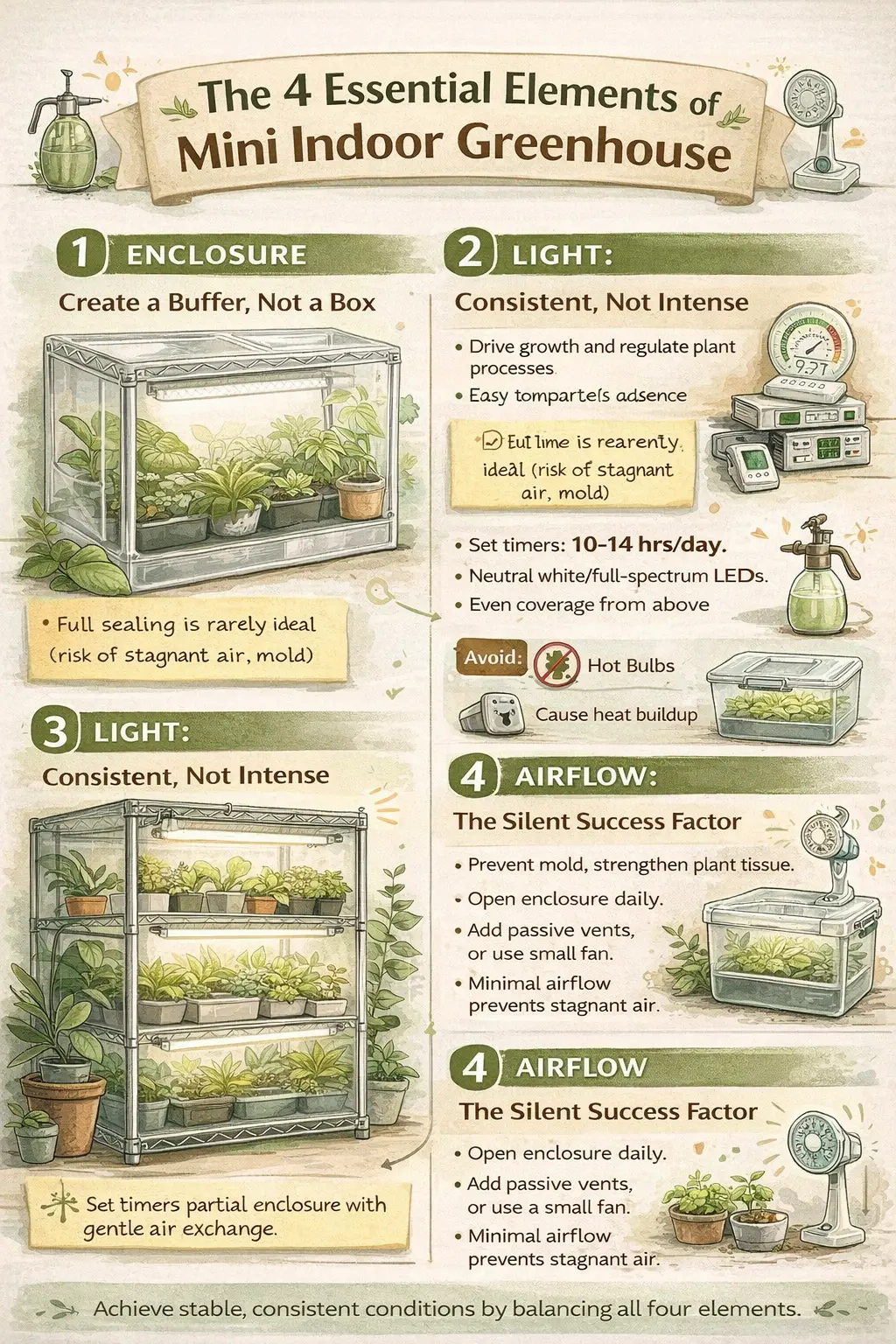
1. Enclosure: Create a Buffer, Not a Box
The enclosure is the structure that traps humidity and moderates temperature swings, and it’s your first line of defense against unstable room conditions. But perfect sealing isn’t always the goal. In fact, partial enclosures with controlled ventilation often outperform fully sealed boxes by reducing stagnant air and condensation buildup.
Common enclosure options:
- Clear plastic covers or humidity domes
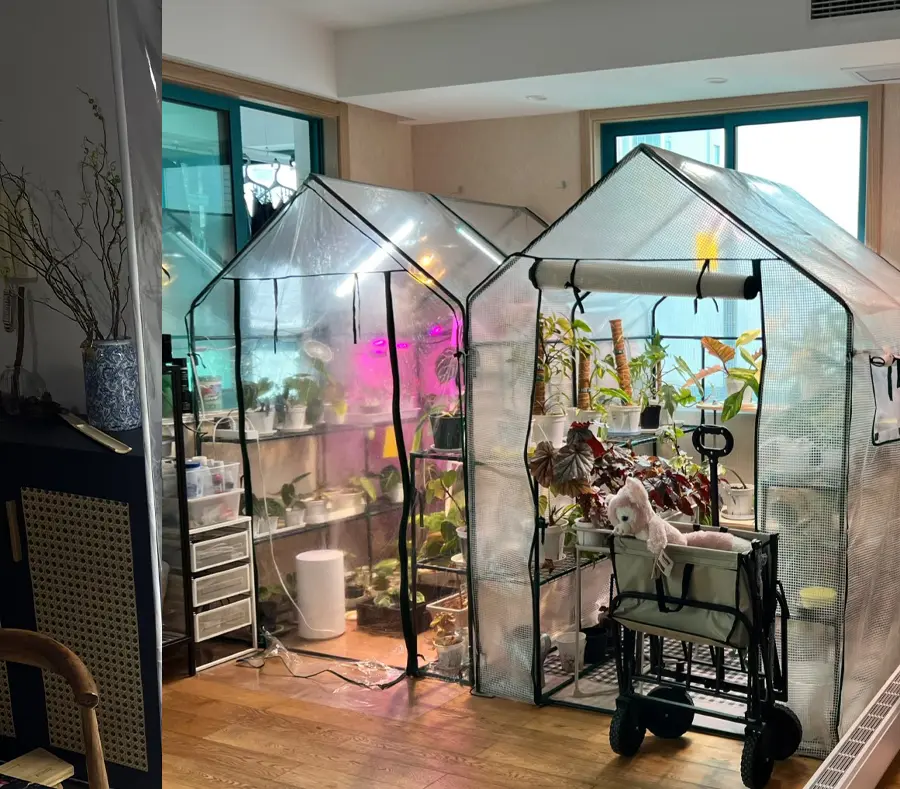
- Zip-up greenhouse shelves
- Glass or acrylic cabinets
- Clear storage bins or tote DIY builds
Why it matters:
A good enclosure raises humidity around your plants—which reduces water stress and speeds rooting—but it should allow gentle air exchange to prevent mold, fungal issues, and overheating.
2. Lighting: Consistent, Plant-Appropriate Illumination
Plants aren’t just sensitive to humidity—they need light energy to grow. Even when propagating cuttings, good lighting reduces leggy growth and supports photosynthesis. Studies show that plants indoors benefit significantly from supplementary lighting when natural light is insufficient, with full-spectrum LED lighting being among the most effective solutions.
Lighting principles that matter:
- Duration: Aim for ~10–14 hours per day for most houseplants.
- Type: Full-spectrum LEDs mimic natural sunlight best and stay cool.
- Placement: Lights should be placed above plants, evenly covering the canopy.
Common lighting mistakes:
- Using indoor decorative bulbs (inefficient for growth)
- Ignoring light duration and schedule Consistent coverage matters more than blinding brightness.
3. Humidity: Control, Not Saturation
Humidity is one of the primary reasons people build enclosed propagation spaces. Young plants and cuttings lose water quickly through transpiration, so moist air helps prevent desiccation and encourages root growth.
But caution:
- Too much humidity can be harmful. Constant condensation on walls, soft stems, or mold indicates oversaturation.
- What you want is stable relative humidity—high enough to reduce stress, low enough to avoid fungal issues.
Good target ranges (general guidance):
- Propagation/seedlings: moderately high humidity
- After roots form: moderate humidity with air exchange
Humidity domes, transparent greenhouse covers, or even a mini humidifier/mister system can help you maintain balance.
4. Airflow: The Silent Success Factor
Airflow is often underestimated—but it’s essential in preventing disease and encouraging healthy plant structure. Stagnant air + high humidity = mold, mildew, root rot, and pest problems.
Airflow strategies that work:
- Gently open the enclosure daily
- Add passive vents to covers
- Use a small low-speed fan for circulation
Why airflow matters:
- Supports gas exchange: Plants need fresh CO₂ for photosynthesis.
- Prevents condensation: Moving air reduces moisture on surfaces.
- Strengthens tissues: A breeze simulates natural conditions.
Step-by-Step: Build Your Mini Indoor Greenhouse at Home
Here’s a practical workflow that works in most homes without advanced tools:
Step 1: Choose Your Location (First)
Before buying materials, select a spot that:
- Has stable temperature (no windowsill with drafts)
- Avoids direct sunlight (which causes heat buildup)
- Has easy access to power for lights
Environmental stability is far more important than natural light access. Grow lights can make up for low sun exposure indoors.
Step 2: Pick an Enclosure Based on Your Needs
Ask yourself:
- Am I only propagating? → Lightweight covers work.
- Do I want long-term growing? → Stronger cabinets or shelves.
Simple enclosure ideas range from clear storage bins to a modified IKEA shelf with a transparent cover.
Step 3: Install Proper Lighting
- Attach LEDs above plant tiers
- Use a timer to keep a consistent light schedule
- Adjust height as plants grow
Step 4: Organize Plants by Need
Group plants that have similar humidity and light preferences to avoid stress and competition.
Step 5: Add Controlled Airflow
Start with natural ventilation first. Only introduce fans if moisture or fungus issues appear.
Step 6: Observe and Adjust
Plants are your best indicator of success. Watch how they respond and tweak one factor at a time.
How a Mini Indoor Greenhouse Improves Propagation Success
Using a greenhouse or enclosed propagation area can dramatically increase rooting consistency. By stabilizing humidity and temperature, you reduce environmental stress and give young plant tissues the best chance to develop roots quickly and strongly.
Common Mistakes (and How to Avoid Them)
| Mistake | Why It Happens |
|---|---|
| Fully sealed boxes | Causes stagnant air and mold |
| Overwatering | Happened because enclosure reduces evaporation |
| Heat buildup | Bad light choice or poor ventilation |
| Ignoring airflow | Leads to fungal growth |
| Expecting quick results | Plants adapt gradually |
Most mistakes come from attempting to optimize too early rather than establishing a stable environment first.
Can a Mini Indoor Greenhouse Be Permanent?
Yes—but it depends on the plant. Many tropical indoor plants thrive long-term in controlled environments. Others benefit from gradual adaptation back to ambient room conditions.
Think of your indoor greenhouse as a tool, not the final destination.
And be careful, not every plant is allowed to be propagate.
How This Fits Into a Larger Indoor Growing System
Your greenhouse station can evolve:
Propagation → Humidity control → Lighting upgrades → Full indoor garden
As you improve one element, the entire environment becomes more plant-friendly without requiring a complete overhaul.
Final Thought
A mini indoor greenhouse isn’t about complexity—it’s about control. When your light, humidity, airflow and enclosure work in harmony, plants grow stronger roots, healthier leaves, and you’ll see fewer failures. By starting with a simple, adjustable setup, your greenhouse can grow with your skills and plants over time.