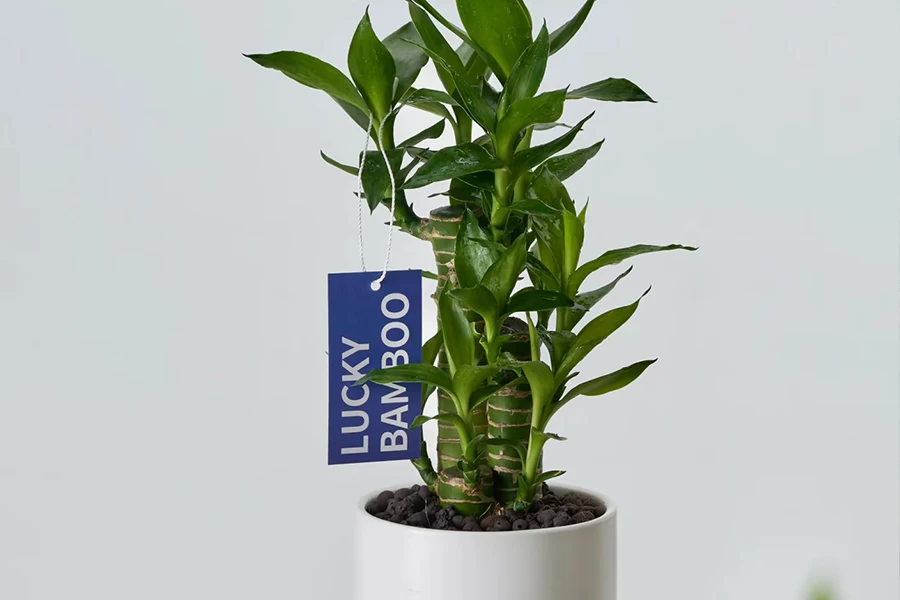
Lucky bamboo is one of those rare plants that manages to be meaningful, beautiful, and remarkably easy to care for all at once. Whether you keep it on your desk, in your living room, or by a bright window, it brings a calm, sculptural presence — and, according to tradition, a bit of good fortune as well.
Despite its name, lucky bamboo is not actually a true bamboo. It belongs to the Dracaena family and behaves much more like a tropical houseplant than a fast-growing grass. This makes it especially well-suited to indoor environments, even for beginners.
In this guide, we’ll explore what lucky bamboo really is, where it comes from, what it symbolizes, and how to care for it so it stays healthy, green, and graceful for years to come.
Lucky Bamboo vs. Giant Bamboo
True bamboo belongs to a group of fast-growing grasses that are usually grown outdoors. In ideal conditions, some species can grow several inches per day and reach enormous heights.
Lucky bamboo, on the other hand, is Dracaena sanderiana. While it is related at a broad evolutionary level, it is not a bamboo at all in the botanical sense. It grows slowly, stays compact, and adapts well to indoor light, which is why it has become the preferred “bamboo” for homes and offices.
The Origins and Symbolism of Lucky Bamboo
Origins
Lucky bamboo is native to the tropical rainforests of West Africa, where it grows beneath taller trees in warm, humid, filtered light. It was introduced to Western horticulture in the late 19th century and named in honor of the German plant collector Henry Frederick Conrad Sander.
Symbolism
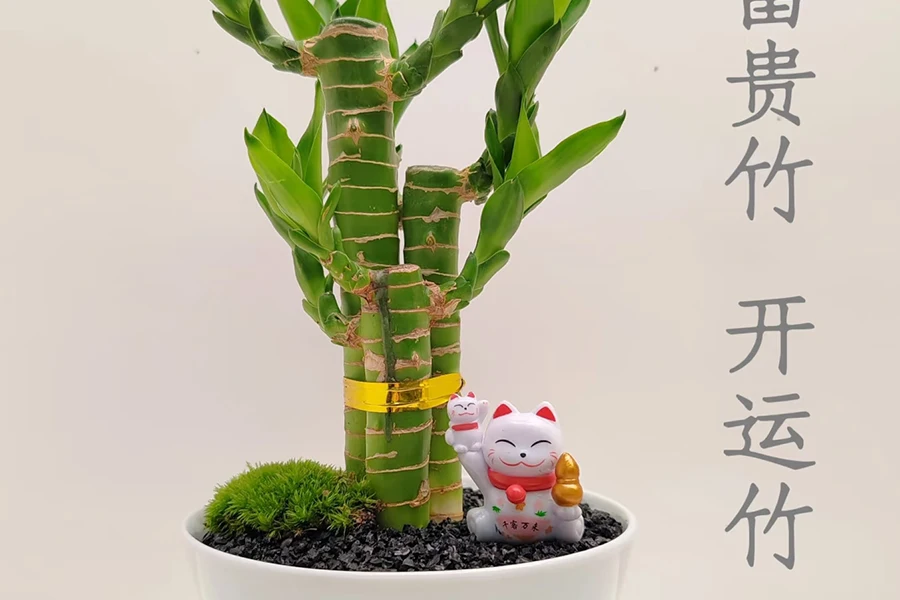
Lucky bamboo is deeply rooted in Feng Shui and East Asian symbolism. The number of stalks and their arrangement are believed to influence different aspects of life:
- 1 stalk: Simplicity and focus
- 2 stalks: Love and partnership
- 3 stalks: Happiness, wealth, and longevity
- 4 stalks: Traditionally avoided, but can represent balance
- 5 stalks: The five elements — earth, water, fire, wood, and metal
- 6 stalks: Prosperity and good fortune
- 7 stalks: Health and abundance
- 8 stalks: Wealth and success
- 9 stalks: Great luck
- 10+ stalks: Completeness and perfection
Popular shapes such as spirals, towers, and “S” curves also add meaning and visual interest.
How to Care for Lucky Bamboo
Light
Lucky bamboo prefers moderate to bright indirect light. A position one to two meters from a north- or east-facing window is usually ideal. Direct sunlight can scorch the leaves, while very low light slows growth and dulls color.
If natural light is limited, a small full-spectrum grow bulb works very well.
Water
Lucky bamboo can be grown in either soil or water.
- In water: Keep roots submerged, but change the water every 7–10 days to prevent stagnation and algae growth.
- In soil: Keep soil lightly moist, never soggy.
Always use distilled, filtered, or rainwater. Tap water often contains chlorine and fluoride, which can cause leaf yellowing.
Soil or Hydroponics
Lucky bamboo adapts well to both:
- Hydroponic growing: Roots are supported by stones or gravel in water. Clean and simple, with less mess.
- Soil growing: Use a well-draining, rich potting mix.
Both methods work well — choose based on aesthetics and maintenance preference.
Temperature & Humidity
Ideal temperature range is 70–90°F (21–32°C). Normal household humidity is usually sufficient, though very dry air may cause browning tips. Avoid cold drafts near doors or windows in winter.
Why Is My Lucky Bamboo Turning Yellow?
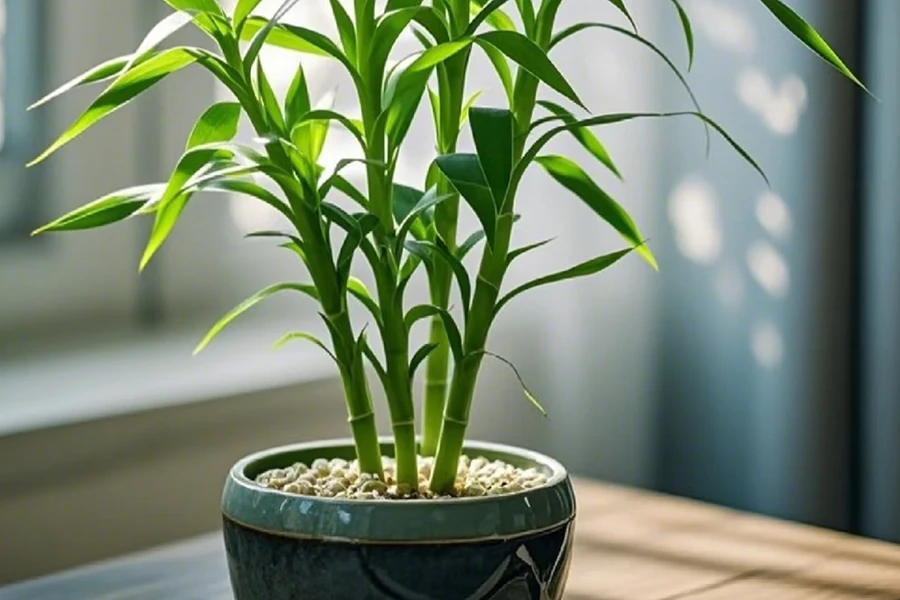
Yellowing leaves usually indicate stress. Common causes include:
- Overwatering leading to root rot
- Using tap water with chemicals
- Too much direct sunlight
- Insufficient indirect light
- Poor soil or nutrient deficiency
Trim damaged leaves, improve water quality, adjust light, and ensure good drainage to correct the issue.
Pruning and Shaping
Lucky bamboo grows steadily and benefits from occasional pruning.
Trim thin, leggy, or overly long shoots about 1–2 inches above the main stalk. This keeps the plant balanced and encourages bushier growth.
Braiding Lucky Bamboo
Braiding is done with young, flexible stalks:
- Plant three thin stalks in a triangular shape.
- Cross left over center, center over right, repeating gently.
- Tie the top loosely with soft ties.
- As the stalks grow and harden, remove the ties.
This creates the classic braided lucky bamboo form seen in decorative arrangements.
Getting Started
Choose a container: Clear glass vases are popular for water-grown bamboo.
Add stones: Decorative pebbles support roots and improve appearance.
Position carefully: Bright, filtered light is best.
Avoid direct sun and cold drafts.
Conclusion
Lucky bamboo is more than a decorative plant — it’s a symbol of balance, resilience, and positive energy. With minimal care, it rewards you with graceful form, long life, and endless styling possibilities.
Whether you grow it for its meaning, its beauty, or its simplicity, lucky bamboo is one of the most satisfying and forgiving plants you can bring into your home in 2025.